Sunday, September 20, 2015

Back in the Field

After a long summer of reports, proposals, and sundry management tasks, I was finally back out in the field this week at Great Falls Park. Above, view of the Potomac River from Difficult Run, early in the morning.

Difficult Run.


The interesting things one finds exploring in the woods.

Vultures. When I arrived on the first morning at 7:00 AM, these were hopping around the picnic tables. I wonder if they ever harass picnickers. It's one thing to have a jackdaw begging for crumbs, but a turkey vulture would be unnerving.

Aqueduct dam, which diverts water from the river for the city of Washington. It construction turned out to be a boon for Great Falls, because it took so much water out of the river that the consortium of top-hatted capitalists who had been planning to build a vast, water-powered manufacturing complex along the old canal gave up.

Slack water above Great Falls.

Wild argeratum, almost identical to the stuff that grows in my garden.

A little lesson in the soils of the Anthropocene Era. This is the eroding bank of a stream small enough to step across, in a very small valley. The light brown soil at the top all accumulated in the first 100 years or so of plow agriculture in this part of the world, roughly 1750 to 1850. That 2.5 feet (0.75 m) of soil was all washed off the surrounding slopes, likely a loss of at least half a foot (12 cm) and maybe more. Beneath the historic sediment is the dark line of a buried topsoil, and beneath that is the gray soil of an old swamp or marsh.

Another view. Remember that this is a tiny valley; there are rivers in eastern North America choked with 20 feet of soil that was originally loosened by plowing and then washed away; there are slopes in the Chesapeake region that lost 6 feet of soil during the era of careless plowing. It is important for archaeologists to recognize the effects of this, so that we don't waste time looking for sites in old swamps, or imagine that sites on eroded uplands have any integrity.

Me, happy to be out of the office.

Ancient Traditions and Rising Seas

How long can tribal societies preserve oral traditions?

It is a hard and complicated question. On the one hand certain myths, archetypal images, and associations can be preserved for tens of thousands of years; consider that the world tree of the Maya is identical in many details to that of the medieval Norse and modern Siberians, apparently preserved for 13,000 years. But scholars who have studied more concrete traditions, such as accounts of actual battles or great earthquakes, say that they fade away after 500 or at most 800 years.

Which makes a new article by Patrick Nunn and Nicholas Reid extremely interesting. Nunn and Reid have studied he traditions of coastal people all around Australia, many of whom have stories about lands inundated by the sea. The map above shows the sources of the stories they analyze, and the extent of land in Australia around 20,000 years ago. From their abstract:
Stories belonging to Australian Aboriginal groups tell of a time when the former coastline of mainland Australia was inundated by rising sea level. Stories are presented from 21 locations from every part of this coastline. In most instances it is plausible to assume that these stories refer to events that occurred more than about 7000 years ago, the approximate time at which the sea level reached its present level around Australia. They therefore provide empirical corroboration of postglacial sea-level rise. For each of the 21 locations, the minimum water depth (below the present sea level) needed for the details of the particular group of local-area stories to be true is calculated. This is then compared with the sea-level envelope for Australia, and maximum and minimum ages for the most recent time that these details could have been observed are calculated. This method of dating Aboriginal stories shows that they appear to have endured since 7,250–13,070 cal years bp. The implications of this extraordinary longevity of oral traditions are discussed, including those aspects of Aboriginal culture that ensured effective transgenerational communication and the possibility that traditions of comparable antiquity may exist in similar cultures.
Two examples of of these traditions:
Kangaroo Island or Karta (4405 km2) lies at the mouth of Gulf St Vincent, its closest points to the Australian mainland being to the south coast of Yorke Peninsula (40 km) and across Backstairs Passage to the southwest end of the Fleurieu Peninsula (13.5 km). The earliest and most detailed versions of the story about the drowning of Backstairs Passage were collected from the Raminyerar and Jaralde peoples of the mainland. All involve an ancestral figure named Ngurunduri whose two wives ran away from him. He pursued them relentlessly along the south coast of the Fleurieu Peninsula, finally catching sight of them as they were crossing what was then a strip of land connecting it to Kangaroo Island across Backstairs Passage. Infuriated, he caused the sea to rise and drown them; the women and their belongings became the islands known as The Pages (Meralang) and the sea never again receded from the passage.
The Narrangga tribe living on Yorke Peninsula ‘had a story that has been handed down through the ages' which recalled a time when Spencer Gulf was dry land, ‘marshy country reaching into the interior of Australia'. In another account, probably from a different source, this country is described as ‘a valley filled with a line of fresh-water lagoons', each associated with particular types of water bird; the ‘open country between the lagoons' was occupied by ‘emus, curlews and mallee fowls' while elsewhere there were other creatures. Both versions of the story describe the initial flooding of the Gulf as having been catastrophic rather than gradual, the result of a mythical/giant kangaroo using a magic bone to cut a trench; ‘the sea broke through, and came tumbling and rolling along in the track … it flowed into the lagoons and marshes which completely disappeared'
I find these remarkable. As Nunn and Reid write, these traditions are different from the Genesis/Gilgamesh sort of flood story in that the flood waters never recede. In every case the description of the world before the flood is plausible; there is nothing parallel to Plato's crazy Atlantis, just ordinary stretches of land or mash. The flooding is said to have been catastrophic, but in fact that is how it happened in many places; the seas did not rise gradually, but in a series of strong "pulses," and this effect was multiplied in the sorts of bays and inlets where many of the Australian stories are set. These inlets might indeed have flooded rapidly when the seas breaches dunes across their mouths. Many of the tales attribute the flooding to a great ancestor or spirit animal, but one can hardly blame ancient Australians for not knowing about melting glaciers.

I think Nunn and Reid make a strong case that these stories are authentic folk memories, and the geology makes it clear that most of them are at least 7,000 years old. Amazing.

Dams and Carbon

National Geographic has a feature this week on which cities around the world are doing the best at phasing out power from fossil fuels. Scanning their table, I see that the cities doing best by this metric mostly rely on hydropower, that is, on dams. In other contexts National Geographic has been a big supporter of dam removal, and they wrote a skeptical piece on Brazil's plan to generate power with a huge system of new dams on Amazon tributaries. Well, which is more important? Free-flowing rivers or reducing CO2 emissions?

At this point in time I lean toward reducing CO2 emissions. But whatever we choose, we have to recognize that there is no free lunch anywhere.

Saturday, September 19, 2015

Combat and Suicide

The sad, sad story of the the Second Battalion, Seventh Marine Regiment:
He thought he was getting used to suicides in his old infantry unit, but the latest one had hit him like a brick: Joshua Markel, a mentor from his fire team, who had seemed unshakable. In Afghanistan, Corporal Markel volunteered for extra patrols and joked during firefights. Back home Mr. Markel appeared solid: a job with a sheriff’s office, a new truck, a wife and time to hunt deer with his father. But that week, while watching football on TV with friends, he had wordlessly gone into his room, picked up a pistol and killed himself. He was 25. . . .

Almost seven years after the deployment, suicide is spreading through the old unit like a virus. Of about 1,200 Marines who deployed with the 2/7 in 2008, at least 13 have killed themselves, two while on active duty, the rest after they left the military. The resulting suicide rate for the group is nearly four times the rate for young male veterans as a whole and 14 times that for all Americans.

The deaths started a few months after the Marines returned from the war in Afghanistan. A corporal put on his dress uniform and shot himself in his driveway. A former sergeant shot himself in front of his girlfriend and mother. An ex-sniper who pushed others to seek help for post-traumatic stress disorder shot himself while alone in his apartment.

The problem has grown over time. More men from the battalion killed themselves in 2014 — four — than in any previous year. Veterans of the unit, tightly connected by social media, sometimes learn of the deaths nearly as soon as they happen. In November, a 2/7 veteran of three combat tours posted a photo of his pistol on Snapchat with a note saying, “I miss you all.” Minutes later, he killed himself.
All those Republicans eager to send ground troops to Syria or back into Iraq ought to be reading Dave Phillips' story.
“You come back and try to be a normal kid, but there is always a shadow on you, a dark shadow you can never take away.”

Gold Signet Rings of the Minoan and Mycenaean Worlds

Idly searching for some images of Minoan art to put in my post on The Riddle of the Labyrinth, I was struck by a photograph of a gold signet ring, with the notation that it came from a "tomb of gold rings." That, I thought, was something worth following up on.

This particular ring, perhaps the most famous, was excavated by Arthur Evans from a tomb at Isopata near Knossos. Evans dated it to around 1650 BCE. It shows four women in Minoan costume raising their arms in what looks like a significant gesture. They are surrounded by plants that also seem important. In the upper left, a fifth, tiny figure appears; to some interpreters it seems to be descending from the sky. Although the women's bodies are carefully rendered, there heads are hardly present (a common feature of these seals). Interpretations have been all over the place:
Morris and Peatfield used this ring as their typological image for their altered states of consciousness hypothesis, whereas Gimbutas considered the image to provide evidence for the continuity of bee-worship and honey-rituals from Neolithic European cultural horizons down to the Aegean Bronze Age. Vasilakis considered this ring to exemplify Minoan dance circular dance rituals. Rehak considers this ring to show some kind of rite pertaining to young adult women, rather than an epiphany scene.
Which makes this a good introduction to the subject of Minoan and Mycenaean signet rings, wonderful little things that seem charged with meaning, if only we could figure out what it is.
This ring comes from the "Tiryns Treasure" at the Mycenaean site of Tiryns on mainland Greece, and dates to around 1500 BCE. It shows an Assyrian-looking scene in which four lion-headed demons bearing libations approach a seated god or king. Note the bird behind the seated figure. No idea what it means, but it must mean something, right?

The so-called Minos Ring, which has an interesting story. It was found by a boy, a farmer's son, who handed it over to a priest described by Evans as "meddlesome." The priest brought it to Evans, who thought it was genuine and offered to buy it, but the priest asked for a sum Evans refused to pay, and no deal was struck. But the priest did allow Evans to take an impression of the seal, from which he made two copies that are now in the Ashmolean (one is above). In 1934 the priest turned to the Museum of Iraklion, but the Greek archaeologists there could not agree on whether it was genuine, so they refused to buy it. Years later they decided they did want it after all, but the priest reported that it had been lost, and it has not been seen since. As to what it depicts, well, go ahead and guess -- what you come up with can't be any wilder than some of the theories that have already been published. The story of King Minos? A feud of goddesses?

A ring showing a bull dancer, from Akarnes, Crete, which may date to c. 1700 BCE but on the other hand may be a 20th-century fake.

This fascinating ring came from the Tiryns Treasure, c. 1500 BCE. The two priestesses or goddesses are accompanied by a young male figure who tends to an impressive plant. This is conventionally interpreted as giant fennel, which it indeed resembles, and which has many ancient, magical associations. But others think it is the extinct and even more magical plant silphium, revered in the ancient world as both an aphrodisiac and a means of birth control.


Two rings from Mycenae, with themes of hunting and war.


Photograph and drawing of another ring from Mycenae, showing goddesses, an olive tree, and a labrys or double ax.

In 1965 archaeologists were exploring the cemetery at Phourni on Crete, which was used for a thousand years, from around 2200 to 1200 BCE. They stumbled across the spectacular burial of a woman, the Princess of Phourni; her tomb produced 140 items of gold, including five rings, of which this is one. (This was the "tomb of gold rings" from that first post I mentioned.) Does this depict the Theft of the Divine Silphium, a formerly important myth that was somehow omitted from our written sources?

From a tomb on Poros. Does the right-hand section depict the same scene as above?
The so-called Ring of Theseus, found at Athens in the 1950s. The authenticity of this ring has also been disputed, but both the ring and the circumstances of its discovery were minutely examined by a panel of Greek archaeologists in 2006, and they insisted that it is genuine.

Griffin ring from the tomb of gold rings at Phourni.


And here is my favorite of these rings, the so-called Ring of Nestor. Evans acquired this in Pylos in 1924, after hearing from "a friend" that it might be for sale. Evans wrote an entire long article about the ring, saying:
On the remarkable gold signet-ring, known from the place of its discovery [Mycenaean Pylos] as the 'Ring of Nestor', the scenes of initiation into the after-life are divided by the trunk and branches of a Minoan 'Tree of the World'. Here there can be little doubt...that the plant, the shoots of which spring forth from the trunk to give shade to the lion guardian of the realms below, must be identified with the same 'Sacral Ivy' that climbs the rocky steeps in this cycle of wall paintings....May we not perhaps go even farther? This conspicuous spray - with its green leaves picked out, as we see them in the fresco, by the bright orange outline of the sacred emblem - springing from the hoar and barren trunk of the tree that here seems to stand on the borders of the Minoan Underworld, might it not itself have possesed some mystic power? It is impossible not to recall the Golden Bough, which, when plucked by Aeneas, opened for him the passage to Avernus. But ever, as one was torn away, another branch of gleaming gold sprang in its place.
While Evans was convinced that the ring was genuine, many have been just as convinced that it was a fake. In the 1950s the Ashmolean Museum took it out of the display case and hid it away in a back room. But then in the 1990s the ring came back into favor with scholars and went back on display in the Ashmolean; today its status remains disputed. Archaeologists tend to doubt the ring's authenticity. On the other hand comparative mythographers mostly believe in it, because they think it includes information about the ancient strata of European myth to which no forger would have had access in 1924. I think the very weird subject matter argues for authenticity; if you wanted to sell Arthur Evans a fake ring, wouldn't you choose a theme he already believed was important in Minoan art, like the bull dancing ring? Why dream up this bizarre mishmash of Norse, Egyptian, and Minoan imagery? If it is genuine it adds another chapter to the worldwide mythography of the world tree, with a monster at its root and divine kingdoms in its branches.

It is a little sad that some of these rings may not be what they seem. But at least a dozen have come from good archaeological contexts at Knossos, Mycenae, Tiryns, and Phourni, and they are enough to open a magical golden window into the Bronze Age past.

UPDATE


This gold signet ring has just been excavated from a Middle Helladic II (c 1500-1400 BCE) tomb near Pylos. The context is unquestionable. And it depicts a bull with an acrobat, which I would say makes it more likely that the other examples discussed above are also genuine.

UPDATE 2

More rings from the tombs in Pylos! The top two are both thought to represent goddesses, the second one shown on a mountaintop with birds.


UPDATE 3

Drawings of yet more rings from Mycenae, from an article Arthur Evans published in 1901. The one above shows an ancient design of two noble beasts and a pillar, the same design famously used over the gate of the citadel.

A goddess and an armed male figure; a hero?

And a worshiper before a pillar, with a male spirit or god appearing from above.

The Infinite

It was always dear to me, this solitary hill,
and this hedgerow here, that closes off my view,
from so much of the ultimate horizon.
But sitting here, and watching here
in thought, I create interminable spaces,
greater than human silences, and deepest
quiet, where the heart barely fails to terrify.
When I hear the wind, blowing among these leaves,
I go on to compare that infinite silence
with this voice, and I remember the eternal
and the dead seasons, and the living present,
and its sound, so that in this immensity
my thoughts are drowned, and shipwreck
seems sweet to me in this sea.

Giacomo Leopardi
Translated by A.S. Kline

Pat Buchanan Agrees with Vladimir Putin about Syria

In the department of strange bedfellows, I give you Pat Buchanan's essay supporting Russian intervention in Syria:
The problem in Syria is not so much with the Russians—or Iran, Hezbollah, and Assad, all of whom see the Syrian civil war correctly as a fight to the finish against Sunni jihadis.

Our problem has been that we have let our friends—the Turks, Israelis, Saudis, and Gulf Arabs—convince us that no victory over ISIS can be achieved unless and until we bring down Assad. Once we get rid of Assad, they tell us, a grand U.S.-led coalition of Arabs and Turks can form up and march in to dispatch ISIS.

This is neocon nonsense.

Those giving us this advice are the same “cakewalk war” crowd who told us how Iraq would become a democratic model for the Middle East once Saddam Hussein was overthrown and how Moammar Gadhafi’s demise would mean the rise of a pro-Western Libya.

When have these people ever been right?
So today I find myself in coalition with Vladimir Putin and Pat Buchanan, which, well, it is what it is. I know that Assad is a vicious thug, but is rule by a vicious thug worse than unending war, or than a victory for the Islamic State? We allied with Stalin to defeat Hitler. I think a similar approach is called for here.

Friday, September 18, 2015

Why Don't We Have Better Politicians?

Tyler Cowen:
The two participants who have done the best relating to voters, through the media, are the two former CEOs, Donald Trump and Carly Fiorina. Overall that is true even if you think Trump had a subpar performance this debate.

A priori, you would think that being a professional politician selects exactly for people who can do well in a televised national debate. Yet, from this limited number of data points, it is the CEOs who have the relevant skills.

What should we infer about the relative filters for CEOs and politicians? . . .

Why don't actors and actresses, in either the literal or the operational sense, take over the upper tiers of the political sector?  . . . How about a smart talk-show host? 
This is something about contemporary politics that I have commented on before, apropos of the Senate reigns of Harry Reid and Mitch McConnell. Why are our leaders such lousy communicators? Watching Trump kill the rest of the field is downright embarrassing, and as Cowen says the only other candidate who has stood up to him effectively is Carly Fiorina. Why are great speakers like Obama, Reagan or Mario Cuomo so rare in our politics? Or even great gladhanders like Bill Clinton?

Obviously being a great speaker or having a winning  public persona is an advantage for an American politician, but it is far from the most important thing. What does matter, it seems to me, is convincing the other party insiders that you are absolutely on their side. You have to operate much more in back rooms and little private conferences and so on than in public. In those settings, what matters is fidelity to the cause; to have one position out of line, or cast one wrong vote, can sink the career of the best orator.

I also wonder about the kind of people who choose to get involved in American politics as they currently exist. If you were a great speaker and a great talk-show guest, why would you choose to get involved in politics, rather than business or television? What does public office offer to balance out the vastly lower salaries and so on? True ideologues excepted, I suspect the answer is "not very much."

Clouds

Over Costa Rica. Very freaky; people watching it said it looked like the End Times. Video here.

Carolingian Cup from a Viking Hoard

This lovely thing comes from the Vale of York hoard unearthed by metal detectorists in Yorkshire in 2007. The hoard was deposited around 950. The silver gilt vessel was probably made in northern Germany or the Netherlands in the ninth century and stolen from a monastery.


Just Words

Donald Trump summed up the latest Republican debate best:
We were discussing disease, we were discussing all sorts of things tonight, many of which will just be words. It will just pass on. I don’t want to say politicians, all talk, no action. But a lot of what we talked about is words and it will be forgotten very quickly. 
Amen to that.

The thing that puzzles me most about contemporary politics is the weird disconnect between what gets talked about and the actual problems in the world. The Times:
Despite an abundance of serious issues to talk about, nobody offered solutions to problems like child poverty, police and gun violence, racial segregation, educational gaps, competition in a global economy and crumbling infrastructure. On looming disasters (the changing climate) and more immediate ones (a possible government shutdown over, of all things, Planned Parenthood), the debate offered no reassurance that grown-ups were at the table, or even in the neighborhood.
Much of Republican politics has long been a fact-free zone, and we saw more of that in the debate. Carly Fiorina threw her hat into the crazy ring with style, claiming to see things in those Planned Parenthood videos that are not there, and then saying we should forget about negotiating with Iran or Russia and beef up our military presence in the Middle East and Poland. Everybody but Trump subscribes to the orthodox position that cutting taxes on the rich is the best way to increase economic growth, despite the complete lack of evidence that this is true. On the subject of CO2 emissions and climate change, we get a barrage of evasions and assertions spewed forth with a Zen indifference to whether any of it is true or self-contradictory. Marco Rubio said yet again that a carbon tax would destroy the economy, which is simply ludicrous.

All I hear from Republicans is 1) cut taxes on the rich; 2) fight everybody until they all surrender; 3) end abortion. What else is there besides rhetoric?

On the Democratic side, there are plans, but I confess to feeling no confidence that the things Bernie Sanders is proposing would really fix our troubles. For one thing his ideas about raising taxes don't come close to paying for his ideas about spending more money. As my readers know I am a supporter of single-payer health insurance, but I do not believe Congress will pass such a bill in my lifetime, since only a minority of Democratic legislators supports it; what is the fallback plan?

More deeply: would things like universal preschool and more subsidies for college tuition really reduce inequality in America, or help the middle class get ahead? I doubt it. As it happens I support free preschool, which we could well afford and might do some good. But I have serious doubts about the wisdom of making college cheaper for millions of people, since I think that in America millions of people already go to college who shouldn't. If we have more money to spend on higher education I think we should direct it to community colleges and training programs, so that people who don't want to go to 4-year colleges don't have to. Why is it a good idea to spend hundred of billions to enable more students to take classes they hate in subjects they don't care about?

Everybody I know, including the Republicans, is queasy about the huge role Wall Street plays in the economy these days, and about the general shift of wealth from manufacturing to finance. But who has a rational plan for taming this monster? Is there a way to limit the reach and power of Wall Street that still allows it to play the central role that our sort of capitalism demands? Is there some alternative form of capitalism that doesn't demand hugely powerful, centralized markets? I know that on the populist left there is a loud cry to "restore Glass-Steagall," the old law that separated commercial banks from retail banks. But commercial banks don't even exist any more in the form that Glass-Steagall regulated; look back to the 90s and you see that many of the Congressmen who voted to rescind the bill did so because it had become effectively useless anyway. If the law were restored all that business would shift into hedge funds, or offshore.

The good things that are happening in America right now are only tangentially connected to the office of the Presidency. We are shifting from fossil fuels to clean energy at a remarkable rate, and while I wish the government would do more to promote this, it is not really necessary. The people have started to police the police in a serious way, thanks to smartphones and increased awareness of the problems. Sexism and racism are slowly declining; gay people are rapidly gaining acceptance; decaying urban neighborhoods are being made into great places to live.

I find myself seized by a vague indifference to the current election. I will certainly vote, and I do think there are important differences between Democrats and Republicans. But I have no sense that anyone in politics or out has the answers I am looking for. How can we create a world that is more equal without drowning ourselves in bureaucracy? Where will the jobs of the future come from? Is it possible to promote marriage? How can we help children in single-parent homes? Can we design schools that encourage exploratory learning while still teaching ordinary kids the essential skills? Who should go to college, and what should they learn? How can we promote a tolerant society in which people are decent to each other, without stifling free expression? What does good health care mean, and how should we provide it? When is military force helpful, and how should it be deployed? Who should go to prison, and for how long?

Still waiting for a politics that takes serious questions seriously. But not expecting it.

Thursday, September 17, 2015

Metaphysical Disclaimer

My elder daughter took this picture in a witchy shop in Salem. It made me think that I need a Metaphysical Disclaimer. Something like:
While we hope you find this blog interesting and informative, we make no claim that any of our posts has metaphysical significance.

The "Dangerous Times" Thing

This time it was Marco Rubio, challenging Donald Trump's fitness to be president, but the line gets thrown around all the time:
These are extraordinarily dangerous times that we live in.
Hogwash. This may be a dangerous time in the Middle East and parts of Africa, but for the rest of the world this the safest era in history by a wide margin. All the terrorists in the world have yet to kill as many people as were killed on the average day in World War II.

People freak out about an Iranian bomb, but the Americans and Soviets used to have 5,000 warheads aimed at each other and poised to launch.

The murder rate is down; the number of people killed in car accidents is down; we have pulled most of our soldiers out of harm's way in Iraq and Afghanistan.

We have lots of problems in America, but in historical terms our problems with violence are mild. Why is it so hard to admit that things really aren't so bad?

Trump on the Bushes

Donald Trump to Jeb Bush, last night:
Your brother and your brother’s administration gave us Barack Obama, because it was such a disaster those last three months that Abraham Lincoln couldn’t have been elected.

Akihiro Nikaido, Tea Bowls

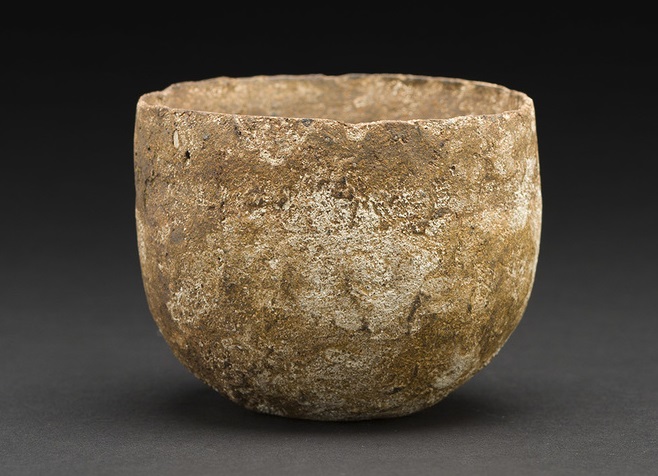
Akihiro Nikaido, born 1977, is a Japanese ceramic artist deeply devoted to the tea ceremony as an aesthetic experience. He was once a salaryman, but he quit his job, ditched his western suit, moved to the famous ceramics town of Mashiko, and devoted himself to traditional Japanese ceramics. Instead of happenings, he works with other traditional Japanese artists and chefs to stage elaborate tea ceremonies. These events are supposed to appeal to all five senses -- hence his tea bowls are all textured, and how they feel in the hand is an important part of their artistry. More at the Cavin-Morris Gallery.


Wednesday, September 16, 2015

Not All Adjuncts are Miserable

Caravaggista:
I could use this to segue into all the heartbreak and distress the adjunct crisis has caused me and so many others, but the reality is that personally, even though I don’t make much money or have benefits, I get to do what I love every day. That’s worth something. It might not be sustainable forever, but it’s worth it for however long I get to live it.
So there's one young adjunct who would rather teach for no money than earn more doing something less fun.

There are also lots of adjuncts like me, people with other jobs who are happy to pick up a course from time to time, whatever it pays. Heck, if I got to teach whatever I wanted to interested students, I would do it for free. If I were offered a tenure-track professorship at this point in my life, I would probably turn it down.

The adjunct system sucks in many ways, but it's great for some of us, and for others it beats office work.

Sprout Heads


The latest Chinese fashion, apparently.

A Thought about Human Evolution

Frans de Waal:
The problem is that we keep assuming that there is a point at which we became human. This is about as unlikely as there being a precise wavelength at which the color spectrum turns from orange into red. The typical proposition of how this happened is that of a mental breakthrough — a miraculous spark — that made us radically different. But if we have learned anything from more than 50 years of research on chimpanzees and other intelligent animals, it is that the wall between human and animal cognition is like a Swiss cheese.

Apart from our language capacity, no uniqueness claim has survived unmodified for more than a decade since it was made. You name it — tool use, tool making, culture, food sharing, theory of mind, planning, empathy, inferential reasoning — it has all been observed in wild primates or, better yet, many of these capacities have been demonstrated in carefully controlled experiments.

We know, for example, that apes plan ahead. They carry tools over long distances to places where they use them, sometimes up to five different sticks and twigs to raid a bee nest or probe for underground ants. In the lab, they fabricate tools in anticipation of future use. Animals think without words, as do we most of the time.
Although knowledge of human evolution is widespread, and more than half of Americans accept that we did evolve, the real lessons of evolution are little appreciated even among biology teachers. In the long run, there is no such thing as a species, or a genus. There is only constant change, one tiny variation at a time. What we call a species is just a still from a moving picture of evolution in motion. We are not the same as our ancestors of 50,000 years ago, and they were not the same as their ancestors of 50,000 years before that, and so on back across a billion and more years to the first eukaryotic cell. We are part of life, one recent outcome of earth's grand experiment. There is a part of our minds that hates this chaos and longs for things to stand still and be named; in heaven, we imagine, there will be no more change. But if god is anything, god is change; the universe is in ceaseless violent turmoil, and we are part of that turmoil, denizens of cosmic chaos. There may be in some sense a deeper layer of stasis, fundamental equations that lay the rules of the dance; maybe time is just one way of perceiving a universe that could also be seen as a four-dimensional image built of interacting waves, as a pattern in the mind of god. But we are creatures of time and change; that is our fundamental reality. That, to me, is what evolution really means: that we stand on sand that moves like a beach in storm, and must learn to dance with the changing world, not waste our energy forcing it to stand still.