Showing posts with label Japan. Show all posts

Sunday, January 11, 2026

Sawara

Sawara is a historic district in the city of Katori, part of the Narita urban agglomeration. It preserves numerous buildings of the Edo Period (1603-1867) and the Meiji Era (1868-1912), most of them fronting on this canal.

The town was established as a port in the 700s.

There is also a historic shrine, although like most Japanese shrines it has been rebuilt many times and none of the regular online sources says how old the current version is.


And a park famous for its irises.

Here's a nice Japanese touch.

The town has an annual Grand Festival with floats representing local heroes.


Seems like a delightful place.

Monday, July 8, 2024

Kobayashi Kiyochika Documents the Sino-Japanese War, 1894-1895

I was so struck by this image, which an art blogger was using as the banner on his site, that I had to look it up. I guessed that it was Japanese propoganda from the 1890s or 1900s, which I have written about here before. And lo! 

This is Scouting Party near Niuzhuang on a Snowy Night, by Kobayashi Kiyochika (1894). There is a lot of stuff by Kobayashi online, but none of his regular Japanese stuff (temples with cherry blossoms, boats on river, etc.) grabbed be like his military works.

Two with the same title, Japanese Forces Capturing the Pescadores Islands in Taiwan (1894)

The Japanese Army has Landed at Weihaiwei and is Marching Onward (1995)

And a panel from a triptych titled, Despite Heavy Artillery Like Rainfall, He Alone Opens the Hyonmu Gate (1894). These are all from Harvard University.

Thursday, July 4, 2024

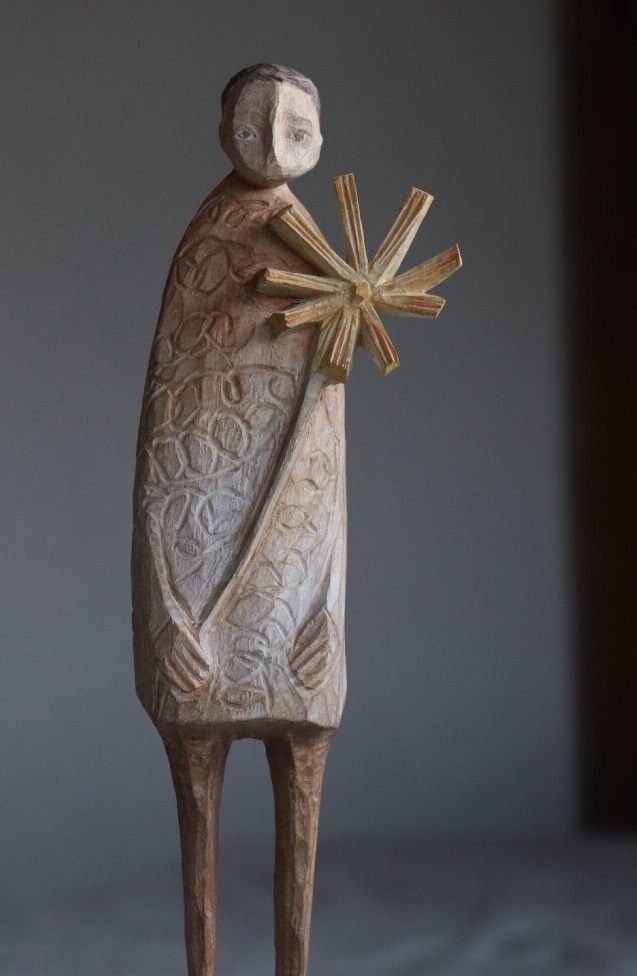
Fumiya Watanabe

Fumiya Watanabe (born 1985) was raised in a modern district of Tokyo but then decided to throw himself into Japanese tradition. He attended Kyoto Traditional Crafts College, then apprenticed under a master carver in Inami, Japan's "City of Wood." 

Now he lives and works in Gifu Prefecture, a largely rural area north of Tokyo.

But I don't see much of Japanese tradition in his work, which seems to draw on Surrealism and other 20th-century European forms, or in the way he talks about it:

My work is like a diary, like a poem. My feelings appear in various forms. Events in my daily life, things from the past, people around me, and the dogs and cats I live with also come to me…. I am not trying to convey some big message in my works. I just give form to what I feel. I want the viewer to freely interpret and enjoy them.
I find them delightful. More at his web site.


Monday, January 15, 2024

Immigration to Japan

Immigration to Japan is gradually increasing. There are now 2.76 million foreigners living in Japan, about 2.3% of the population. The biggest source countries are China (745,000), Vietnam (476,000), South Korea (412,000), and the Philippines (291,000). The government hasn't said much about this, but the policy of admitting more foreigners must be a response to the crashing birth rate.

One thing I was curious about was how much of this is Japanese men marrying foreign wives, which I remember hearing was a big thing. But wikipedia has this:

International marriage migration used to represent as much as 25% of permanent migration flows to Japan, but this trend has been in decline since a peak in 2006. . . . In 2006, according to data released by the Japanese Ministry of Health, Labour, and Welfare, 44,701 marriages, or 6.11% of all marriages registered in Japan were to a foreign national. In 2013, this number had fallen to 21,488 marriages or 3.25%.

So not as much of a big thing as it used to be.

Tuesday, November 28, 2023

Muqi

Muqi was a Chinese monk who lived from roughly 1210 to 1269 AD, during the southern Song dynasty. So far as we can tell he spent most of his life in a monastery in Sichuan, where he practiced the stripped-down form of Buddhism the Chinese call Chan, known in Japan and the US as Zen. Now he is known for his paintings, but he did not leave very many works and we don't know that he would have described himself that way.

He is in the news (Artnet, NY Times) because his most famous work, Six Persimmons, has traveled from its home in a Japanese temple to San Francisco for a brief show. This was originally painted into a simple scroll with other images, but a Japanese collector who bought it in the 1500s decided it was a masterpiece, cut it out, and gave it the masterpiece treatment. It became hugely famous for somehow embodying the minimalist spirit of Zen: the close attention to detail that allows us to see each fruit as a unique individual, combined with an almost cursory rendering that gives only the amount of detail we need to see the distinctions the artist saw. 

There are too many interpretations of this little composition for me to even list them, so it's probably best to think of the painting as a koan, one of those riddling phrases that serve as a starting point for Zen meditation.

As for Muqi's other work, this is Chestnuts, cut from the same scroll as Six Persimmons but not nearly as famous.

His other truly famous painting is this one, Guanyin, Crane, and Gibbons.

His landscapes look to me much more like more traditional Chinese work, although experts see some of the same minimalist spirit as in Six Persimmons.


I just learned recently that when Chinese intellectuals got to arguing with Christians in the eighteenth and nineteenth centuries, many of them thought they had to answer allegations that China was not as spiritual as the Christian west. One of their responses was that Chinese spirituality showed in landscape paintings. These landscapes, they said, were their equivalent to western paintings of Christ on the cross. I found this to be an arresting thought; these landscapes all look kind of alike, just like crucifixions look kind of alike, because their main function was to inspire meditation along certain paths.

Thursday, October 5, 2023

Ray Morimura

Ray Morimura (born 1948) studied oil painting in college but then switched to color woodblock prints that "show traditional Japan through his own lens." I haven't found an explanation of why but you have to think that needing to make a living was part of it. People around the world love and buy Japanese prints with traditional themes, but there isn't much of a market for Japanese oil paintings.  I'm certainly happy to have these in the world. Above, Shinsenen, 2019.

Garden of Kikyo, 2022

Panoramic View of Shomyouji, 2012

Here's something a little different, Plover. Morimura has done a lot of these sketchy, humorous works as well as the more formal compositions.

Sando, the Approach to the Shrine, 1991

Itsukushima Shrine, Miyajima Island, 2006

Cherry Blossoms in the Moonlight, 1999. Below, a brightly colored work I found posted without title or date.

Monday, October 2, 2023

Dogu

Dogu ceramics – "earth figure" – are among the more interesting creations of the Jomon culture of Japan. The Jomon were hunter-gatherers who reached the islands around 11,000 BC. Rather remarkably, they started making pottery not long afterwards, certainly by 10,000 BC. "Jomon" actually means "cord-marked", describing the most common surface treatment for their pots.

The date for the earliest Dogu figures is disputed; I have seen dates ranging from 10,000 BC to 5,000 BC. Everyone agrees, though, that they became much more common and elaborate after 3,000 BC and thereafter went through several stylistic changes before the Jomon culture faded in the face of a massive migration of rice farmers from the continent around 600 to 400 BC. 

Most of these objects are small, on the order of 10 cm, but a few are as large as 40 cm tall (15 inches). There are fragments of what seem to be even larger figures, perhaps as much as a meter tall. Above is one of the most famous, now in the National Museum in Tokyo.

Most were found deliberately broken into pieces. 


Nobody knows what these were for. They are not generally found in tombs, but on the other hand they are found in large quantities around certain sites that seem to be shrines. One of the common ideas is that they were used in some kind of rite, at the end of which they were broken; perhaps they were sent as messengers to the gods or spirits, or perhaps they carried away bad luck.


These objects were rediscovered in the 1600s, beginning with a famous site known as Kamegaoka, or the Hill of Jars. Japanese archaeologists have been digging them up ever since. 


Most are humanoid, but there are exceptions like this boar and monkey.


Very cool. Incidentally one of the other interesting things about the non-agricultural Jomon is that they built large stone circles and earthworks, so that makes them another people who were doing "civilized" things before they took up farming.