Showing posts with label genetics. Show all posts

Wednesday, May 13, 2026

David Reich on Bronze Age Genetics

In this interview with Dwarkesh Patel, genetist David Reich says that human genetic change was fastest between 5,000 and 2,000 years ago. Changes associated with the Bronze and Iron Ages seem to have been far more dramatic than those that took place during the agricultural revolution:

In this part of the world—Europe and the Middle East—we are actually in a period of accelerated natural selection. One way to see this is to look at the enrichment pattern we’re observing, where immune traits are unusually associated with these selection signals. We could compare the last 5,000 years of our time period, what’s called the Bronze Age and further onward, to the previous 5,000 years. What we see is that this intensification of selection around immune traits, and similarly the intensification around metabolic traits, has accelerated over this time period.

It’s not like natural selection has been at the same rate over all places and times. It’s increasing over the time period we’re analyzing. Plausibly the whole time period has increased compared to previous periods. We’re in a period of intensified selection. That’s not implausible, because this is a population that went through a huge shock in terms of the way people live and the culture. Almost everyone we’re analyzing are farmers or food producers in one way or another. Farming was invented for the first time anywhere in the world in the Middle East 11,000 or 12,000 years ago. The people who invented farming exploded into Europe after 8,500 years ago, spread across the continent, and expanded rapidly.

In the Bronze Age, there was an intensification of how people lived, with much higher population densities. People were living more and more next to their animals and getting their diseases, and exchanging their diseases with the animals and with each other. This is a period of rapid change in how people are living, resulting in different biological needs of this population. It’s not surprising, perhaps, that in the context of these dramatic changes, the biology of the population might not be ideally adapted.

There might be what some people call an evolutionary mismatch, where you take a genetic variation that evolved in hunter-gatherers and put it into farmers or pastoralists, and it’s not exactly right. What you’re seeing is the DNA of this population, which descended from hunter-gatherers only 10,000 years ago, reacting to the shock of having been moved into an agricultural, Bronze Age, high-population-density, urban environment. A hypothesis is that what we’re seeing is the adaptation that occurs as a result.
One example:
One of the things we do in this work is look carefully at many of these positions in the DNA. . . . One of the things we see is that, while for the most part the signals of natural selection we detect are consistent with constant natural selection over time, in a handful of them we’re able to see that there’s been a reversal or a radical change in natural selection. Very often that occurs in the period between 5,000 to 2,000 years ago, which is the Bronze Age and the Iron Age, a period of rapid population growth and rapid movement to intensive use of many technologies that were not used that way before.

An example of this is the TYK2 genetic variant that is a major risk factor for severe tuberculosis, which is the most important infectious disease killer in the world today. If you look at this major risk factor for tuberculosis, this variant rockets up in frequency from 8,000 or 6,000 years ago to maybe 9% or 10% in this part of the world. Then it rockets down in frequency in the last 3,000 years. In both cases, there’s very clear evidence of natural selection, in the first case to increase in frequency, and in the next case to decrease in frequency.

A possible reason is the spread of tuberculosis. It maybe becomes endemic in the population 2,000 or 3,000 years ago. That’s potentially consistent with pathogen sequence data and other lines of evidence. And maybe this variant was protecting against something before then, but then tuberculosis became significant after that point, and it was so bad that it pushed in the opposite direction. That’s speculative.

Thursday, April 23, 2026

Civilization and Evolution

From an excellent, fascinating interview with geneticist David Reich:

The context that lot of my work in the last few years has been focused on, and that I'm tremendously excited about right now, is to try to use genetics from ancient people to understand how people got to be the way they are today biologically. So what we've done in our research group in the last few years is that we've generated data on an absolutely huge number of people. 

The paper that we are currently publishing has data from more than 10,000 ancient people from Europe and the Middle East. These individuals are from all over and from all time depths up to 15,000 years ago. So the last 10,000 years, this is the time period when, in Europe and the Middle East, agriculture comes in. It's a very eventful period culturally, it's a period of extreme population growth, when people began to live differently. We can compare the rate of evolution at the beginning of the time period to the end of the time period and it's gotten faster. And not only has it gotten faster, but genetic variants that were under positive natural selection before in some cases switch to negative selection, so it's a period of oscillation of natural selection. 

What seems to have happened is that there's cultural change, due to differences in the way people live, with agriculture, living more densely, living with animals, urbanization, other things that are changing, and they are prompting changes in the genome that are resulting in, on average, changes in frequency of the genetic variants that might be useful for people living in these new and differently challenging environments. But if you look at the individual positions that are significant in Europe, they tend to move in the same direction in East Asia, even though the histories are completely independent in this time period.

If that is right, then cultural change, in particular agriculture and urbanization, has caused a sort of convergent evolution across Eurasia, with the same genes being favored in widely separated populations. Which is fascinating.

Saturday, June 21, 2025

The "Dragon Man" Skull was Probably a Denisovan

Back in 2021, Chinese paleontologists published a skull from an archaic human, dated to around 146,000 years ago, that they attributed to a new species. They called this species Homo longi, Dragon Man, since it was supposed to have been found along the Dragon River.

But Qiaomei Fu, a geneticist who played a part in identifying Homo denisova, had his suspicions that this was really a Denisovan. He eventually got the chance to study the skull. First attempts did not identify any DNA but they did produce some protein sequences that matched Denisovan sequences from the famous finger bone. Then, anayzing some dental calculus, they found mitochondrial DNA that closely matches Denisovan DNA.

There are a lot of caveats to be made here, in particular that we're talking about DNA snippets rather than long strands, and we already know that there was human diversity and interbreeding in East Asia in that period. But this looks pretty good to me, so the digital model you see in these two images may well be the cranium of a Denisovan.

Incidentally, I learned from the Cell article that the current consensus is that Neanderthals and Denisovans diverged around 400,000 years ago.

Monday, April 28, 2025

Who Were the Carthaginians?

The Carthaginian Empire around 330 BC

The Carthaginian elite spoke a language that derived from Phoenicia, used a variant of the Phoenician alphabet and considered themselves a Phoenician colony. Their religious iconography was Phoenician and their gods seem to have been variants of Phoenician deities. But there have always been signs that the Phoenician influence in Carthage was not all that deep. They sailed Greek-style ships, their architecture was not particularly Phoenician, and by later Roman times (a period we know a lot about) there is little evidence of Phoenician influence in north African culture. If you read Roman accounts of the Punic Wars, the Carthaginian leadership comes across as no different from Greeks, and Hannibal was very popular among the Greek leaders of Sicily and southern Italy. So how Phoenician was Carthage?

Enter a big team of international scientists led by Robert Reich of Harvard who analyzed DNA from Carthagian sites around the western Mediterranean dating to between 600 and 150 BC. (NY Times, Science, Scientific American)

An international research team analyzed the degraded DNA from the remains of 210 individuals, including 196 from 14 sites traditionally identified as Phoenician and Punic in the Levant, North Africa, Iberia, Sicily, Sardinia and Ibiza. The study concluded that the Phoenicians did not intermingle equally with all of the people they met. “They had little DNA from Sardinians, Iberians or even North Africans,” Dr. Reich said. Only three of the 103 people whose bones were carbon-dated had substantial Levantine heritage, and those three — one from Sardinia, two from Sicily — may have been immigrants who arrived during the Roman period that followed the Third Punic War.

Overwhelmingly, the main ancestry of the Phoenicians studied was Greek; these were most likely people whom the Phoenicians encountered and mixed with in Sicily, where Greek and Phoenician colonies existed side by side. Dalit Regev, an archaeologist at the Israel Antiquities Authority who collaborated on the paper, said the research showed that the restless mobility of seafaring Aegean men and women and their descendants powered the expansion not only of the Greeks but of the Phoenicians, too. For more than 2,000 years, the general assumption was that the Carthaginians derived from the Levant, specifically Canaan, the source of their language and religion. But an eight-year study published on Wednesday in Nature suggests that, from the sixth to the second centuries B.C., Levantine Phoenicians made only a negligible genetic contribution to Punic colonies.

Reich summarized the findings like this:

They preserved Phoenician culture, language, religion and their commercial lifestyle, but passed it to people of biologically different ancestry with whom they mixed after they arrived in these regions.

Punic Carthage by J.C. Golvin

Lots of caveats  here: as always, burials skew toward the elite, and the Carthaginian Empire was a big, unwieldy, polyglot construction with a lot of local variation, so 200 is not a very big sample. But I am certainly not surprised by these findings. As I indicated, I am not ever sure how much culture the Phoenician passed on, especially outside the elite; so far as I can tell, the main language in Carthaginian North Africa was Berber and this remained true down to the Arab conquest and beyond. Historians consulted by the NY Times point out that our records from the classical period do not describe people arriving at Carthage from Phoenicia, but do show members of the Carthaginian elite (like Hannibal's sisters) marrying into Greek or Berber families. Although the authors of this study play up their "surprising" findings, I would have been more surprised if these studies had shown a big genetic impact from Phoenicia.

More interesting is the genetic dominance of Greeks, another piece of evidence that the expansion of Greek colonists across the Mediterranean was a key historical event, setting the stage for the dominance of classical civilization under the Roman Empire.

Back in the 1980s I knew a guy from an elite Tunisian family who grew up speaking mainly French. He had a bit for describing his family that I heard him use more than once, saying that he was Berber-Phoenician-Greek-Roman-Arab-Turkish-French. It struck me then that this is a much better way to think about human ancestry that imagining lines of descent from ancient founders. We are mixers, and always have been.

Monday, September 16, 2024

How are We Evolving?

Ali Akbari et al on BioArxiv: 

We present a method for detecting evidence of natural selection in ancient DNA time-series data that leverages an opportunity not utilized in previous scans: testing for a consistent trend in allele frequency change over time. By applying this to 8433 West Eurasians who lived over the past 14000 years and 6510 contemporary people, we find an order of magnitude more genome-wide significant signals than previous studies: 347 independent loci with >99% probability of selection. Previous work showed that classic hard sweeps driving advantageous mutations to fixation have been rare over the broad span of human evolution, but in the last ten millennia, many hundreds of alleles have been affected by strong directional selection. 

This only confirms what people have thought from other evidence, that our evolution has speeded up rather than slowed down: In what directions have we been evolving?

Discoveries include an increase from ~0% to ~20% in 4000 years for the major risk factor for celiac disease at HLA-DQB1; a rise from ~0% to ~8% in 6000 years of blood type B; and fluctuating selection at the TYK2 tuberculosis risk allele rising from ~2% to ~9% from ~5500 to ~3000 years ago before dropping to ~3%. We identify instances of coordinated selection on alleles affecting the same trait, with the polygenic score today predictive of body fat percentage decreasing by around a standard deviation over ten millennia, consistent with the Thrifty Gene hypothesis that a genetic predisposition to store energy during food scarcity became disadvantageous after farming. We also identify selection for combinations of alleles that are today associated with lighter skin color, lower risk for schizophrenia and bipolar disease, slower health decline, and increased measures related to cognitive performance (scores on intelligence tests, household income, and years of schooling). These traits are measured in modern industrialized societies, so what phenotypes were adaptive in the past is unclear. We estimate selection coefficients at 9.9 million variants, enabling study of how Darwinian forces couple to allelic effects and shape the genetic architecture of complex traits. 

Lighter skin is a really obvious one; peope in the north need sunlight for vitamin D more than they need protection from the tropical sun. I just mentioned our declining ability to store fat, which is related to the spread of agriculture, and rising intelligence seems pretty useful. But some of these raise questions: if schizophrenia and bipolar disorder are being selected against, how did they ever become common in the first place? Why on earth would celiac disease rise in a region where wheat is the staple food?

They also find that the risk of Multiple Schlerosis is rising due to selection, which is really bizarre, but that male-pattern baldness is decreasing, raising again the question of how it ever got to be common.

Stay tuned to this; we are going to learn a lot more about genetics and how we are evolving over the next decade.

Friday, August 30, 2024

David Reich Speculates

Fascinating podcast interview with paleogeneticist David Reich. The intereviewer asks Reich a lot of questions that elicit the answer, "I don't know" or "this isn't my area of expertise." But Reich must have been in an expansive mood, because after making his qualifiers he goes on to speculate, sometimes wildly, about what might be.

The most interesting theme concerns the role that comparatively small groups have played in human evolution. On the one hand, it seems that modern Eurasians and Native Americans are mostly descended from 1,000 to 10,000 people who left Africa around 55,000 to 60,000 years ago. These people, the model says, outcompeted not only the Neanderthals and the Denisovans but other groups of fully modern humans who had been in Eurasia for 50,000 years. On the other hand, 21st century humans have Neanderthal and Denisovan DNA, and DNA from other groups of modern humans, and, as Reich says about twenty times, the story of our past is always the story of movement and mixing. So what does it mean that we are "descended" from some group or other? Reich makes it clear that he does not understand this at all. The interviewer asks if we know where the group from which we mainly descend was at any point in time, and Reich basically answers no. Nobody knows how to model a past in which we always lived in small groups but somehow shared genes around the world.

He even says at one point that from one perspective you might say that nobody from outside Africa is really a fully modern human. Instead, he says, you could model our past as Neanderthals who are genetically overwhelmed by one wave of modern humans after another, gradually evolving to the point that they became 98% modern human without ever ceasing to be Neanderthals. In support of this view he mentions that while our genome is only 2% Neanderthal, if you go back 50,000 years ago our ancestors are 10-20% Neanderthal. It turned out, though, that Neanderthals had built up a lot of bad mutations over 500,000 years of living in small groups and those variants were quickly selected out.

Reich clearly feels that we do not understand human evolution.

Some other points:

Over the past 10,000 years, our genetic changes have been mostly related to disease resistance and metabolism. Lactose tolerance would be a great example of a metabolic change, but Reich uses another one: we have gotten less efficient at storing fat. This is presumably because farmers have diets that vary less over the course of the year. This was in response to a question about the argument that farming was a big mistake that has made life worse, and Reich basically says there is no evidence for increased dietary stress. In the course of this Reich mentions that there is very little evidence for any recent genetic changes related to cognition; people of 50,000 years ago seem to have had modern brains.

The relationship between culture and genetics is very complex. Reich describes cases in which cultures have been taken over genetically by people from outside, who can be detected only genetically, not because of any cultural or linguistic changes. One is the Polynesians. They came from Taiwan and were genetically East Asian. Then the Melanesian islands they settled were infiltrated by people from New Guinea, who took up Polynesian sailing and so on, leaving a massive genetic imprint on what remained a Polynesian culture.

The evidence seems to show that at the end of the Neolithic, around the time of the steppes invasion, plague was causing more than a quarter of all deaths in Europe. Reich says nobody will say this out loud because it seems so crazy, but it is what the data says.

In India, as in Europe, the population was changed by the steppes invaders who brought Indo-European languages and left a strong genetic signature. But whereas in Europe that percentage is about the same in every modern person, in India there are huge variations, based on caste, because the resistance to marriages between people of different castes has been strong enough to block most interbreeding for 2,000 years.

It is very weird that farming appeared all over the world within about 4,000 years of the end of the last Ice Age, and nobody can explain this. One theory is that the current interglacial era is a uniquely beneficial environment, which to me implies that we are riding a climate lucky streak that can't last too much longer.

There is no chance that there were Sumer-level civilizations before the end of the last Ice Age.

But the weirdest thing concerned attempts to study past epigenetics. Genomes are in practice always being modified by other molecules that shut down some genes and pump up others. Reich says there is some evidence of epigenetics from very old genomes, and the biggest difference anyone has noted is that in us, the genes for language are much more active. It seems that DNA evolution has not been fast enough to give us the language skills we need for our lives, so our bodies have resorted to other tricks 

Tuesday, July 30, 2024

David Reich on Indo-European Genetics

Some updates on what the science is telling us, from this lecture, on YouTube. First, Yamnaya – the Ukrainian people who spread Indo-European languages across Eurasia – took form around 4000 BC. They mainly migrated from the east, from the Don River basin and the northern Caucasus, but interbred with local hunter-gatherers. They were not numerous, only a few thousand people. They lived around the lower reaches of the Dnipro River.

Then around 3600-3400 BC they exploded in numbers, a "classic founder event." (Founder events are when a few people reach a new environment where they multiply enormously, like the New England Puritans or the first French Canadians.) Around 3500 BC is when we first get good evidence for wheels, and Yamnaya skeletons show evidence that they rode horses. So it looks like the Yamnaya had by 3500 BC perfected both horse riding and cart-building and launched themselves onto the steppes as nomadic herders. They were very successful and soon there were hundreds of thousands of them.

Then around 3200 BC they launched themselves into the world so rapidly that their expansion "broke the connection between geography and genetics." All the samples shown on the map above are just Yamnaya, genetically from the same population.

One of the big remaining questions in all of this is where the first Indo-European languages arose. Reich points to the North Caucasus as the likely homeland. 

Friday, March 29, 2024

New Genetic Findings from India

From Elise Kerndocuff of Berkeley and a bunch of others. All of this is based on modern populations, with a sample of more than 2,700 genomes from across the subcontinent:

  1. As with previous studies, the authors find that people in India divide roughly into two groups, known as North Indian and South Indian.
  2. People in India derive 1-2% of their genes from Neanderthals or Denisovans.
  3. Most people in India descend mainly from a single migration out of Africa that took place roughly 55,000 years ago; only 0-3% of genes might descend from an earlier migration of Homo sapiens sapiens out of Africa that the authors date to about 74,000 years ago. (This is important for other debates but not so important about the population of India; basically, there is an archaeological problem because genetic studies keep finding that Europeans and Asians mostly descent from people who left African 55,000 to 60,000 years ago, but there were Homo sapiens sapiens in Eurasia a lot earlier than that.)
  4. Essentially all people in India have genes that descend from Iranian farmers who migrated to India in the Neolithic; to get a sample of south Asian hunter-gatherers without Iranian mixture the authors used Andaman Islanders. Look at the graph at the top and you see that in North India, Iranian farmer (Sarazm) is the largest component, at about 47%. This is what you would expect; farmers had larger populations than hunter-gatherers and genetically dominated wherever they went. The dominance is less extreme in India than in Europe because hunter-gatherer populations were denser in the tropics, and maybe because Indian hunter-gatherers took up farming faster.
  5. Most (but not all) people in India have genes from Bronze Age Steppes invaders. As you would expect, this ancestry is stronger in the north, but it is also present in the south. Most archaeologists think these people brought Indo-European languages and the civilization of the ancient Vedas to India.

The authors, as is proper, present their percentages vaguely, with error bars, and in fact they don't print any numbers at all. But squinting at their graph, I come up with these numbers for the mean points in their ranges.

Like everyone else, modern Indians are a mixture of many different ancient populations, which were in turn mixtures of populations who came before them. There are no pure races, or pure civilizations.

Monday, August 7, 2023

Tracing the Descendants of Slaves using Paleogenetics

The Catoctin Iron Furnace in Maryland operated from 1776 into the late 1800s. Until the Civil War, much of the labor was provided by slaves. Despite years of historical research and avocational archaeology around the site (some done by friends of mine), very little has been learned about them. 

Back in 1979, archaeologists working for the state found and excavated 35 burials in the way of a road-straightening project near the furnace. This appears to be the cemetery for the enslaved people who worked at the furnace. The bones have been in the Smithsonian ever since, and now a very interesting genetic study of the remains has been published in Science. (NY Times, NPR, Science) The study traced the gradual blending of African and European genes into an African American populations, that is, early people were recognizably all African or half or one quarter European, but by the Civil War the amount of European ancestry was fairly uniform. The thing that is getting a lot of attention now is that the researchers compared the DNA from the cemetery to profiles posted at 23andMe – there is a box you can check on your 23andMe form that makes your profile available to researchers – and identified more than 2,000 people who seem closely related to the Catoctin Furnace worker families. Many of them may be descendants. One reason to take this data seriously is that in our time these genes are still concentrated in Maryland, rather than randomly distributed. This study opens up a wonderful new avenue for African Americans to trace their families back into the historical void of slavery, where records almost always identify people by their first names only.

To me the most important thing about this study is its potential to break down the wall of suspicion that surrounds paleogenetics. Many, many groups around the world refuse to allow their ancestors's bones to be tested, and these days excavated human bones are almost always immediately reburied. The keeping of bones in scientific laboratories is very widely seen as a colonialist crime, and these repositories have become one of the biggest issues between archaeologists and others. But archaeologists don't keep the bones because they are evil, but because they are curious. We want to learn about the past. The Catoctin study shows the incredible potential of paleogenetics to open up new windows into the past, especially for groups whose past is not well documented. As Henry Louis Gates (one of the authors of the study) put it, “The history of Black people was intended to be a dark, unlit cave,” but with these new techniques, “you’re bringing light into the cave.”

If the bones from the Catoctin cemetery had been reburied, that cave would still be dark.

The thing about studying the past, though, is that you don't always find what you want. The Melungeons, for example, spent 200 years claiming that they were anything but mulatto –Turkish, North African, Native American, etc. – but genetics revealed that that they are mainly what their hostile neighbors said they were, a mix of white and black with a small amount of Native American. There are rumors that the leaders of some Native American groups in the eastern US have been tested and found that they have no or very little Native ancestry.

One source of conflict between archaeologists and Native Americans concerns continuity in place. Native groups trying to hold onto their homes want to claim very long residence, preferably several thousand years, but archaeologists see a whole lot of movement and mixing in Native groups, especially during the catastrophe of European invasion and conquest. 

Science is like that. Sometimes it confirms old stories, but often it does not. Sometimes it supports the claims of Native groups to have long lived in some particular spot, and sometimes it shows something very different.

So, do you want to know, or not? Millions of African Americans do want to know, and so are very excited by the potential of paleogenetics to connect them to their enslaved ancestors and perhaps even back to the parts of Africa from which they were kidnapped and sold. And wherever people really do want to know, they will find scientists who want to work with them.

Monday, June 19, 2023

Genetic History of the Balkans

Romans on the Danube, from Trajan's column

New paper by Olalde et al., "Cosmopolitanism at the Roman Danubian Frontier, Slavic Migrations, and the Genomic Formation of Modern Balkan Peoples." Abstract: 

The Roman Empire expanded through the Mediterranean shores and brought human mobility and cosmopolitanism across this inland sea to an unprecedented scale. However, if this was also common at the Empire frontiers remains undetermined. The Balkans and Danube River were of strategic importance for the Romans acting as an East-West connection and as a defense line against “barbarian” tribes. We generated genome-wide data from 70 ancient individuals from present-day Serbia dated to the first millennium CE; including Viminacium, capital of Moesia Superior province. Our analyses reveal large scale-movements from Anatolia during Imperial rule, similar to the pattern observed in Rome, and cases of individual mobility from as far as East Africa. Between ∼250-500 CE, we detect gene-flow from Central/Northern Europe harboring admixtures of Iron Age steppe groups. Tenth-century CE individuals harbored North-Eastern European-related ancestry likely associated to Slavic-speakers, which contributed >20% of the ancestry of today’s Balkan people. 

So they find three major population changes in the Classical and Medieval Balkans:

  1. The arrival of people from eastern Mediterranean, who moved across the late Republic and early Empire by the hundreds of thousands, either as slaves or in search of opportunity.
  2. Invaders who carried genes from the West Asian/East European steppes arriving between 250 and 500 AD; these are presumably Goths, Vandals, Gepids, Heruli, and sundry other barbarians.
  3. Slavs, arriving between 500 and 900 AD, who contribute 20 percent of the genes of modern Balkan peoples.

If you were thinking of asking where the Slavs came from, well, 

The Slavs, who raided the Balkans during the 6th century and settled in the region in the 7th century, had a particularly long-lasting cultural impact, reflected in the Slavic languages widely spoken in the region today. . . . Even present-day Peloponnesians carry a small yet significant amount of Slavic-related ancestry, but the ultimate origin of Slavic speakers and the degree of demographic impact in the region is not yet well understood.

A few caveats. First, the study is based on only 52 high quality DNA profiles, all of which come from three sites in Serbia. That's not a great data set for writing the whole history of the Balkans. (And two of them were identical twins, buried side by side.)

But for what's it's worth, this data matches closely with both the traditional narrative of Balkan history and the findings of recent genetic studies of the Roman empire. It is clear now that the establishment of the empire led to a great deal of movement between the eastern and western Mediterranean areas, and also north to south, with Africans found in Britain and Gauls in Egypt. For the people in the current study dated to between 1 and 250 AD, around half were mostly Anatolian or Syrian in their ancestry, while the rest were mainly descended from the local Iron Age folk. There were three exceptions, two men who proably came from northwestern Europe and one from Sudan or Ethiopia.

From 250 to 500 AD there was much less eastern Mediterranean ancestry, so those people either left or dwindled. Local Iron Age ancestry remained common. The new factor was several people carrying genes from northern Europe (resembling known Lombard graves) and others with components that resemble Sarmatians from the steppes. This matches with other modern genetic studies, which show evidence of major migrations from the north and northeast, enough people to leave clear genetic signatures in the medieval and modern populations.

Five individuals buried in the early 900s showed what is probably Slavic ancestry, with generally west Asian genes and Y-chromosomes from the group called I2-L621, which is common in modern Slavs but not found in Europe before the early Middle Ages.

This figure shows data from modern populations, with the black representing genes from northern or northeastern Europe (Goths. Lombards, Sarmatians, Slavs) and the white everything else. You can clearly see that the amount of northern and steppes DNA declines as you move south, just as you might expect. The tenth-century people from this study are outlined in red, showing that they fit fairly well into the modern gradient. 

The important lesson is that we humans are a species on the move, always migrating, invading, slave-trading, and otherwise mixing up our genes with spectacular abandon.

Thursday, May 18, 2023

Evolution in General and Human Evolution in Particular

There's a major new genetic study out that says modern humans don't have a single point of origin:

Scientists have revealed a surprisingly complex origin of our species, rejecting the long-held argument that modern humans arose from one place in Africa during one period in time.

By analyzing the genomes of 290 living people, researchers concluded that modern humans descended from at least two populations that coexisted in Africa for a million years before merging in several independent events across the continent. (NY Times, Nature)

If you think that sounds really weird, that's because of the way the origin of new species has been thought about and taught for most of the past 150 years. The first model came from Darwin himself, after he studied the finches of the Galapagos. His idea what that groups of finches became isolated from each other, either geographically (on different islands) or behaviorally (relying on different foods) and so gradually evolved in distinct directions. The basic idea was isolation ►speciation. Part of the reason this became dogma was that in the absence of Mendelian genetics Darwin and his allies could not explain how a new, favorable trait could spread through a large population, rather than being swamped by existing variants.

That isn't gone from the science; geographical and behavioral separation probably play a role in the formation of many species. But lately a lot more attention has been payed to whole large populations evolving in common ways. Consider Homo erectus, which existed for more than a million years across vast areas of Africa and Eurasia but gradually evolved toward larger brains and more dexterous mouths. Modern genetic studies have also taught us how common inter-species breeding is, and how readily species can incorporate genes they bring in from outside.

So working under the old model, people thought that fully modern humans evolved from some small population that had gotten separated from the mass of African hominids. The new model suggests that modern humans emerged from at least two distinct populations, Stem 1 and Stem 2, that were not entirely separated from each other, and that the transition took place over a few hundred thousand years.

This study is based on modern genomes so it is not definitive; it will need to be confirmed with ancient DNA and fossils. But this is definitely the way evolutionary science is trending.

Thursday, March 30, 2023

Swahili Origins

The Swahili people of coastal east Africa practiced a blend of cultural practices from around the Indian Ocean. They were Muslims and had been for a long time, perhaps the first in sub-Saharan Africa. Their trading companies were organized along lines known from pre-modern Persia, and their sailing ships were modeled on those used in the Persian Gulf and Arabian Sea. But their architecture and food were distinctly African. Their language was rooted in Bantu but had a simplified grammar and numerous words from Persian, Arabic, and Hindi. They looked African. (Above, portrait of the 19th-century Zanzibar trader known to the British as Tippu Tib.)

Old Zanzibar

Their own origin story, related to Protuguese historians in the 1500s, was that they were descended from Persian princes who sailed across the sea and married local princesses. One version comes from the Kilwa Chronicle, which purports to relate the history of the island city of Kilwa. The Chronicle tells us that a Persian king, after a disturbing dream, decided to emigrate, so he took his six sons in seven ships and sailed for Africa, buying the island from its African sovereign by laying down enough colored cloth to surround the whole island.

This basic story has, to a remarkable degree, been confirmed by a new DNA study.

Here we report ancient DNA data for 80 individuals from 6 medieval and early modern (AD 1250–1800) coastal towns and an inland town after AD 1650. More than half of the DNA of many of the individuals from coastal towns originates from primarily female ancestors from Africa, with a large proportion—and occasionally more than half—of the DNA coming from Asian ancestors. The Asian ancestry includes components associated with Persia and India, with 80–90% of the Asian DNA originating from Persian men. Peoples of African and Asian origins began to mix by about AD 1000, coinciding with the large-scale adoption of Islam.

Modern techniques allow us to speculate on how long ago various genes entered a population, and this data again matches the known history very well. The Persian DNA is the oldest foreign component, while the later mixing involves genes from India and the Arabian peninsula. This matches what the Portuguese found in the 1500s: old stories about Persians, but strong trading ties to modern Yemen and many merchants who spoke fluent Arabic.

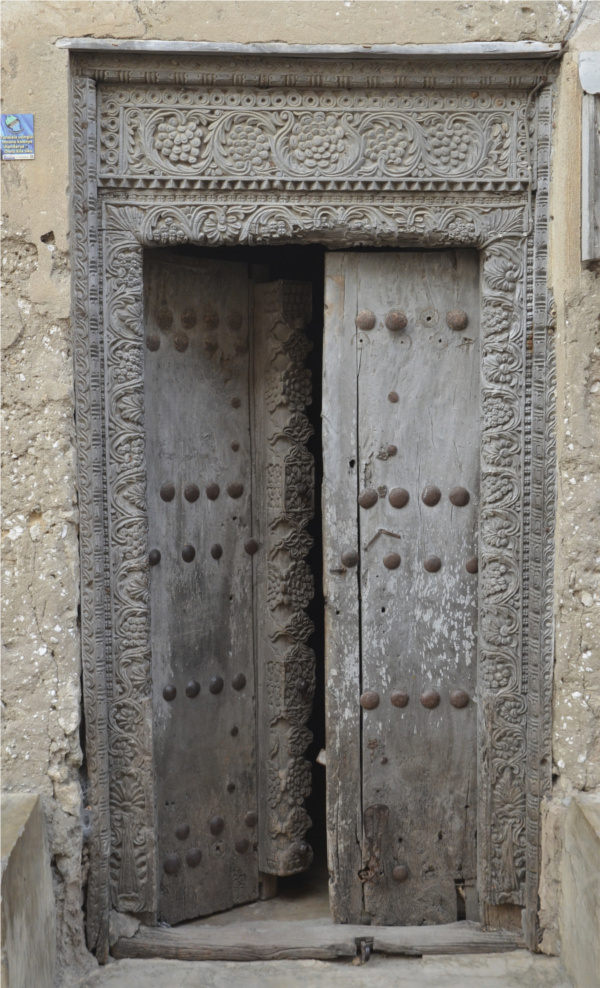
One of the famous doors of Stone Town on Zanzibar

For nearly half the DNA of any population to come from outsiders is unusual. Current estimates are that 30 to 40% of English genes come from Anglo-Saxon invaders, while no more than 15% of Turkish genes come from Turks. Which makes it quite fascinating that this culture uses an African language and has so many other African traditions. There are a few likely reasons for this. First, the 80 people we know about are all probably from the elite, and the story of the common people may be different. (The authors of this study say they are looking for non-elite burials now.) Also, the migrants from Persia seem to have been overwhelmingly male, so perhaps the migrant traders left all affairs on the women's side of the house to their wives, including the raising of children.

Ruins in old Gede, a medieval Swahili town

David Reich, one of the authors of the study, has a somewhat different take. He told the NY Times that Persian culture did not dominate outside the mercantile realm because this was not a violent conquest. As the story of Kilwa suggests, the foreign traders reached accommodations with local peoples and leaders. Without supreme political power, they were absorbed by the local world rather than dominating it. 

(Which is nice, but on the other hand the main business of Swahili merchants was always trading African slaves, which went on until the British navy stamped it out in the 1840s.)

And here is another way that paleogenetics has confirmed legends that allegedly scientific archaeologists dismissed in the 1950-2000 period. For whatever reason –something to do with Nazis and the Vietnam War, so far as I can tell – local evolution came to be the gospel. Recent histories of the Swahili coast have downplayed stories of foreign arrivals and tried to derive the whole culture (except Islam) from local traditions. But the local storytellers were right, and men who sailed across the sea from Persia were a big part of their society's origin. Likewise with the Anglo-Saxons, who really did invade Britain and conquer it, and the Lombard invasion of Italy, and many other cases. The old Irish story that their island has seen at least four waves of invasion looks better and better in the light of modern genetics.

I love living in a time when so many of these old, intractable debates have actually been resolved by science.

Friday, October 7, 2022

Mass Grave from the Second Battle of Himera, Sicily, 409 BC

DNA analysis of the remains from this burial pit shows that about a quarter of the "Greeks" who fought in this famous battle against Carthage were non-Greeks, most likely mercenaries. Graves said to be associated with the First Battle of Himera in 480 BC were more than half non-Greek. 

That's a big image worth clicking on if you like this sort of thing. (NY Times)

Tuesday, June 28, 2022

Women of the Indo-European Migration

Genetic data on the migration of steppes people into Bronze Age Europe, which probably spread Indo-European languages, has always emphasized men. The Y chromosome lineages of northwestern Europe are more than 80 percent steppes derived, while female mitochondrial DNA lineages are more mixed. But the details of how this happened remain obscure. A 2018 paper by Juras et al., which I just read, presents some data. They sampled mitochondrial DNA from nine people of the Corded Ware culture, which spread across Europe from France to Poland in the early Bronze Age. They find that in the east (Poland, the Czech Republic) the mitochondrial DNA is derived from the steppes, but in Germany it was derived from earlier Neolithic populations.

It's a small sample but it suggests a tweak to the model of Indo-European expansion. Perhaps the first invaders into the settled lands of Europe were complete tribes, men, women and children. But once they had established themselves in the new environment, perhaps it was mostly male war bands that spread the conquest farther west; and perhaps this change went along with the change from a nomadic model, in which whole communities were on the move, to a settled model in which most people stayed home and only armies marched to conquer new lands.

Sunday, December 5, 2021

The Arrival of Indo-Europeans in Southern Iberia

I recently threw myself back into reading about the very impressive Copper Age culture of southern Portugal and southern Spain, dating to between 3000 and 2500 BC. This required me to sort out the complications of the tombs at Valencina de la Concepción, because so much online writing about the site is garbled. Above is the Tomb of the Crystal Prince, otherwise "Structure 10.042-10.049 of the PP-4 Valerio Sector."

Crystal dagger from the tomb above.


Another great site is at Perdigões in Portugal, a complex of circular earthworks, burials, and buildings.

Anyway I undertook this exercise because of more news from paleogenetics concerning the population history of this region. What the new studies show is that the people of this Copper Age culture were all natives of Neolithic Europe, their genes mostly those of farmers who migrated from Anatolia, who interbred with the Mesolithic inhabitants of the regions where they settled.

El Almoyola, a famous Site of the El Argar culture

As I said, the culture of the Iberian Copper Age throve down to around 2500 BC. Then it started to fall apart; many sites were abandoned, others shrank, and the distinctive cultural expressions fade out. When we again see impressive monuments in this region, after 2200 BC, they are part of quite different cultures of the Bronze Age; for example we see many more fortified towns full of buildings with stone foundations. In Southeastern Spain the early Bronze Age culture is called El Argar. The genetics of these people are quite different. They show considerable steppes ancestry, the genetic signature of the Indo-European invaders. As usual, the change is even more profound on the male side; the available male skeletons are 100% Indo-European in the Y-chromosome line. These skeletons are mostly or entirely from the elite. So we see that the elite men of Bronze Age Spain were entirely descended from invaders in the male line. The men were often buried with swords, so these were the sword-wielding aristocrats who would dominate Europe for the next 4,000 years.


Rich burial from El Almoyola, and gold ear spools found in it

An interesting detail is that the paleogenetics also turned up signs of people from the eastern Mediterranean, a thousand years before the first known Phoenician settlements in the region. Trade goods from Italy and perhaps Syria have also been identified. The Mediterranean was to some extent a connected world even before the first real sailing ships.

Monday, September 27, 2021

Paleogenetics and Etruscan Origins

Ancient Greek and Roman writers wondered about the origin of the Etruscans. They spoke a language nothing like the Indo-European tongues of their neighbors, and their religious tradition was also quite different. Some thought the Etruscans were native to Italy, others that they had emigrated from Anatolia – presumably because there were several non-Indo-European languages spoken there. Of course some writers connected this to the Trojan War, because the Greeks liked to connect everything with the Trojan War. 

Now there is paleogenetic data that bears on the question:

The origin, development, and legacy of the enigmatic Etruscan civilization from the central region of the Italian peninsula known as Etruria have been debated for centuries. Here we report a genomic time transect of 82 individuals spanning almost two millennia (800 BCE to 1000 CE) across Etruria and southern Italy. During the Iron Age, we detect a component of Indo-European–associated steppe ancestry and the lack of recent Anatolian-related admixture among the putative non–Indo-European–speaking Etruscans. Despite comprising diverse individuals of central European, northern African, and Near Eastern ancestry, the local gene pool is largely maintained across the first millennium BCE. This drastically changes during the Roman Imperial period where we report an abrupt population-wide shift to ~50% admixture with eastern Mediterranean ancestry. Last, we identify northern European components appearing in central Italy during the Early Middle Ages, which thus formed the genetic landscape of present-day Italian populations.

Of the 48 people who lived BC, 40 were perfectly standard western Mediterranean types. So the Anatolian migration theory is out. They had a bit of steppes ancestry, so they were not isolated from the Indo-European invasion that changed the other languages of the peninsula, but for whatever reason they kept their old language while others did not.

More striking is the evidence of major immigration from the eastern Mediterranean during the Roman Empire. This was also true at Rome, but not nearly to this extent; I have to think that this is a sampling problem, and that immigrants did not really make up half the Tuscan population. 

And, again as at Rome, there is clear evidence of invaders from the north (Ostrogoths, Lombards, Franks) during the early Middle Ages.

I am just loving that I can experience all this genetic data coming in to answer age-old questions.

Friday, August 27, 2021

More Paleogenetic Data on Early Europe Yields More Evidence of Migration

Early Bronze Age Burial, Czechoslovakia

There's a big new paper this week from the Max Planck Institute ancient DNA group, based on 271 ancient genomes (206 of them new) from western Czechoslovakia dating to between 5000 and 1000 BC. Their basic argument is that besides the two big, well known migrations, the arrival of Middle Eastern farmers around 5000 BC and the arrival of Indo-European speaking steppes people around 3000 BC, there were other genetic shifts that probably represent more migrations.

They identify three different Neolithic populations, each mixed with the Hunter Gathers of a different part of Europe, that seem to have vied over this territory and shifted dominance over time. 

Steppes ancestry arrived with the Corded Ware culture around 3000 BC; but the Corded Ware population was nothing like a pure steppes population, but was mixed with both local Neolithic people and some other population, possibly from the Baltic.

And then there were further changes after the Indo-European speakers arrived. One interesting change is that the early Corded Ware people had five different y-chromosome lineages, but by 500 years later only one lineage survived, meaning that one clan of men completely ousted or outbred the others. But the people of the Early Bronze, c. 2000 BC, were different yet again.

Anyway the genetic history of Europe continues to get more complicated, with more evidence of conquest, movement, and mixing. Old notions of populations and cultures that developed in place over thousands of years have collapsed.

Sunday, May 23, 2021

Greek Paleogenetics and the Desire for Continuity

Across the world there are many societies that pride themselves on connections to their ancient past and hate it when archaeologists suggest that they are really the descendants of more recent immigrants: Japan, Ireland, India, etc. One of those places is Greece. Modern Greeks are constantly dreaming up new ways to connect themselves to the classical past, for example calling their officials Ephors or Archons. (Sometimes they do this in ways that make classicists laugh, for example when the flight school for the Greek Air Force was named the Icarus Academy.)

But are modern Greeks the descendants of classical Athenians and Spartans? After all a lot has happened in Greece since then: Celtic invasions, Alexander the Great and his empire, the Romans, the arrivals of the Slavs all across the Balkans, the Turks, the vast displacement of 1923, when Greece and Turkey exchanged a million people. The controversy over this began in the 19th century, when German and English visitors to Greece decided that the contemporary people did not look like ancient statues or act like classical nobles, so they must be Slavs or something. They were not very polite about this, which put Greek backs up against the wall.

For going on twenty years now Greek geneticists have proclaimed that every new advance in genetics confirms their continuity with the classical past; for going on twenty years non-Greek geneticists have been shaking their heads.

Now another bunch of Greek geneticists is at it again, claiming that 

Present-day Greeks share ~90% of their ancestry with Middle Bronze Age northern Aegeans, suggesting continuity between the two time periods.

The blogger at Eurogenes says he regarded this claim as so bizarre that he wasn't even going to comment on it, except that people keep asking him for his opinion. He offers this graph of what statisticians call the cline, the gradient of distance between numerical groups:

If you click on that to view it at a legible scale you can see that modern Greeks fall in between Bronze Age Greeks and south Slavs, but closer to modern Bulgarians than to anyone in the ancient world. Note also that some individuals fall a long way from the average, which is a sign of a mixed population. Our blogger thinks the way some modern Greeks are pulled toward Cyprus is significant, representing  migration from Cyprus or eastern Anatolia, perhaps in the Roman period.

The data is not really good enough to make percentile claims, but the simplest way to interpret this graph is to say that modern Greeks are a mix of ancient Greeks with immigrant groups, including Middle Easterners who came during the Roman or Byzantine Empire and medieval Slavs. 

The degree to which some modern people, even archaeologists, get upset about these numbers just baffles me. The Japanese case is especially weird, since the genetics shows the Japanese people mostly  migrated to the islands more than 2,000 years ago. That isn't long enough for you? 

But for some people it is not. They want to have emerged from a hole in the earth right where they now live – an actual claim made in court by Native American nations – and do not wish to hear about migrations or mixing. But human history pretty much *is* migration and mixing, along with conquest, plague, and sundry others breaks in continuity. Wishing for local roots that stretch back to the dawn of time will not make it so.

Thursday, December 24, 2020

DNA and Caribbean History

The native inhabitants of the Caribbean have always been something of a historical mystery. Their communities disintegrated rapidly under the assaults of the Spanish and their diseases, leaving the islands largely uninhabited by the early 1600s. The nearly empty islands, and the possibility of growing valuable crops on them, triggered a sort of land rush in which the European powers all tried to seize their own islands and have their own place in the sun. Without any natives to enslave, they brought in workers from outside. Early on this included many indentured servants and convicts from Europe, but eventually they relied almost exclusively on enslaved Africans. By 1720 the islands were populous again, this time inhabited by Africans and Europeans, and people were already wondering where the natives had gone.

David Reich's paleogenetics lab has now published a major study of old genes from the island, and they have some fascinating findings. 

First, the distant past. The islands were initially inhabited 6,000 or so years ago by hunter-gatherers genetically identical to those in Central America. Once settled they remained largely cut off from the mainland, developing "a very distinctive deep lineage." The population was low. Honestly it sounds somewhat like paradise, with a small population easily feeding itself from fishing, gathering turtle eggs, and so on. But something had to be keeping the population low, perhaps disease.

Then around 2,500 years ago Caribbean hunter-gatherers met the fate of most such people around the world: they were displaced by farmers from the mainland. So little was known about the Caribbean natives of 1492 that scholars debated where they came from, but based on the handful of surviving Carib words (hurricane is one) most guessed they came from Columbia and were related to the Arawak people. Genetics confirms this, conclusively tying Caribbean farmers to the Arawak. The genetics also shows that the hunter-gatherer population almost completely disappeared; they hung on for about a thousand years in a few places, including western Cuba, but they made almost no genetic contribution to the islanders of 1492. Nor did this data show any additional influx from the mainland later on, which contradicts claims made by many archaeologists working from changes in pottery types and the like.

As to what happened to the native islanders after 1492, the DNA shows that they did not completely disappear. Varying proportions of indigenous DNA show up in modern populations around the Caribbean: 14% in Puerto Rico, 4% in Cuba, 6% in the Dominican Republic. Which is interesting partly because Puerto Ricans look more like Native Americans than any other Caribbean people, making this a triumph of the "look and guess" school of paleoanthropology. Puerto Ricans have lately shown a lot of interest in reviving their native past, and these findings will no doubt encourage that movement.

The most controversial part of the new publication is going to be an argument that the indigenous population remained very low down to 1492:
Ancient Caribbean people avoided close kin unions despite limited mate pools that reflect small effective population sizes, which we estimate to be a minimum of 500–1,500 and a maximum of 1,530–8,150 individuals on the combined islands of Puerto Rico and Hispaniola in the dozens of generations before the individuals who we analysed lived. Census sizes are unlikely to be more than tenfold larger than effective population sizes, so previous pan-Caribbean estimates of hundreds of thousands of people are too large.
Spanish accounts seem to imply larger populations than this, and those Spanish estimates have proved to be fairly accurate for Mexico; why would they be so far off in the Caribbean? And why would there be at most 80,000 people on Puerto Rico and Hispaniola? Seems very mysterious, since agriculture based on maize and sweet potatoes supported much larger populations in the 1700s despite the brutality of Caribbean slavery.

Anyway this is fascinating, yet another way paleogenetics can shed light on questions archaeologists have despaired of answering.

Wednesday, November 18, 2020

Can Biology Class Reduce Racism?

In the Times, Amy Harmon reports on an effort by some high school biology teachers to rebut racist beliefs about genetics:

Biology textbooks used in American high schools do not go near the sensitive question of whether genetics can explain why African-Americans are overrepresented as football players and why a disproportionate number of American scientists are white or Asian.

But in a study starting this month, a group of biology teachers from across the country will address it head-on. They are testing the idea that the science classroom may be the best place to provide a buffer against the unfounded genetic rationales for human difference that often become the basis for racial intolerance.

At a recent training in Colorado, the dozen teachers who had volunteered to participate in the experiment acknowledged the challenges of inserting the combustible topic of race and ancestry into straightforward lessons on the 19th-century pea-breeding experiments of Gregor Mendel and the basic function of the strands of DNA coiled in every cell. . . .

The history of today’s racial categories arose long before the field of genetics and have been used to justify all manner of discriminatory policies. Race, a social concept bound up in culture and family, is not a topic of study in modern human population genetics, which typically uses concepts like “ancestry” or “population” to describe geographic genetic groupings.

But that has not stopped many Americans from believing that genes cause racial groups to have distinct skills, traits and abilities. And among some biology teachers, there has been a growing sense that avoiding any direct mention of race in their genetics curriculum may be backfiring.

“I know it’s threatening,” said Brian Donovan, a science education researcher at the nonprofit BSCS Science Learning who is leading the study. “The thing to remember is that kids are already making sense of race and biology, but with no guidance.”

My reaction to this is cautious and ambivalent. On the one hand, dealing with race in biology class makes a lot more sense than anti-racist math or other sorts of woke silliness. And there are some facts about race that one might convey to high school students, for example that people from east and west Africa are more different from each other than Europeans are from Chinese, or that most human variation is within rather than between populations.

On the other hand, people are bad listeners. Treating the genetics of race as a serious topic is just going to convince some kids that there is something to racist ideas, or confirm their prior beliefs in that direction. Like when politicians deny being involved in scandals and half the public hears only the connection between the scandal and the name. 

But to me the real problem is that we really know precious little about the genetics of human behavior in any sense, and therefore have no idea whether there are hereditary behavioral differences between populations. Such differences would presumably not be very large, but they could exist and they might matter. This is why I have always argued against a philosophical position that says we should treat people equally because they are all the same. I think there may well be important differences between different types of people – between men and women, between 25-year-olds and 55-year-olds, between immigrants and the native born – so I think we need to acknowledge differences and take our stand on treating people as equally as we can despite them.

I do not think the causality flows from bad beliefs about genetics to bad feelings about people of other races or groups, but the other way around. Racist pseudo-science is just window-dressing for identity affirmation and tribal hate, and is completely unnecessary to racism. Even if you could cure people of it, that would not change their feelings. In the face of commitment to an identity that provides meaning to people's lives and a structure for interpreting the world, evidence and logic are likely to be of no use whatsoever. 

Only gradual social and psychological change will help. Fortunately, that seems to be happening.