Wednesday, January 16, 2013

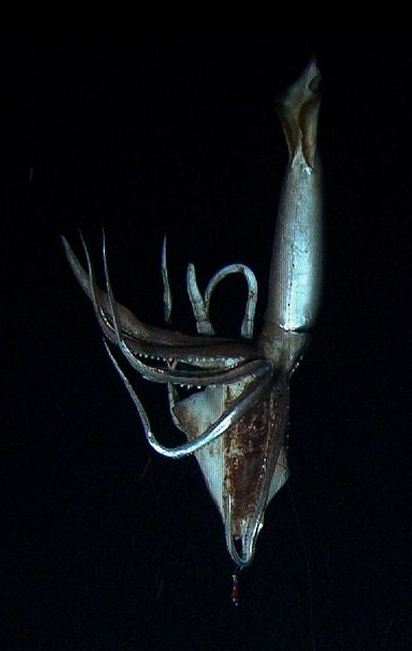
Basilica of San Zeno, Verona

Today's medieval church is Basilica of San Zeno in Verona, mainly built in the 10th century. It is most famous for something that never happened there, that is, the marriage of Romeo and Juliet, but it is an amazing building. It has the solidity and strength of the best Romanesque, but with enough refinement to render it lovely as well.

The marvelous bell tower was begun in 1045 and finished in 1178. The apse to the right is a 14th-century addition.

The famous 12th-century porch.


The bronze door of the west portal, ca. 1138.

Adam and Even, and Cain and Able, from the West Door.


The interior. I wonder if it is possible to take a tour that isn't all about Romeo and Juliet?

Obama and Gun Control

The line from certain conservative activists has always been that even if Obama was acting moderately in office, that was only because he was hiding his true socialist, anti-American nature in order to get elected. I always thought this was crazy.

I also thought it was crazy for gun-lovers to worry that Obama was coming for their guns, since gun control was one issue he had never shown any interest in.

But now the word leaking out of the White House is that Obama plans to introduce the most "sweeping" gun control legislation in decades, possibly attempting to ban both large capacity magazines and interchangeable magazines. And it sort of looks like conservatives were right about this one. Perhaps it is true that Obama kept mum about guns because his political people thought it was an electoral loser, but now that he has no more elections to run in, and the national mood has been primed for action on guns by catastrophe, he is poised to act on his true instincts and try bold action to limit private ownership of military weaponry.

But then again, he remains very cautious in the sense that he is only doing what the majority of Americans want. Most Americans support limits on gun ownership and a majority support an outright ban on "assault weapons." The politics are still tough, because the minority who love guns cares much more about the issue than the majority who fear them, but if Obama pushes this issue he will have the polls on his side.

Tuesday, January 15, 2013

Stealing Tide

The Times asked a bunch of "experts" why thieves are stealing so much Tide detergent that it has become a sort of currency in poor neighborhoods. Their answers boils down to:
  1. For the working poor, the use of brand-name products is an important status symbol, indicating that they are keeping their heads above water;
  2. Tide is known to all Americans and its packaging is instantly recognizable;
  3. The same random process of memetic drift that creates all fads.
I would add that modern, high-density liquid detergent is expensive enough that a bottle small enough to carry around is worth something. How do I get to be the kind of "expert" whose opinion is sought on questions like, why are thieves stealing Tide?

Monday, January 14, 2013

T.M. Lurhman on Magic, Belief, and Reality

Philip Zaleski, reviewing anthropologist T.M. Luhrman's book on witchcraft and other magical pursuits in Britain, published in 1989:
Ms. Luhrmann found Western magic to be a peppery mulligatawny soup of mysticism, shamanism, tarot, astrology, goddess worship, dream analysis and Renaissance hermeticism - the ultimate triumph of spiritual syncretism.
But the people who followed these beliefs were not backwoods cranks. They were professionals, engineers, and especially computer types. They were successful in the careers and their relationships, or, anyway, as successful as Christians and non-believers. It was only their beliefs that seemed outside the mainstream.
Among the most extreme propositions: that mind can directly mold matter; that all events are meaningful, and chance does not exist; that seemingly unrelated objects ''correspond'' to one another - so that, for instance, the moon, water, willows, elephants, the number nine, the letter ''S'' and the angel Gabriel are all intimately related.

How, Ms. Luhrmann ponders in her most penetrating meditation, do such tenets take hold? What leads a businessman to abandon conventional beliefs, strip naked and implore the goddess Hecate for a better secretary? Most magicians, it seems, really do believe that magic works. She found that as the fledgling magician develops proficiency, he or she begins to see new patterns and accept new assumptions - as does a specialist in any field. The magician, like anyone else, tends to remember the successful rituals and forget the flops. Events others ascribe to chance become proof of a ritual's effectiveness; if the magician performs a ritual involving water and next day sees someone crying, the tears validate the ritual. Magicians see causality where others see coincidence. The pull of any new ideology can be intense. Even Ms. Luhrmann, the dispassionate observer, found herself seduced. Beginning her fieldwork as a skeptical scientist, she began to think in magical terms. Her fantasy life deepened, as did her dreams, which exploded with mythological imagery. While she refuses to endorse magical power, she describes herself as ''hooked.'' After rituals, she feels ''vital and electric.'' She is ''astonished'' by the ''pertinence'' of tarot cards. If she finally rejects a magical view of the world, it is in large measure because ''I stood to lose credibility and career by adherence.''

Ms. Luhrmann concludes that people are too ''fuzzy'' to live by rational ideology. Rather, they stumble upon new ways of living and then compose an ideology to justify their actions. She calls this process ''interpretive drift'' - a disturbing proposition, especially since the transformation is often ''accidental, unintended,'' even ''unacknowledged.'' We are, as it were, bewitched by life, and our ideas follow suit.
I believe that this is generally true of religion. The beliefs are invented after the fact to explain things that are experienced, or felt. Practice and ritual come first, theology or ideology afterward. The nonbeliever's question, "How can you believe that?" usually misses the point. The point is the experience of faith, which feels so real and true that it justifies the creed in a way far beyond logic and evidence.

The Greek Gods

Such was the archaic religion as we know it from Homer: to posit divinities that are beyond good and evil inasmuch as they are but names for the inescapable realities of nature. "How else could this people, so sensitive, so vehement in its desire, so singularly capable of suffering," asks Nietzsche, "have endured existence, if it had not been revealed to them in their gods, surrounded by a higher glory?" Hera is marriage, the marriage bed, motherhood, and the chafing against those confinements; Zeus, the thunderbolt out of the mountain and the weather-world it stands for; his daughter Athena, the cunning to prevail in combat, and skill to excel at the loom or potting wheel; Aphrodite, the glamour and devastation of desire; Ares, her consort, the brute inevitability of war; Artemis, the safeguards of chastity and the hazards of childbirth; her brother Apollo, the art of healing and the ruthlessness of disease; Poseidon, the bounty and peril of the sea. . . . The Homeric gods are a glorifying mirror in which the mutability of nature and of ourselves is found again -- immortally joyous, forever shining.

--Benjamin Taylor, Naples Declared

Sea Wolves

On the western coast of Canada, where the Great Bear rain forest meets the Pacific Ocean, live wolves who make their living as much from the sea as the land. These wolves are a distinct sub-species, smaller than inland wolves and with other differences in their fur and coloration. They swim often and well, crossing miles of ocean to reach islands where they forage. They eat clams, mussels, crabs, fish, sea birds, and even beached whales; when the salmon run they catch them by the hundreds and then eat their heads, leaving the rest of the fish behind. Sometimes they kill seals, when they can catch them away from the water. They also hunt deer and smaller terrestrial mammals like other wolves do, but some packs get as much as 75 percent of their food from the sea.

I discovered them looking for a book that my 10-year-old son could use for a book report in school. Pulling titles off the animals shelves of my library more by size than anything else, looking for something with the right amount of text, I happened to yank out The Sea Wolves by Ian McAllister and Nicholas Read. This book begins with an intensely annoying diatribe against the human hatred of wolves, complete with an analysis of The Three Little Pigs, followed by a lot of useless stuff about how nice wolves really are. As if every 10-year-old in America didn't already prefer wolves to  pigs. Our hatred of wolves did rise to irrational heights, but it was rooted in the fact that wolves love to eat sheep, which from their perspective are hefty servings of meat just as tasty as deer but bred to be stupid and slow. Now that we no longer have to worry about going hungry if a wolf takes our lambs, we like wolves again. But once you get pas the annoying introduction, The Sea Wolves is a cool book with lots of great pictures and much interesting information about these wolves and their environment.

Parts of Canada's western coast remain profoundly wild, reachable only by boat or by many miles of hiking through roadless forest. This means the coastal wolves have little experience of people; some even call them "the last wild wolves." I find them fascinating, and discovering them made me feel lucky -- lucky to have stumbled across this book, and lucky to live in a world where so much information about the world is at my fingertips.

Certainty

If a man wishes to be sure of the road he travels on, he must close his eyes and walk in the dark.

--St. John of the Cross

Sunday, January 13, 2013

Peary, not at the North Pole

As an aside, I note that National Geographic has accepted that their guy Robert Peary never really reached the North Pole. This photo, from their 125th anniversary retrospective, is captioned
Robert Peary’s 1909 Arctic expedition likely came within ten miles of the North Pole—closer than any explorers before them.
It isn't Peary's mistake that bugs me, it's the way he and his powerful backers acted afterward to cover it up, and make it seem that he really did reach the pole, that makes me insist that he didn't "reach the North Pole."

National Geographic is 125

Let us pause to celebrate the organization that has done so much to bring the world's wonders to those of us who mostly stay home. Above, Mathew Stirling unearths Olmec civilization in Mexico.

Jane Goodall with one of her chimps.

The Leakeys at Olduvai Gorge.

Richard Adams at Rio Azul. Just four of the many, many important projects around the world partially funded and then brought to the public by National Geographic.

Saturday, January 12, 2013

Relativism and The World Until Yesterday

Anthropologist Wade Davis hates Jared Diamond's latest book, which is about what we modern people might learn from the world's surviving tribal peoples, and in his review he goes after all of Diamond's other books, too:
The other peoples of the world are not failed attempts at modernity, let alone failed attempts to be us. They are unique expressions of the human imagination and heart, unique answers to a fundamental question: what does it mean to be human and alive? When asked this question, the cultures of the world respond in 7000 different voices, and these answers collectively comprise our human repertoire for dealing with all the challenges that will confront us as a species as we continue this never-ending journey. It is against this backdrop that one must consider the popular but controversial writings of Jared Diamond, a wide-ranging scholar variously described as biogeographer, evolutionary biologist, psychologist, ornithologist and physiologist. In Guns, Germs and Steel, Diamond set out to solve what was for him a conundrum. Why was it that some cultures such as our own rose to technological, economic and political predominance, while others such as the Aborigines of Australia did not?

The very premise of Guns, Germs and Steel is that a hierarchy of progress exists in the realm of culture, with measures of success that are exclusively material and technological; the fascinating intellectual challenge is to determine just why the west ended up on top. In the posing of this question, Diamond evokes 19th-century thinking that modern anthropology fundamentally rejects. The triumph of secular materialism may be the conceit of modernity, but it does very little to unveil the essence of culture or to account for its diversity and complexity.

Consider Diamond's discussion of the Australian Aborigines in Guns, Germs and Steel. In accounting for their simple material culture, their failure to develop writing or agriculture, he laudably rejects notions of race, noting that there is no correlation between intelligence and technological prowess. Yet in seeking ecological and climatic explanations for the development of their way of life, he is as certain of their essential primitiveness as were the early European settlers who remained unconvinced that Aborigines were human beings. The thought that the hundreds of distinct tribes of Australia might simply represent different ways of being, embodying the consequences of unique sets of intellectual and spiritual choices, does not seem to have occurred to him.
When I consider what Davis is saying here, I find it true and ridiculous at the same time. I agree that each culture is a different way of being, that each has its own wonders, and that it is foolish to assume our own superiority and imagine that everyone wants to be like us. So far as we can tell, our astonishing civilization, with its technological wizardry and awesome economic productivity, has not made us much happier than our Paleolithic ancestors were. The most amazing thing about humanity may not be the point we have arrived at, but how many different ways of being we have created over the 200,000 years of our existence.

And yet modern culture is at least very different than all others that came before. It has already absorbed hundreds of disparate cultures and tribes and looks set to absorb, and in a sense destroy, all of the rest. Isn't Davis even a little bit curious about how it came to be, and why it arose in one part of the world than in another? I am, and I think it would be an important question even if we all agreed that modern culture was clearly worse than every other.

But is there any sense in which modernity is clearly superior to what came before? I think there is. First, modern technology has allowed the existence of billions more people than could ever have lived without technological progress. Davis is very eloquent about what an amazing thing each culture is, but what about each person? We have also greatly expanded the range of our knowledge. Thanks to anthropology and history, I know something about dozens of different cultures; if each culture is an amazing thing, isn't our ability to learn about many different ones something good? What about some of other creations, like democracy, human rights, equal legal standing for women, and so on; does Wade see any value in those? Wade writes,
The goal of the anthropologist is not just to decipher the exotic other, but also to embrace the wonder of distinct and novel cultural possibilities, that we might enrich our understanding of human nature and just possibly liberate ourselves from cultural myopia, the parochial tyranny that has haunted humanity since the birth of memory.
If anthropology presents us with the possibility of escaping from a narrow-mindedness that has troubled us from our origins, doesn't that at least open the possibility of our creating a society better than any than any that came before? As many people have noted, pure relativism is self-refuting, since the relativist would have to admit that cultures insisting on their own cultural superiority are equal to his own worldly way. Any real ethical system has to recognize that some acts are right and others wrong, and therefore to postulate that some societies at least could be better than others.

Wade also seems bothered by the premise of Diamond's latest book:
Traditional societies do not exist to help us tweak our lives as we emulate a few of their cultural practices. They remind us that our way is not the only way.
I found this huffiness off-putting. All cultures borrow from other cultures; is there something wrong with our copying practices from people in New Guinea? Doesn't that rather represent the open-mindedness that Wade wants to praise? Wade also seems, to use an awful word, to reify culture, that is, to turn it into a pure thing that never changes and is subject to no differences of interpretation. I dispute this. I think that many cultures have existed in states of flux, have hosted rival schools of thought, have experienced violent upheaval and even civil war over cultural questions. Change is part of culture, not a violation of it.

I think that humanity's cultural diversity is a splendid thing. But I am suspicious of anyone who has so suspended his own moral judgment that he cannot single out practices in other cultures for condemnation, or recognize the unique achievement of modernity.

I wonder whether Wade thinks there is any sort of cosmic point to our existence. To many scientists, the point of humanity is to know; through our intelligence, they believe, the universe becomes aware of itself. And of course religious believers think that over the millennia we have become more aware of God and his teachings. What does Wade think?

Snow in Jerusalem


Edward Redfield

Edward Redfield (1869-1965) was the leading spirit of a school of painters sometimes known as the New Hope Impressionists. Centered on Philadelphia, they ignored more radical developments in the art scene and concentrated on rendering their world, both country and city, in pleasing tones. Redfield painted a lot of good pictures but none I would call great. Part of his appeal to me is that he painted a world I have spent a lot of time in, the old farms of the Delaware Valley. Above is my favorite Redfield painting, Trout Brook (1930)

The big critics find this stuff boring, viz. this from Guy Pene du Bois:
The Pennsylvania school born in the Academy at Philadelphia or in the person of Edward W. Redfield is a very concise expression of the simplicity of our language and of the prosaic nature of our sight. It is democratic painting--broad, without subtility, vigorous in language if not absolutely in heart, blatantly obvious or honest in feeling. It is an unbiased, which means, inartistic, record of nature.
Above, Mullins Hill.

But, I mean, sometimes inartistic, blatantly obvious painting without subtility is more pleasant to be around than kind that grapples with the depths of the soul. Dogwoods (1946).

Redfield did all of his painting outside, including the winter scenes, sometimes tying his canvas to a tree. He never made preliminary sketches and finished almost all his works in one sitting. As one critic put it,
Redfield merged the French impressionist aesthetic with the American mythos of the “strenuous life.”
Above, The Old Mill (1919).

And some of his stuff really looks rather rushed.  Above, Canal at Lambertville (1906).

As an aside, imagine how much history someone who lived from 1869 to 1965 experienced. Above, The Rock Garden, Monhegan Island, Maine (1928).


Redfield was born in Bridgeville, Pennsylvania and after extensive travels in Europe he spent much of his later life on a farm in Center Bridge. Late afternoon Reflections, Bucks County and Springtime Pasture.

Redfield reached the peak of his career between 1900 and 1920. In those years he had 15 solo exhibitions and won so many awards that most biographers don't even try to count them. He was very popular and his paintings sold very well. Above, The Burning of Center Bridge (1928), unusual in that Redfield painted it from memory.

Late Afternoon.

Friday, January 11, 2013

Beyond the Stars Other Worlds

Stars, and beyond the stars other worlds
Love faces more trials

Not lifeless this speckled sky
Hundreds of caravans trail here

Earth’s scent and shade are not enough
There are many gardens, many nests

If one home is lost, why grieve
There are other vales wailing

You are a falcon
Fly

Gone the days I was alone in the crowd
Stars, my confidants

--Iqbal, translated by Rafiq Kathwari


The Water Supply of Ancient Petra

Ancient Petra today sits in a dry, desolate part of Jordan. Two thousand years ago, though, it was a thriving city surrounded by rich fields. Terraces were built on the hills that trapped water for crops, and streams were dammed to store water or direct it into underground channels:
Rainfall in the region occurs only between October and March, often in brief, torrential downpours, so it was important for Petra’s inhabitants to capture and store all available water for later use during the dry season. Over the centuries, the Nabataeans of Petra became experts at doing so. The broad watershed of sandstone hills naturally directed water flow to the city center, and a complex system of pipes and channels directed it to underground cisterns where it was stored for later use.
One of the authors of a new study of the water system says,
Perhaps most significantly, it’s clear that they had considerable knowledge of their surrounding topography and climate. The Nabataeans differentiated watersheds and the zones of use for water: water collected and stored in the city itself was not cannibalized for agricultural uses. The city’s administrators clearly distinguished water serving the city’s needs from water to be redirected and accumulated for nurturing crops. Thus, extensive farming activity was almost entirely outside the bounds of the city’s natural catchment area and utilized separate watersheds and systems of runoff.
I bring this up mainly as a corrective to the notion that the past was much simpler and less bureaucratic than the present. Many ancient civilizations depended on farming regimes that were minutely regulated by central authorities, and Petra seems to have been one of them.

The Feminist and the Cowboy

Rod Dreher has been following the saga of Alisa Valdez, who wrote a book about a northeastern feminist (herself) who fell in love with an unreconstructed cowboy:
The cowboy is 6 feet 2 inches tall with a cleft chin, strong jaw, and well-formed lips (“mama said meow”). He could buy all his accessories in a Brooklyn men’s shop, but he doesn’t have to because he’s the real thing, a real rancher in a real cowboy hat who herds real cattle and wears his faded Wranglers so well that they turn the heads of the gay couples at the hipster bar where they go on their first date (back when [the author] still believed it was OK for the woman to pick the location of a date). Our heroine’s attraction to him—that is, the animal attraction of a trash-talking feminist who grew up in a Marxist, Barbie-free household to this … this … caveman, this brute with a pickup truck and a gun rack who watches Fox News and eats steak—comes as an unwelcome surprise to her at first. She wonders: Aren’t all conservatives “stupid! Or evil!”? Shouldn’t a good feminist only be into guys in tweed suits who recycle? Isn’t it a liberal sin to be turned on by big, strong, leathery, tanned hands? But then she turns to Google and realizes that science and biology are on the side of her libido. Feminism may have covered our eyes with its “dreary shroud of lies,” but nature knows the truth, which is that men and women are different. After that, the revelations come fast: “We are the vessel. They are the elixir and the funnel. We are the earth. They are the plough and seed. They give, we take. We open, they enter.” [The author], like all womankind, was “programmed, sexually and emotionally, to get excited by a man who took charge.” Her first night at the ranch, Al Green on the radio, the “angels sang arias” and “the earth moved.” She would tell you more details about that night, but the cowboy has forbidden it.
But how quickly things change: Between the time the book was finished and when it appeared on the shelves, the cowboy revealed that he was an abusive jerk and threw the author out:
while I set out to write a memoir that was a love letter to a man I was deeply in love with, a man who challenged me in myriad ways, a man who changed my life profoundly, a man I respected and honored greatly at the time, what I actually wrote was a handbook for women on how to fall in love with a manipulative, controlling, abusive narcissist. The fascinating thing about the release of the book, for me, has been just how many reviewers have seen what I failed to see when I wrote the book: That the cowboy was controlling and abusive. I simply never saw it then.
As Dreher says, the publishers are probably kicking themselves for ever entering into a deal with the obviously unstable Valdez.

Emile Simpson on Afghanistan

Former British infantry captain Emile Simpson has written a book on war and politics in modern times, and includes a section on Afghanistan, where he served three tours. Tom Ricks has a review:
Simpson's core observation on the Afghan war is that when war is simply violent politics, one shouldn't expect it to end, because politics doesn't end. As he writes in his book, "The outcomes of contemporary conflicts are often better understood as constant evolutions of how power is configured." (P. 2)

Once you see the conflict in Afghanistan as political at its core, then just talking about the enemy as a unitary force makes no sense. For example, when in 2005 Helmand's provincial governor was ousted from office and so could not pay his followers, he sent them to work for the Taliban, which was hiring. "Akhundzada and his men did not ‘change sides'; they remained on their own side." (P. 44)

Seeing military action through a political lens, as he advocates throughout the book, also puts coalition operations in a different light. Wresting control of Kandahar city from the Taliban might seem to make military sense if it is the enemy's center of gravity, he notes. But think of it instead as a political problem. "In political terms, to have identified Kandahar city as the decisive point was a bold move; however, for a political consultant in a US presidential election, it would be like the Democratic Party investing massive resources in trying to win Texas." (P. 100)

He also warns that it is easy for the Taliban's leaders to negotiate, because it gives them legitimacy, but hard for them to reach any agreements, because then they would have to enforce them, and they can't. "If the leadership were to negotiate a political settlement only to have it ignored by the groups it claims to control, it would lost all credibility." (P. 78)

He thinks that official corruption is "a significantly more relevant issue than the insurgency" in terms of the future stability of the Afghan state. (P. 152)
Interesting.

Crimean Treasure Hidden from Attacking Romans

At the fortress of Artezian in the Crimea, Ukrainian archaeologists have discovered two treasures that they believe were buried when the Romans attacked the town in 45 CE. Sadly for the owners, the Romans took the town and slaughtered most of the inhabitants, which explains why the treasure was never recovered. At least the Romans didn't get it.


Why Our Hands Get Wrinkly in Water

Science!
The smooth skin of human hands and feet becomes furrowed after extended periods in water. Though often assumed to be a result of water passively seeping into the skin, the phenomenon is actually caused by the nervous system constricting blood vessels. As early as the 1930s, surgeons noticed that no wrinkling occurred if a finger nerve had been severed, so furrowing has been used as a medical indicator of nerve function. But what evolutionary purpose wrinkling serves, if any, remained a mystery.
I had heard the water entry explanation before, and it never made sense to me; shouldn't added fluid make your fingers swell up like when they are injured, not get wrinkled? Prunes and raisins get wrinkly when the dry. And since we learned  in the 1930s that this was actually a nervous system response, how come nobody ever told me?

Since the wrinkling is something your body does on purpose, why does it do that? Some scientists have now hypothesized that the wrinkles form because the added roughness helps us to manipulate wet objects. They had volunteers move wet objects around before and after soaking their hands in water for 30 minutes, and the resulting wrinkles did indeed help them move the wet objects more quickly. Interesting.

Cleaning up Our Mess

That mess of marshes, bridges, rail yards, tool gates, and so on that you pass through on your way into New York via the George Washington Bridge used to be a toxic wasteland. Every sort of nasty chemical had been dumped there for over a century, and the marshes were in bad shape.

Now, though, the wetlands around New York City are gradually being cleaned up and made livable again. The latest propaganda bulletin from my corporate employers touts our involvement in one of these projects, salt marsh restoration in Hackensack, New Jersey. This project involved removing and landfilling the most contaminated soil and capping the rest with comparatively clean sand dredged from New York's shipping channel. From the brag sheet:
The award-winning project created 42 acres of new wildlife habitat and additional bridges and recreation trails for bikers, hikers, paddlers and other outdoor enthusiasts. The project also restored wetlands and salt marsh habitat and added anadromous fish spawning habitat to the Hackensack River. While also improving the environment, these efforts have restored fisheries and will support more resilient coasts in the face of climate change.
We are still doing some scary things to our environment, like dumping vast quantities of hormones and mood altering drugs. But in many ways our environment is getting cleaner every year, and this is something we should celebrate.

Wednesday, January 9, 2013

Today's Castle: Caisleán an Phuca

Caisleán an Phuca, or Castle Pook, is a stone keep in County Cork, Ireland. Its name means "Castle of the Pooka." The castle was built in 1380 by Geoffrey the Red of the Synan family. The Synans were Normans who came to Ireland in the twelfth century. They built at least five castles in Ireland.

Enough of Castle Pook survives that you can climb the stairs to the upper floors and look out through the cross-shaped windows.

But none of the upstairs rooms are intact.


But more on the name. One authority tells us,  "In the fairy mythology of Ireland the Phouca or Pooka is described as a misshapen imp, haunting lonely glens and dark recesses." And indeed Castle Pook took its name from a nearby cave said to be haunted by such a being.

There are many Pooka's Rocks and Pooka's Caves in Ireland; in fact there is at least one other castle with Pooka in its name, Carrigaphooca Castle or Castle of the Pooka's Rock (above). A little valley known as Gleann an phuca is famous in folklore as a place where the fairy and human worlds meet, and many men have been taken away to join the fairy dance. Oh, if only.

Stephen Shennan, Genes, Memes, and Human History

Archaeology is by its nature an inductive, data-rich, detail-oriented science. What most archaeologists do is extract objects from the ground using extraordinary care, making meticulous records of the process, and then analyze them using their minute knowledge of similar sites left by the same or similar cultures. You can read thousands of pages of archaeology without encountering anything the deserves the name of "theory," or any big idea about the past.

Yet there are big ideas in archaeology. Especially as it is taught in universities, archaeology is all mixed up with notions of cultural evolution, ethnic identity, gender studies, and so on. I find, though, that these sorts of ideas have almost no impact on how I do my work or what I hear about when I go to archaeological conferences. This brings me to Genes, Memes, and Human History: Darwinian Archaeology and Cultural Evolution (2002), by British archaeologist Stephen Shennan. This is an excellent book, and in fact I would say it is the best theoretical, big-picture work by an archaeologist I have read in a decade. It is full of fascinating information about humanity's past, and some of the ways that past might have been shaped by natural selection. As an attempt to re-invigorate archaeological practice with an infusion of evolutionary science, though, it largely fails, because the issues it deals with intersect only seldom with archaeology as it is normally done.

Shennan, like the rest of the world, is fascinated by humanity's evolutionary history and the impact our genes have on who we are and how we live. Like almost anyone with any scientific interests, he is dismayed by the casual way assertions about genes for this and that are thrown around in the popular discourse. He suggests that there is one discipline that can show us how the intersection of our genetic heritage and our cultural creativity has worked out in practice, and that is archaeology. Archaeology shows us how people actually lived in the past, providing a million years of real data instead of mere "men are from Mars" speculation. In the other direction, evolutionary theory can inform archaeologists' attempts to figure out what their data means, and questions about genetic vs. cultural evolution provide an agenda for archaeological research.

There are a few places in which Shennan makes this work wonderfully. My favorite concerns the apparently discontinuous nature of the archaeological record. Based on how much they have found from various cultures, archaeologists get the impression of major fluctuations in the populations of the areas they study. In the Chesapeake region, for example, you can hardly put a shovel in the ground without finding artifacts from what we call the Savannah River culture of around 2500 to 2200 BCE. Artifacts for the following 500 years are, by comparison, rare. Shennan presents data from intensely studied parts of Europe, such as the Swiss lakes, showing what appear to be waves of intense occupation, separated by empty centuries. But are these population fluctuations real, or are they an artifact of how archaeologists work? In the Chesapeake region there are archaeologists who believe the fluctuations are illusory. They think there were plenty of people around in the 2200 to 1500 BCE period, but we don't recognize them because their tools were not distinctive, their settlements were in places where they were less likely to survive, or we are simply mis-identifying their remains.

Shennan presents data from human evolution that may have a real bearing on these questions. He notes that humans are capable of breeding very fast. We can, when we want to, produce children three times as fast as chimpanzees or bonobos. In fact our breeding potential is so great that if you look at any traditional culture, whether peasants or hunter-gatherers, you find that people are taking active steps to limit fertility. (Abortion, infanticide, requiring young couples to accumulate property before they can marry, and so on.) Why would we have evolved this ability to breed rapidly, if in practice we rarely use it? One explanation would be a history punctuated by population crashes and rebounds. Those who could produce children quickly to occupy the depopulated landscape would have a huge evolutionary advantage, leading over the millennia to our remarkable fertility. The convergence of these two lines of evidence, archaeological and physiological, makes a very strong case that human populations have in fact been highly unstable, and therefore that the discontinuities in the archaeological record do represent population booms and crashes.

Another fascinating section of the book concerns what Shennan calls life history strategies. You cannot get a very clear idea of an organism's evolutionary fitness by observing it an any one time in its life. If you consider just that one moment, you might think the organism was sabotaging its own reproductive chances and that Darwin had things all wrong. For example, sometimes wolves old enough to breed stay with their parents for another year, helping to raise a new litter of siblings instead of looking for a mate and setting up their own families. Long-term studies of many wolf packs have shown, though, that wolves who do this acquire skills that help them when it comes to raising their own offspring, so forgoing a year of breeding potential may be worth it in the evolutionary long haul. This is especially true in lean years, when most pups of inexperienced parents die anyway. Putting off mating is a strategy that may actually lead to more surviving offspring over the whole life of the animal.

Humans, of course, use many different life history strategies to maximize their evolutionary success. Shennan cites two amazing, long-term studies of well-documented human groups to show this. Farmers in the German district of Friesland left most of their property to a single son, and other sons had to leave the district or look for other kinds of work. Daughters were married off to other farming families. Historian Eckart Voland has shown that these families invested  much more in their daughters, through dowries, than in their non-inheriting sons. Why? First, Voland showed that property owners left many more descendants than those without property. Providing large dowries made it possible for daughters to marry other property-owning farmers and leave many descendants, whereas non-inheriting sons would likely not leave many descendants no matter what was done for them. Similar effects led lower-ranking nobles of Renaissance Portugal to provide large dowries for daughters while sending younger sons overseas, into the army, or into the church. Historian James Boone showed that the daughters of minor families had more descendants than the sons even when they lived long lives, which partly explains why those families treated younger sons as expendable. Younger sons of minor families were far more likely to die in war than either elder sons or the younger sons of the very top clans.

There is much, much more in Shennan's book, from history, ethnography, and archaeology, and I highly recommend it.

As an archaeologist, though, I found it in many ways discouraging. The data Shennan uses to advance evolutionary arguments comes mostly from ethnography or history, not archaeology. Where archaeology does appear the argument depends on remarkable sites and remarkable circumstances, for example an entire German valley that was minutely explored by archaeologists before the whole place was dug up by coal companies. The preservation of animal bone seems to be quite extraordinary at coastal sites in northern California, allowing us to make lots of inferences about hunting and fishing strategies that could never be made from the typical site, or from any site in my part of the world. The neolithic villages around Swiss lakes have been exhaustively explored by archaeologists for a century, and the preservation of large amounts of waterlogged wood allows us to date them very precisely using tree rings. It is only in these special cases, it seems, that archaeology is exact enough to support the kind of theorizing Shennan wants to do. Does that make the rest of it a waste of time?

I would like to make two criticisms of Shennan's approach. One concerns disease, about which Shennan says next to nothing. Over the past 10,000 years infectious disease has been the biggest killer of humans. How has this impacted calculations of advantage, life history strategies, and the like?

My other serious comment involves Shennan's approach to culture, which is very mechanistic. He spends a great deal of time on food acquisition and the attendant technologies, with a whole chapter on "optimal foraging." He also devotes much attention to levels of political organization, that is the rise of chieftainships and early states, and ways to distinguish between chiefly tribes and those with more egalitarian organizations. All fine. But what about the other side of culture, the things that fall under headings like art and religion? Humans put great effort into these things, and in many cultures investment in artistic expertise or religious knowledge is a very successful path to worldly success. Why?

Shennan's approach to culture -- and I have the impression that this is generally true in British anthropology -- is missing the dimension of psychology. A huge amount of what we do is designed to make us feel good. It is designed to entertain us, to move us, to give us confidence, to make us feel that we are part of something larger than ourselves. Some of the liveliest questions in evolutionary theory concern exactly these matters: what is the evolutionary purpose of religious ritual or fertility magic? On these matters the best book I know is still Weston La Barre's The Ghost Dance, and I wish  Shennan would read it and incorporate some of its insights into his view of past cultures. Unless you understand that people in the past felt all the psychic pains and glories that we feel, you will never understand their lives or the record they left behind.

A Snake Goddess from the Road Gravel

This terracotta plaque was found in the Athenian agora in 1932. But it was found in road fill put down during the 7th century BCE, and people have long wondered who the goddess might be and where it came from. Plaques like this were used as votive offerings at shrines, and even when they were removed from the shrine they were usually buried in pits rather than tossed out as trash. A new study of the objects found with the plaque says they include spindle whorls and pottery disks, which were often left as offerings to the goddess Demeter. So, says Michael Laughy of Washington and Lee, the plaque was probably also once an offering to Demeter and probably depicts her. Demeter had numerous shrines in Attica, and one of them must have been demolished or renovated or something, leading to a pile of votive offerings ending up in the road gravel.

Tuesday, January 8, 2013

Second Elegy

But we, when moved by deep feeling, evaporate; we breathe ourselves out and away.

-Rilke

Why Aren't More Women Libertarians?

Discussion of this question has been, I gather, flying around on twitter and what all. I think the obvious answer is that libertarianism is basically an adolescent male fantasy that some men never grow out of. But let David Frum put it more pithily:
Maybe the best answer to why women reject libertarianism is that so many women feel they already spend enough time with toddlers.

Never too Old

Gary Marcus:
The critical-period effect is the idea that you can’t do certain things—like learn a language, or learn an instrument—unless you start early in life. It’s a discouraging thought for anyone past adolescence. But, recently, the evidence for this idea had started to unwind. . . .

Amblyopia is a visual disorder in which the two eyes don’t properly align; sometimes it’s called “lazy eye.” The standard medical advice is to treat your child early, by getting them to wear an eye patch over the good eye (in order to strengthen the weak one). If you don’t treat the problem early, you can just forget about ever fixing it. Just after my book went to press, however, Dennis Levi, the dean of the School of Optometry at Berkeley, conducted a brilliantly simple study that was easy to conduct, yet would have seemed like a waste of time to anybody steeped in critical-period dogma. Levi and his collaborator stuck eye patches on the good eye of adult amblyopics, aged fifteen to sixty-one, whom everyone else had written off on the presumption that they could not learn anything new. He then set his subjects down at a video game—a first person shooter called Medal of Honor: Pacific Assault, to be exact—and told them to have fun. Levi found that his subjects got better at virtually every aspect of visual perception he could measure. It wasn’t that it was too late for adults to overcome amblyopia, it was that the myth of critical periods had kept people from trying.
Via Andrew Sullivan.

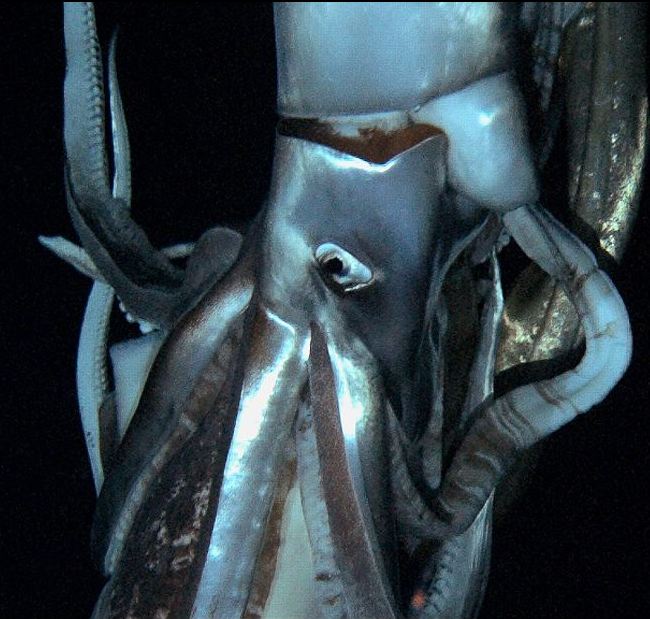
Giant Squid at Home

A Japanese crew has finally succeeded in capturing video of a live giant squid swimming in the ocean depths. What you can see online is pretty poor; perhaps they are saving the good version for a TV special. These still pictures are nice, though.

Status, Dress, and the Shoes of Roman Children

Just about everything we like to bemoan about our own consumerist obsessions was pioneered by the Romans. Consider the habit of dressing small children in fancy garb, as a way of showing off their parents' status. A new study of shoes from Roman military bases shows that the children of officers wore much fancier shoes than those of ordinary soldiers. Most of the shoes cited in the study come from Vindolanda on Hadrian's Wall, where excavations have turned up more than 4,000 shoes.

Above and top, elaborate carbatinas worn by officer's children. Below, a miniature felt marching boot worn by the child of a common soldier.

A Trove of Figurines from the Greek Neolithic

I was reading about the latest collection of small, crude figurines from neolithic Europe -- about 300, found all over the small village of Koutroulou Magoula, occupied between 5800 and 5300 BCE -- when it struck me that this figurine-making habit is something quite remarkable.

From the Paleolithic to the Bronze Age, Europeans turned out these things by the thousand. They are made of stone, bone, ivory, and especially clay. Some are found in burials or other ritual contexts, but others come from trash  heaps or the floors of houses. The impulse to create human forms seem to have run deep, and to have endured for a very long time. This is certainly not universal; across much of the world such objects are almost unknown.

But in central and southeastern Europe, they are inescapable.

I can't think of what might explain such a long-lived cultural quirk. Was it a religious impulse, related to cults of anthropomorphic goddesses or semi-divine heroes? Was it a habit, passed on because such idols were lying around everywhere people had lived, and people who found them thought they were neat and made their own? Beats me.

Monday, January 7, 2013

Jung's Gnosticism and the Modern Condition

Besides the many books that he published, psychotherapist and mythographer Carl Jung also wrote one that never saw the light of day. The Red Book was a hand-written, illuminated manuscript in which Jung recorded certain visions and dreams of his own in which, he thought, he had received revelation about the true state of the universe. Jung's son and executor refused to let it be published, which led to all sorts of rumors about its content. Once the son was dead, though, the forces of capitalism and scholarship went to work on the Jung Foundation, and now The Red Book has at last been published.

According to Catholic historian David Bentley Hart, it was withheld by Jung's family not because it is shocking but because it is embarrassing, and I suspect he is right.
The official story of the book’s genesis is that Jung began receiving revelations in 1913, when he was thirty-eight years old, beginning with three premonitory trances in which he twice saw a great flood inundating Europe and once saw something like rivers of blood glowing on the far horizon. He would have dismissed the episodes as symptoms of mental fatigue had not the onset of war the next year convinced him that they had been genuine auguries of the future. So he undertook to lay open his thoughts to whatever other messages his unconscious mind might care to send him and soon began suffering terrifying and absorbing visions and auditions (and, apparently, the odd paranormal event), which he called his “active imaginings,” but which he sometimes feared might be signs of incipient psychosis. 
Hart adds, "Some of that may be true."

As Hart describes them, Jung's visions sound like a cross between Dante's Divine Comedy and bad Dungeons and Dragons:
Along the way, he encounters a succession of allegorical figures who, we are informed, are not merely fictions of his own devising, but real and autonomous powers dwelling in the depths of his psyche. The most important of these is Jung’s special spirit-guide, Philemon, an ancient magician with a flowing white beard, a kingfisher’s wings, and the horns of a bull. Jung also meets a woman who turns out to be his own soul personified; the hero Siegfried, whom he rather discourteously murders; a bird-girl; a one-eyed tramp dying by the wayside; a jocund rider in red who reveals himself to be the devil (and who helps put Jung in touch with his vegetative side); a heretical Christian anchorite from the Libyan desert; a huge, horned, axe-wielding god named Izdubar (or Gilgamesh) who has been made lame by the “terrible magic” of science and whom Jung reduces to the size of an egg and places in his pocket; the Cabiri (ancient Greek chthonic deities), who are really only subterranean gnomes; the disembodied shade of Christ; and so on.
Jung was very interested in the Gnostics of late antiquity, and his visions are, says Hart, "saturated" with Gnostic imagery and sensibility. Like the Gnostics, Jung longed to find the secret knowledge that would allow him to somehow get beyond the visible world and grasp the true order of the universe. But unlike them, he did not equate that order with God. This very much offends Hart. Jungs visions, he says, are
almost wholly devoid of the special pathos that is the most enchanting, sympathetic, and human aspect of ancient Gnosticism: the desperate longing for escape, for final liberation, for a return to the God beyond.
And this is where Hart lost me. I can certainly believe that Jung's manuscript is nonsense on stilts; after all, much of the stuff he published while he was alive was awfully bad. Like the strange brews that spilled from Swedenborg, Blavatsky, and all the rest of their dreaming ilk, I am sure that Jung's symbolic universe would leave me cold. Or laughing.

But I, of course, sympathize with Jung's refusal to equate the order of the universe with a loving god, and what's more I don't see anything nihilistic about the direction of his thought. Hart, as a Christian, seems to assume that any philosophy without a loving god, and without eternal bliss for the saved, is empty or trivial:
Our spiritual disenchantment today may in many ways be far more radical than even that of the Gnostics: We have been taught not only to see the physical order as no more than mindless machinery, but also to believe (or to suspect) that this machinery is all there is. Our metaphysical imagination now makes it seem quite reasonable to conclude that the deep disquiet of the restless heart that longs for God is not in fact a rational appetite that can be sated by any real object, but only a mechanical malfunction in need of correction. Rather than subject ourselves to the torment and disappointment of spiritual aspirations, perhaps we need only seek an adjustment of our gears. Perhaps what we require to be free from illusion is not escape to some higher realm, but only reparation of the psyche, reintegration of the unconscious and the ego, reconciliation with ourselves—in a word, therapy. . . .

This, at least, is the troubling prospect that The Red Book poses to my imagination. It may truly be possible for an essentially gnostic contempt for the world to be inverted into a vacuous contentment with the world’s ultimate triviality.
But, I want to know, what is wrong with trying to set our own minds in order, the dreaded process that Hart calls "therapy" as if that were a terrible insult? And why does a world without a personal, caring sort of god have to be trivial, vacuous, or even troubling?

I, on the contrary, find the Christian vision of heaven to be very troubling -- if you ask me, it is simply not possible to both remain human and know more than momentary bliss -- and the notion that a caring god allows things to go to hell on earth to be even more troubling. I have never thought that the postulate of a caring creator solved any problem, whether in philosophy, cosmology or ethics. It is indeed very interesting that so many humans long restlessly for god -- but then many, like me, do not, and I fail to see why Hart's longings should reveal more about the nature of the universe than mine do. Whatever that longing is, it certainly says nothing in particular about the nature of the deity longed for, since humanity's gods have taken so many different forms over even the brief millennia of our historical memory.

I would ask Hart this: the universe contains about five hundred billion galaxies, each with millions of stars and planets. Life, for all we know, may abound throughout it, and there may be millions of alien civilizations scattered across its immensity. You, like me, were given the chance to know life on a beautiful blue planet in one corner of that immensity, to see lightning arc across the sky and living flowers grow from dead ground, to love and wonder and suffer and triumph and die. And yet you seem to think that without god, heaven, and hell, this is all trivial. How?

Chuck Hagel, War Skeptic, Nominated as Secretary of Defense

Despite angry reactions in some quarters, Obama has nominated former Senator Chuck Hagel as Defense Secretary. Hagel is controversial mainly because, having voted for the Iraq War, he turned so strongly against it that he suggested impeaching President Bush for refusing to bring our troops home.  In this 2007 profile, John Judis explains that Hagel's change of heart was all mixed up with re-evaluating his own experience in Vietnam. Despite being wounded twice, Hagel came home from Vietnam convinced that the war was right and the sacrifice worth it. While his brother Tom became a liberal Democratic and something close to a pacifist, Chuck "took the American Legion path," and when he entered politics it was as a Republican. This started to change in 1999, when Hagel was involved in re-opening relations with Vietnam, traveled to the country, and started to read about its history:
Tom Hagel says his brother's reevaluation of Vietnam began in earnest a few years later. "It was the run-up to the invasion of Iraq where you [began to] see all of this just flood out," he says. "Since that time, standing back, watching and talking to him, there were at least a few times a year, it was like watching someone growing increasingly obsessed and frustrated with what he sees going on around him and feels powerless to change it." According to Tom, during "the last year or two," as Chuck read more about the history of the war, his views on Vietnam changed dramatically. "I have never seen him change an opinion on anything in my life so quickly as he did after this information," Tom says. "It shocked me when he told me about it."

The first public inkling of Hagel's changed outlook would come in a profile of him in November 2004 by Washington Post reporter Robert Kaiser. Hagel described the learning process he was going through. "I read everything I could about Indochina, about the war, about the French, about Vietnam, about our policy, what got us there. ... And the more I read, the more I understood. ... I got a sense that there was just so much dishonesty in it. And it was chewing these kids up. ... So I started connecting all the deaths and all the suffering and the chaos and wounds. I started to sense a dishonesty about it all." Hagel now saw the war in Vietnam, like the war in Iraq, as a war of choice--one that had been built on an edifice of lies. . . .

Sometime in the last year, Hagel began to apply these conclusions to Iraq. Two things spurred him to do so. First, during several trips to the Middle East with Reed, he came to believe that the United States was throwing soldiers into the midst of another nation's civil war. "Chuck and I had the realization that this was a profoundly political and not a military problem," Reed says. "The Iraqis have to resolve this civil war and conflict." . . .

That August, after Dick Cheney had made the case for invading Iraq in a speech before the Veterans of Foreign Wars in Nashville, Hagel recoiled. He warned against attempts "to scare the American public by saying this guy is a couple of months away from not only possessing nuclear weapons, but a ballistic missile to deliver those." A few days earlier, he had told Newsweek, "It's interesting to me that many of those who want to rush the country into war and think it would be so quick and easy don't know anything about war. They come at it from an intellectual perspective versus having sat in jungles or foxholes and watched their friends get their heads blown off. I try to speak for those ghosts of the past a little bit."
The vitriol coming from critics of Hagel puzzles me. After all, he remains moderate about all these issues and far from being a pacifist or any other kind of radical. Andrew Sullivan believes that the neocons hate Hagel precisely because the Iraq War made him reconsider his attitude toward war and foreign intervention. By repudiating his own part in the disaster, he implicitly calls on all the war's backers to examine their own culpability. And that they absolutely cannot stand to do.