Sunday, January 17, 2021

Michael Hunter, "The Decline of Magic: Britain in the Enlightenment"

The persecution of "witches" in western Europe peaked between 1590 and 1650. Thousands were burned, whole villages depopulated. Then, mysteriously, the persecution petered out. By 1670 burnings were rare, by 1690 almost unheard of. A handful of cases were prosecuted into the 1720s, but these usually involved accusations of poisoning or religious heresy as well as simple witchcraft.

Why? Despite 300 years of scholarship – the first history of the rise and fall of witch burnings in England was published in 1718 – there is no agreement. Which I suppose is not really surprising, since we are equally in the dark about why the persecution began in the 1400s.

One is tempted, of course, to credit science. But actually science had nothing to say about the matter, at least not directly. In England the Royal Society was several times invited to investigate particular cases of witchcraft or other demonic visitations, and once a petition was got up to have them investigate witchcraft in toto, but they refused to get involved. Scientists were anyway divided on the question. One of England's top scientists, Robert Boyle, was a great defender of the reality of witchcraft, and while Isaac Newton was dismissive of village witchcraft he devoted years of his life to unraveling Biblical prophecy.

Was there, perhaps, some argument among philosophers, in which the believers were gradually beaten down by skeptics like Thomas Hobbes and Robert Hooke? Actually, no. There was next to no skeptical publication about witchcraft before the 1690s, after the trials had essentially ceased. The only prominent writer to take up the skeptical side was Thomas Hobbes, who devoted a single chapter of Leviathan (1651) to dismissing the whole business in terms so vague that orthodox divines found nothing in it to argue against. A writer of the 1670s who tried to defend the orthodox Christian position on Satan and demons found only three skeptical books in English to refute, compared to many hundreds of demonologies. The most prominent of those works, Reginald Scot's Discoverie of Witchcraft, had been published in 1584, before the worst of the persecution even got going, and really no skeptical author had found any additional arguments since Scot's time. The printed arguments for and against witchcraft did not change at all between 1500 and 1700, and the pro-witchcraft books always massively outnumbered those by skeptics. Somehow, though, the arguments of the demonologists ceased to persuade.

Back in 1971, English historian Keith Thomas published Religion and the Decline of Magic. This is one of my favorite academic books, a marvelous look at all the things English people believed in the 16th and 17th centuries. But when it came to the "decline" part, Thomas had little to say. Nobody found that part of the book in any way convincing. Thomas' own work showing how deeply belief in witches, demons, faeries, astrology, oracles and so on were woven into European society made the problem even more difficult.

The mystery of witchcraft's decline, highlighted by Thomas, inspired a generation of British historians to take up the question. Until this week I would have said they had not made much progress, but I am happy to report that Michael Hunter's The Decline of Magic (2020) changes that. The Decline of Magic is not an elegant or charming book; Hunter explains in the introduction that it was cobbled together from a series of articles and talks, and rather than trying to smooth over the breaks he keeps calling attention to them. Despite being only 180 pages long it repeats itself to an irritating degree. Really Hunter has only one thing to say, but it is such a fascinating and important thing that I happily forgive him the foibles of this book.

Hunter says there was a great argument over the reality of witchcraft, in which the defenders of witchcraft were routed and the skeptics emerged triumphant. It does not appear in books because the whole argument was carried on orally. It was within the oral culture of the English elite, at the court of Charles II, in the coffee houses, and among chattering lawyers at the Inns of Court, that witchcraft accusations were made ridiculous and demons ceased to be taken seriously.

Here we encounter one of the great challenges facing any historian: most of what matters in history is spoken, and few of history's major actors have been book-writing people. We have to reconstruct the culture within which history happened from the bits and pieces that chanced to be written down. Hunter does this in a very impressive way. He starts from the many books written by ministers and philosophers arguing for the reality of witchcraft. Since there were hardly any skeptical books, who were they arguing against? Fortunately, they tell us. They write, over and over, that England is plagued by "wits and scoffers" who deny the reality of magic and demons and come perilously close to denying God. They tell us, over and over, that these wits and scoffers are to be found at court, in the coffee houses, and at the Inns of Court.

The later 17th century is the first period from which private letters survive in quantity, and Hunter makes great use of these. In these letters some of the coffee house scoffers and wits are named, and we are told about the skeptical things they said. Others of their breed appear in Pepys' diary. We also meet them in Restoration drama and occasionally in verse. They are, once Hunter started looking for them, everywhere. He even has first-hand accounts of dinner parties at which these matters were argued out, the believers against the scoffers. By 1705 we have doctors like Sir John Sloane arguing that anyone who sees spirits or hears their voices is suffering from a mental disease.

Hunter seals his argument with an amazingly detailed analysis of a single case, a poltergeist known as the Drummer of Tedworth. This famous case of mysterious drumming and other odd phenomena in a grand country house, in the years 1671-1673, was reported on and debated all over Britain. A memorandum on the case even appears in the papers of the Privy Council, and it eventually showed up in a comedic play by Addison. Hunter has dug up dozens of mentions of the case in letters, books, broadsheets, even a printed ballad. He shows that the believers who used the case to argue for the reality of spirits were mocked at every turn by "wits and scoffers" who thought the whole thing was faked by the servants to get revenge on a bad employer. At least two churchmen whose letters survive found themselves embroiled in arguments over it with coffee house skeptics. Two noble friends of the king (Lords Sandwich and Chesterfield) went to Tedworth and reported back in mocking terms to the court. They seem to have treated the whole thing as a lark, an amusing way to get out of London for a few days of ribaldry on the road.

So the question of why the English stopped trying people for witchcraft when it was still a capital crime, and most of the common people still believed in it, and most of the books published on the subject still argued for it, has this answer: because any lawyer or judge who involved himself in such a case risked being laughed at by all the other lawyers, and jeered out of his favorite coffee house. As John Wesley later wrote in his diary, "the infidels have hooted witchcraft out of the world." Plus, any English capital case could in theory be appealed to the king, who would hear it in his privy council, stock full of wits and scoffers like Lords Sandwich and Chesterfield. This actually happened in 1712, when one of England's last convicted witches received a royal pardon.

Hunter is writing only about Britain, but I feel certain that all of this applies to France and Holland as well. Charles II's court was after all modeled on the French court, and the French Parlements were equally stocked with worldly lawyers, the salons with scoffing wits. Meanwhile the Dutch led the world in both coffee house culture and philosophical skepticism. 

As to why the European elite turned toward deism and against demonology, that is a very grand question. One could point to a reaction against the religious enthusiasm of the 1500-1650 period, and the wars it spawned. But certainly skepticism about witchcraft fits perfectly with the whole elite culture of the eighteenth century: neoclassical architecture, the great arc of Baroque and classical music that runs from Bach to Mozart, the obsession with the Roman world, the cult of Reason. 

What is great about The Decline of Magic is that Hunter ties the cessation of witchcraft trials to those big cultural changes without any hand-waving. He shows us the places, the people, sometimes the very words by which the change was made. Where other authors have given us vague assertions about the influence of science, or the philosophical triumph of deism, Hunter shows us the men, the conversations, the jokes that made this change happen. It is a remarkable work of scholarship.

I think Hunter's point about the great difference between print culture and oral culture has much wider application. For example there have lately been several major books about the survival of "superstition" in the eighteenth century, with titles like The Dark Side of the Enlightenment. The claim or at least the insinuation of these books is that the Enlightenment was not really so rational, that people continued to believe in demons, witches, and the like, besides dreaming up new false beliefs like racism. All of which is true, to a point. Many people still believe in ghosts and demons. But as Hunter convincingly shows for the 1670s and 1680s, people may be writing books because they have been shouted out of the coffee houses and have no other way to get their ideas out. Consider how many books in our own time were written from their authors' frustration that "you never hear about x." Most people don't write books, and we cannot, ever, assume that those who do publish speak for the rest.

And, I should add, most people who write books are not nearly as smart as Michael Hunter.

Saturday, January 16, 2021

Maglev, Washington to Baltimore

The draft environmental impact statement has just been released for the DC to Baltimore leg of a planned DC to NY Maglev train. It is supposed to run at 311 mph (500 kph) should get from Washington to Baltimore in 15 minutes, Washington to New York in an hour.  The project is being pushed by a company called Northeast Maglev, which has raised $5 billion to get started, much of that from Japan. The latest cost estimate for the first leg is actually $13.8 billion to $16.8 billion, depending on the route and some other things.

When I first heard about this scheme I was baffled; how could anyone think this could really be built? and if it could be built, how could it ever make money?

But this project is plowing ahead, as the filing if the EIS shows. I of course think this is a great idea, although I have one major complaint: it does not connect to Amtrak at either end, so it won't do as much as it might to promote train riding more generally. Right now it runs from a new station at Mount Vernon Square in DC to Camden Yards in Baltimore. I don't think it is supposed to reach Penn Station in New York, either.


One of the big fights yet to come concerns how much of the route will be on the elevated viaduct and how much will be tunneled, because tunneling costs 10 times as much per mile.

I confess to being very much divided over both this project and the California high speed rail system. Both are staggeringly expensive and don't integrate well into other rail or subway systems, so they are not really what I would design, and I doubt either will ever either be finished or operate profitably. The route of the California system was transparently designed to get key legislators to vote for it, and frankly makes no sense. Public transit advocates keep pointing out that you could help a lot more people by investing all that money in regular bus and subway service.

On the other hand, improving local bus service fails the Daniel Burnham test:  

Make no little plans; they have no magic to stir men`s blood and probably themselves will not be realized. Make big plans; aim high in hope and work, remembering that a noble, logical diagram once recorded will never die, but long after we are gone will be a living thing, asserting itself with ever- growing insistency. Remember that our sons and grandsons are going to do things that would stagger us.

We need big ideas to get people excited about the future. And if we can tap into all those trillions of dollars sloshing around our stock and bond markets, desperately seeking profitable investment, why not?

More at Baltimore Magazine and the Washington Post

Thursday, January 14, 2021

Links 15 December 2021

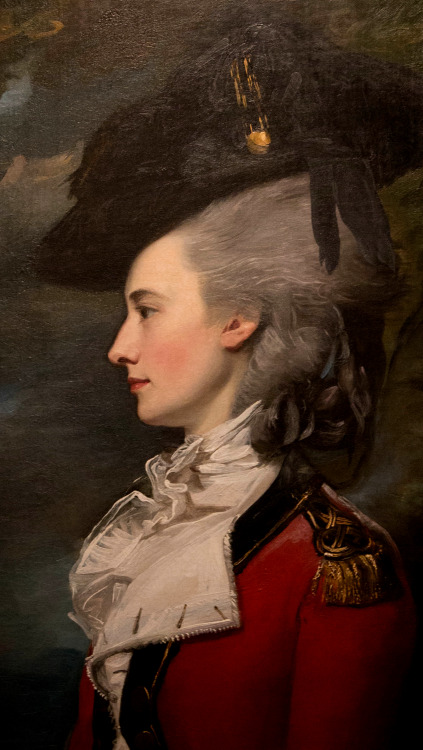
John Singleton Copley, portrait of Frances Montresor, 1778

Charles Blow, who recently moved from New York to Atlanta, calls on black Americans to make a reverse Great Migration back to southern states where they make up enough of the population to wield real political power. (NY Times)

There isn't any good way to measure whether feelings of victimhood are rising or falling, but Kevin Drum says the data he can find show little change over the past 20 years, and maybe a small decline.

American painter Erin Hanson, an impressionist I wrote about in 2018, is featured in a MyModernMet "Top Artist" podcast. Imagine, someone who paints pretty pictures I like hailed in New York as a top artist. What has happened to the modern world?

Kevin Drum explains how Fox News can turn anything into a scary story about liberal threats to white people.

List of 30 famous missing "treasures", from the Ark of the Covenant to the first hour-long feature film. Uneven but better than you are thinking from the clickbait title, and all on one page.

NY Times: "The interviews with Trump voters suggest that even his assault on the most bedrock norm of American democracy — the peaceful transition of power — may still not bring about mass defections."

Crazy room of lighted glass by Claudia Bueno, at Meow Wolf in Las Vegas. More on the Meow Wolf art collective here.

Vox looks into which health care workers are refusing the Covid-19 vaccine and why.

A detailed theory of what happened on January 6, from Trump's planning to the Capitol falling.

The archaeology of Caligula's pleasure garden in Rome, the Horti Lamiani. (NY Times)

Murals and figurines from a Tang Dynasty Tomb

The pandemic-related epidemic of broken toes (Washington Post).

Remarkable doll house furniture and objects by Kiyomi.

Writing, Stereotypes, Authenticity, and Social Change

A bit of a storm has blown up in publishing over a book called American Dirt by Jeanine Cummins. It tells the story of a Mexican woman whose journalist husband is murdered by a crime boss; she then flees for the US border with her son, cartel hitmen after her the whole way. Many early readers were blown away by it, compared it to John Steinbeck, said it was both a "moral compass" and a thrilling page turner, said it made them empathize with asylum-seekers like never before. Then some actual Mexican-American writers read it, and they hated it.

In her essay titled “Pendeja, You Ain’t Steinbeck: My Bronca With Fake-Ass Social Justice Literature,” Gurba criticizes American Dirt for its reliance on “overly ripe” Mexican stereotypes, for its portrayal of characters who are either comically evil or angelically good, for the inaccurate Spanish sprinkled in italics throughout the text, and for the “white gaze” of the authorial perspective, which “positions the United States of America as a magnetic sanctuary.”

Another Latina writer called it

Trauma porn that wears a social justice fig leaf.

I have never read American Dirt and almost certainly never will, but I am willing to bet that every word of this criticism is true. Also, that it is completely beside the point.

Consider, by way of comparison, another book that made millions sympathize with the oppressed: Uncle Tom's Cabin. I have read about half of Uncle Tom's Cabin, and I can tell you that it is chock full of offensive stereotypes, comically evil and angelically good characters, cringeworthy renderings of black dialect, and the sentimental gaze of a privileged white woman. "Trauma porn" is a perfect description. Many black readers hated it so much that "Uncle Tom" came to be one of the worst slurs black Americans can throw at each other. 

But it worked! It worked commercially, outselling every other American novel of its era. More important here it worked politically, converting hundreds of thousand to the anti-slavery cause. 

I think Uncle Tom's Cabin worked precisely because it was sentimental and bad. It worked because of the stereotypes and the smarmy writing, because of the trauma porn. If it had been a better, more nuanced, more truthful book, it would have sold many fewer copies and had much less political impact. Surely nobody winced at it more than Frederick Douglass, but he nonetheless praised it to the skies because he knew that it was just the sort of schlock that would help the cause.

Some people understood this about American Dirt.

“In my experience,” the agent said, “the books that produce this kind of frenzy take something complicated and simplify it so the book-club reader can find some thread of connection to themselves while at the same time feeling protected and safe.” The fact that it was written by a white woman was part of that appeal, the agent added. “People are tribal,” she said. “White women would rather listen to a white woman tell them about racism.” Cisneros, the Mexican American author who had praised American Dirt, felt the book could reach an audience that her work could not. “The reader,” she said, “is going to be someone who wants to be entertained. The story is going to enter like a Trojan horse and change minds.”

People react to art in ways many more serious artists and critics hate. I had a bad reaction to the "Black Panther" movie, and even more to the hype surrounding it. To me, superhero literature is fascist pretty much by definition, all about the Ubermenschen who can solve problems democracy cannot. So to me, the notion that a movie about black superheroes could strike a blow for social justice is absurd on its face. Plus, it's about a king, and I think Tom Paine said everything it was ever necessary to say on royalty. Plus, the movie trades in visual stereotypes about Africa that I find – well, not offensive, it's very hard to offend me, but at least irritating: leopard-skin shields, spears, etc. There is a big film industry in Africa these days and it uses a completely different aesthetic, and I thought "Black Panther" should have at least nodded in that direction. But for hundreds of thousands of black Americans any hesitation was overwhelmed by the simple thrill of seeing black people presented as heroes or villains with awesome powers.

(Still waiting for a Hollywood movie that would embody my idea of social justice, a mob of common people defeating a fascist superhero.)

"Authenticity" is one of those things that everybody praises in the abstract but hates in practice. Storytellers know, have known since Gilgamesh, and probably for thousands of years before a scribe pressed stylus into clay, that real life makes boring stories. Even the most thrilling real event needs shaping to make a story that will grip readers. Storytelling is done at many different levels, from the cartoonish to the subtle; again, this is thousands of years old. But no successful story is like real life. No successful story even attempts to capture life in its full complexity. First, it would fail, and second, the attempt would be too confusing for any reader or listener to follow.

In our world the question of literary authenticity has gotten tied up with identity politics in ways I think are both false and bad. I think a blow-up like the one over American Dirt is intellectually bankrupt, because it assumes totally false things about writing, books, reading, and publishing, and bad in that the median voter will just roll his or her eyes and say, "those annoying radicals, always telling us we can't enjoy a good story even when it takes their side, we need Reagan back."

There is, I say, no such thing as an authentic story. Stories vary in how hard they try to engage with actual human lives, but they all fail – unless they succeed symbolically. It is only as symbol, as a psychological force that enters our minds and burrows in deeply, that art of any sort can "change" us. The best preachers don't work in complicated, subtle stories, but in parables. The most successful activists also trade in symbols. Crafting symbols that will move people is a skill that has nothing to do with authenticity, nothing to do with where the artist grew up. To protest that publishers pay more to white writers is simply to missing the point of what publishers are doing. They are selling myth, and they pay the most to the best myth-makers, not the people who work hardest at telling the truth.

Case in point: American Dirt spent 36 weeks on the NY Times best-seller list, and during last summer's unrest it topped several widely circulated lists of book white people could read to better understand the experience of other Americans.

Tuesday, January 12, 2021

Gustave Doré and Héliodore Pisan, illustrations for Don Quixote


An Anglo-Saxon Charm against Stabbing Pain

Wið færstice is an Anglo-Saxon charm recorded in a single 10th-century manuscript. The name means "against stabbing pain."

They were loud, yes, loud, when they rode over the barrow;
they were fierce when they rode across the land.
Shield yourself now, you can survive this strife.
Out, little spear, if there is one here within.
It slipped behind lime-wood, under the shield,
When those mighty women marshalled their powers
And sent screaming spears.

I will send another back,
a flying arrow swift against enemies.
Out, little spear, if it is here within.

A craftsman sat, forged a knife;
Small the weapon, yet violent the wound.
Out, little spear, if it should be here within.
Six craftsmen sat, wrought slaughter-spears.
Be out, spear, not in, spear.
If there is here within a piece of iron,
the work of witches, it must melt.

If you were shot in the skin, shot in the flesh,
or shot in the red blood,
or shot in the limb, may your life never be harmed.
If it was the shot of ēse or the shot of ælfe
or it was the shot of witch, now I will help you.
This your remedy for the shot of ēse; this for you as a remedy for the shot of ælfe,
this is your remedy for the shot of a witch; I will help you.
Fly around there on the mountain top.
Be healthy, may the Lord help you.
Then take the knife; put it in the brew.

"Ese" seems to be the Old English variant of Aesir, the Norse name for their main gods. But by the tenth century "ese oððe aelfe" seems to have become a formula meaning "whatever sort of magical being."

The word translated "witch" is hægtessan, the meaning of which is disputed. In some contexts it seems to refer to a human witch, but it others it clearly refers to a supernatural being. In one passage it may mean the Fates or Norns. Our word "hag", which must descend from it, is also ambiguous, and in early modern English could refer either to a pathetic old woman or to a dangerous creature of the night. Here it seems to refer back to the "women of power" in the first stanza, riding fiercely over the land. Those night-riding women appear several times in old European lore and scholars have spilled thousands of word over them without coming to any agreement over where they came from or how people imagined them.

This and a couple of other old charms refer to removing a weapon from the sufferer's body; I wonder if practitioners "sucked out" pins or other small iron bits the way some 20th-century faith healers "sucked out" small stones or the like.

Monday, January 11, 2021

Andreas Hetfeld, "Viewpoint"

Dutch sculptor Andreas Hetfeld won a competition to design a new monument for the city of Nijmegen in the Netherlands. Nijmegen is an old Roman town, and Hetfeld's design is a blow-up of a famous Roman cavalry helmet found in the Waal River nearby.

Hetfeld's web site has several pictures of the mask being transported by barge to its riverside site. That would have been interesting to see floating by.


The Last Time a Mob Tried to Keep Congress from Certifying an Election

In February 1861, as Congress gathered to certify the election of Abraham Lincoln, southern sympathizers in both houses tried to hold up the proceedings every way they could. Rumors swirled that the Virginia militia were on their way to blow up to the Capitol. That didn't happen, but an angry mob did gather. They probably would have stormed the building if not for the decisive actions taken by General Winfield Scott, an old man who had been given his first commission by Thomas Jefferson. Fearing trouble, Scott brought two companies of troops to Washington weeks in advance by announcing that he was going to hold a military parade to welcome the new president.

Scott stationed his troops and two canons at the building and threatened to strap the first rioter who tried to enter to the muzzle of a 12-pounder and "manure the hills of Arlington with the fragments of his body." Nobody tried to force his way in.

When Senator Louis Wigfall of Texas asked Scott if he would dare arrest a senator for treason, Scott replied, "No! I would blow him to hell!"

On the one hand, it worked, the certification proceeded without violence, and Lincoln assumed office. On the other, Scott's mailed fist approach was part of the process by which the nation descended into war.

We have seen recently that when the police deploy with the numbers and equipment they think are necessary to guarantee peace, the show of force can be seen by protesters as an act of violence in itself. So I get why various powers in Washington were reluctant to deploy massive force on January 6. In retrospect, they should have, but let's not pretend that would have been cost free.

Sunday, January 10, 2021

Ashli Babbitt's Path toward the Bullet

Sign on the door of Ashley Babbitt's pool business

Shelby Foote once wrote that the death of a soldier in battle happened when two paths intersected: the short, straight path of the bullet and the soldier's long, winding path through life that led him to be standing on that spot.

So let's consider the winding path of Ashli Babbitt, killed by a police bullet while storming the Capitol. How did she end up there?

For some people, their politics is just another expression of their personalities. This is certainly true for me; I am a political moderate because I strive to be moderate about everything. You can also see some of this in Ashli Babbit. She became an angry political extremist partly because she had lifelong issues with anger and a fierce certainly that she was right and others were wrong.

Ashli Babbit's long Air Force career involved a series of angry confrontations and she was reduced in rank at least once for insubordination. To her this was all about her own dedication to her comrades and refusal to bow down to authority, especially the authority of officers she thought were arbitrary or wrong.

But despite her reputation for being outspoken, she kept herself in check. Then one day, the executive officer slipped new papers into a briefing binder shortly before quizzing service members on its contents.

Babbitt asked for permission to speak freely, the former staff sergeant said, and the executive officer granted it — “which was a huge mistake for that captain.”

For the next several minutes, she “let him have it,” the former staff sergeant said. He and other members of the unit watched, riveted, as Babbitt shouted and gesticulated, warning that the officer — who far outranked her — was sapping morale. Another former airman who served with Babbitt said he also witnessed the interaction.

“She was like a dog with a bone,” the former staff sergeant said. “She could never let go of whatever her attention was on, and she was absolutely unafraid of anything.”

After she left the military her problems got worse:

The same year, [2016] Babbitt spotted her husband Aaron Babbitt’s ex, Celeste Norris, pulling out of a shopping center parking lot in southern Maryland, according to a court petition for a protective order Norris later filed. Babbitt spun her white SUV in a U-turn and began chasing Norris, according to the petition, eventually rear-ending the other woman’s car three times and forcing her to stop.

Babbitt then exited her own car “screaming at me and verbally threatening me,” wrote Norris. Norris filed a second protective order petition in early 2017, saying Babbitt had followed her home from work and called her “all hours of day and night.”

She started a pool business – a popular line for rugged individualists who want to work for themselves but don't have much capital or any special skills – but wasn't very successful and fell deeply into debt.

So she was an angry person, with a tendency to obsession and a lot of personal problems.

But that doesn't explain how she ended up storming the Capitol. People who knew her say she wasn't very political until 2016. She called herself a libertarian and was heard to praise Obama. To cover the last part of her journey we have to look away from her own life and toward other actors, especially Donald Trump. 

Babbitt got onto Twitter in 2016 as a Trump supporter, posting photos of herself with her new MAGA gear and H FOR PRISON sign. It is easy to see why Babbitt and many of her personality type fell for Trump. Like them, he said what he wanted, consequences be damned. Like them, he attacked the system and mocked its authority figures.  Like them, he had zero tolerance for other people's whining. And through Trump, Babbitt entered the world of far-right paranoia. 

Trump has served as a gateway to the right for many people. Trump legitimized their anxieties about decline and focused their inchoate anger on immigrants, minorities and the left. He supported their skepticism about the virus and the police state powers being used to fight it. He convinced them that the real story of America was not the one carried by the Times and CNN, but a different story about immigrant violence, elite corruption, and theft from regular, hardworking folks.

Many commenters on the Capitol riot have said that given America's long, violent history of racial and political conflict, all it took to ignite civil strife was someone like Trump to pour on rhetorical accelerant and light the match. Trump came forward at a time when many Americans were unhappy about the state of the country, worried about immigration, race change, the decline of manufacturing, foreign wars that seemed to drag on forever, and so on. His counter-narrative picked up themes launched by Newt Gingrich and Fox News and gave them a new vehemence. Above all, he focused those feelings on himself. The rest of the country rolled their eyes at his "only I can fix it" rhetoric, but his followers seized on it. Unable to believe in a party of an ideology, they chose to believe in a man. 

Since Trump is regularly attacked in the mainstream media and his accomplishments disparaged, belief in him necessitated scorn for the public discourse. Nothing you saw in the papers or on TV could be believed, unless it supported Trump. In that frame of mind, people were open to any sort of nonsense, so long as it could be fitted into a narrative of Trump fighting the forces of corruption. Hence QAnon, and all the rest.

And thus to a rally in Washington on January 6, when thousands of people heard that they now had a chance to fight for the man they believed in against the corrupt forces ruining America. Of course they took it. They marched up the Mall and stormed the citadel of corruption, walking the paths that led Ashli Babbitt to the grave, and will lead hundreds of others to prison.

As to what path America will take, that remains to be seen.

Saturday, January 9, 2021

Gerhard Munthe: Drawings and Illustrations

Gerhard Munthe (1849-1929) was Norwegian artist, famous in Norway but not so much anywhere else. He came from an accomplished family,  – his father a physician, his sister a novelist, one brother a historian, another a military officer – and never much struggled. Except with his wife, who divorced him after 23 stormy years. 

The Daughters of the Northern Lights, 1895

He had a strange upbringing for an artist, in that he announced that he wanted to go to medical school but his father talked him into studying art instead. He studied in Germany for a few years but otherwise lived in Norway. 

Before the 1890s he focused on painting in the academic style. But then he got interested in the Arts & Crafts movement and shifted to drawing, woodcuts, and illustrations, many of them related to the Icelandic Sagas and other Norse literature.

I just love the little drawings Munthe called "vignettes," and as soon as I saw one (at Dido of Carthage) I knew I had to post about him.

More, and some of his paintings, at the Norwegian national museum.


Friday, January 8, 2021

Police and Left-Wing vs Right-Wing Demonstrations

Struck by the difference in how the police responded to Black Lives Matter protests vs. right wing protests over the summer, a group called Armed Conflict Location & Event Data Project has been trying to put together data:

Between May 1 and November 28, 2020, authorities were more than twice as likely to attempt to break up and disperse a left-wing protest than a right-wing one. And in those situations when law enforcement chose to intervene, they were more likely to use force — 34 percent of the time with right-wing protests compared with 51 percent of the time for the left. Given when this data was collected, it predominantly reflects a difference in how police respond to Black Lives Matter, compared with how they respond to anti-mask demonstrations, pro-Trump extremists, QAnon rallies, and militia groups.

The differences in intervention weren’t because BLM protests were particularly violent. ACLED found that 93 percent of the protests associated with BLM were entirely peaceful. “Even if we were to put those 7 percent of demonstrations aside and look purely at peaceful [BLM protests], we are seeing a more heavy handed response,” Kishi said.
Nobody is surprised about this. I would note, though, that these are statistical, not absolute differences. That supports what I believe, which is that the American police are far from unified in their politics. They tend right-wing but they include diverse people and personalities, including some who are genuinely working for peace and some who hate disorder of any sort and are just as happy to slug a right-wing punk as a left-wing punk. The same goes for the general tone of particular police forces.

You saw this in the mob attack on the Capitol. While some police were taking selfies with rioters, others shot and killed one of them. I think it is certainly true that police leadership grossly underestimated the violent potential of a Trump-inspired mob and would have prepared differently for a BLM rally. But it is not true that the Capitol Police as a group failed to oppose the attack on the building. Some tried, but they were undermined by bad leadership and, it seem, traitorous behavior by some of their number. 

On a related topic: If you have ever worked with the Federal security forces and know how seriously they take their jobs, you already know what is coming: the Secret Service, FBI, and federal prosecutors are going to throw the book at every person they can identify who crossed the barrier around the Capitol, and within a few months some people who were shocked by the riot are going to be shocked by the severity of the response. 

Mitt Romney and the Rise of the Mormons

You know who has come out of this crisis looking strong? Mormons. It is Mormons, more than any other Republican group, who have stood up to Trump, and it is Mormons who are stepping forward to lead the post-Trump party. Especially Mitt Romney, dubbed a "pillar of principle" by the Washington Post:

We gather today due to a selfish man’s injured pride and the outrage of his supporters whom he has deliberately misinformed for the past two months and stirred to action this very morning. What happened here today was an insurrection, incited by the President of the United States. Those who choose to continue to support his dangerous gambit by objecting to the results of a legitimate, democratic election will forever be seen as being complicit in an unprecedented attack against our democracy. They will be remembered for their role in this shameful episode in American history. That will be their legacy.

The objectors have claimed they are doing so on behalf of the voters. Have an audit, they say, to satisfy the many people who believe that the election was stolen. Please! No Congressional led audit will ever convince those voters, particularly when the President will continue to claim that the election was stolen. The best way we can show respect for the voters who are upset is by telling them the truth. That is the burden, and the duty, of leadership. The truth is that President-elect Biden won this election. President Trump lost. Scores of courts, the President’s own Attorney General, and state election officials both Republican and Democrat have reached this unequivocal decision.

We must not be intimidated or prevented from fulfilling our constitutional duty. We must continue with the count of electoral college votes. In light of today’s sad circumstances, I ask my colleagues: Do we weigh our own political fortunes more heavily than we weigh the strength of our Republic, the strength of our democracy, and the cause of freedom? What is the weight of personal acclaim compared to the weight of conscience?

Leader McConnell said that the vote today is the most important in his 40 plus years of public service. That is not because this vote reveals something about the election; it is because this vote reveals something about ourselves. I urge my colleagues to move forward with completing the electoral count, to refrain from further objections, and to unanimously affirm the legitimacy of the presidential election.
Does any other American religion have sufficient hold on its members to override their partisan allegiance?

Links 8 January 2021

Tomb Guardian Beast, China, Western Jin, c 300 AD

The race to build ever larger wind turbines; GE's latest model is 850 feet tall (260m) and can power 12,000 homes. (NY Times)

The crazy story of Christie Smythe, who trashed her whole life to throw herself at "pharma bro" Martin Shkreli. The best-documented case I know of a woman falling for a prison-bound scumbag, if you're curious about how that sort of thing happens.

The US has finally implemented Positive Train Control, an automatic system that should prevent most train crashes. Which is good news, but then travel by train was already about 30 times safer than travel by car.

Car thefts, which plummeted after the manufacturers brought out engine kill technology, are rising again because people keep leaving their key fobs in their cars. (NY Times) Another piece of evidence for the view that human life can only get so good, because we constantly dream up new follies to compensate for any advance.

Single-celled organisms can learn.

9 Wild Cult Stories to Get Lost In. In the US, cults don't make the news as often as they used to, but there are still crazy cults around. I think part of the story is that we talk so infrequently about really deep things and many people are starved for that.

Bloomberg worries that unemployed humanities Ph.D.'s will contribute to social unrest and might even lead a revolution. (They wish.)

Review of a new book about wood in human history, which sounds interesting even though it is absolutely not true that historians and archaeologists have been "ignoring" wood's central role in our technology. (Washington Post)

Review of a new biography of Cary Grant, with the take that "Cary Grant" was a character played for decades by Archibald Leach (Grant's birth name)

Terrific essay by Matt Yglesias arguing that in our low-trust world leaders should advocate policies that are as simple and transparent as possible, even if that makes them somewhat less just or effective.

NY Times piece on the personal archive Robert Caro just donated to the NY Historical Society: things like transcripts from all the interviews he conducted for his biographies of Robert Moses and LBJ, and the note he keeps by his typewriter that reads, "The only thing that matters is what is on this page."

Vox Explainer on Parler, the barely moderated social network beloved of the far right.

Thursday, January 7, 2021

A Nation of Rioters

Liz Cheney can speak for at least a dozen of our elected leaders, who all responded to the mob attack on the Capitol by saying, "This is what America is not."

I think Malcolm X was a lot closer to the truth when he said, "Violence is as American as apple pie."

From the riots against the Stamp Act in 1765, to the Boston Tea Party, to the 1812 riot in Baltimore against anti-war newspapers, to the 1863 draft riots in New York, to the lynch riots of Jim Crow, to violent clashes between labor unions and scabs, to the police riot during the 1968 Democratic Convention, to the hard hat riot in Manhattan, to the riots after Martin Luther King's assassination, to the recent riots over police shootings, riots have been key events at every stage of American history. Some of those riots have been more or less spontaneous, while others have been carefully orchestrated by leaders.

Riots spring from many sources, but maybe in the US they are part of our belief in rule by the people. To many populists the whole apparatus of government has seemed like a needless barrier to the people truly ruling themselves. If we are the people, and the people rule, rioters tell themselves, then let's do some ruling. Racial conflict has led to many riots, because the rioters feel that their sort of people are not being represented any other way.

I fully expect there to be more riots in the coming years, because Americans are divided in ways that will be hard for our political system to contain. Frustrations will build, and sometimes they will boil over. But I also expect that the Republic will endure.

Seriously, Literally, Cynically

Ezra Klein has a powerful essay in the Times about how Republican cynicism enabled Trump to carry out his assault on American democracy. He reminds us of Saleno Zito's 2016 Atlantic article, which argued that while the press took Trump “literally, but not seriously; his supporters take him seriously, but not literally.” 

For Republican elites, this was a helpful two-step. If Trump’s words were understood as layered in folksy exaggeration and schtick — designed to trigger media pedants, but perfectly legible to his salt-of-the-earth supporters — then much that would be too grotesque or false to embrace literally could be carefully endorsed at best and ignored as poor comedy at worst. And Republican elites could walk the line between eviscerating their reputations and enraging their party’s leader, all while blaming the media for caricaturing Trumpism by reporting Trump’s words accurately.

On Nov. 5, 2020, just days after the election, Vice President Mike Pence offered a classic of the genre. As Trump declared the election stolen, in terms as clear as a fist to the face, Pence tried to take him seriously, not literally; to signal solidarity with Trump’s fury while backing away from the actual claims. “I stand with President @RealDonaldTrump,” he tweeted. “We must count every LEGAL vote.”

But Trump did not want every legal vote counted. He wanted legally counted votes to be erased; he wanted new votes discovered in his favor. He wanted to win, not lose; whatever the cost, whatever the means. And every day since, he has turned up the pressure, leading to the bizarre theory that took hold of Trumpists in recent weeks that the vice president was empowered to accept or reject the results of the election on Jan. 6; that Pence could, single-handedly, right this wrong. And so, after years of loyal service, of daily debasements and constant humiliations, Trump came for Pence, too, declaring him just one more enemy of the people.

“Mike Pence didn’t have the courage to do what should have been done to protect our Country and our Constitution,” Trump raged, torching whatever rapport Pence had built with his base.

On Wednesday, at the Capitol, those who took Trump seriously and those who took Trump literally collided in spectacular fashion. Inside the building, a rump of Republican senators, led by Ted Cruz and Josh Hawley, were leading a feckless challenge to the Electoral College results. They had no pathway to overturning the results and they knew it. They had no evidence that the results should be overturned and they knew it. And they did not act or speak like they truly believed the election had been stolen. They were there to take Trump’s concerns seriously, not literally, in the hopes that his supporters might become their supporters in 2024.

But at the same time, Trump was telling his supporters that the election had actually been stolen, and that it was up to them to resist. And they took him literally. They did not experience this as performative grievance; they experienced it as a profound assault. They stormed the Capitol, attacked police officers, shattered doors and barriers, looted congressional offices. One woman was shot in the mayhem and died.

One of the most important factors in American politics over the next few years will be what happens to this "stolen election" poison. If it festers among millions of Republicans, I foresee more hostility between the parties, ever more naked gerrymandering, and a good chance that somebody will load up his guns and take action. 

Wednesday, January 6, 2021

Mitch McConnell, All In

Soon to be ex-Majority Leader McConnell, today, an hour before Trump supporters stormed the Capitol:

We're debating a step that has never been taken in American history, whether Congress should overrule the voters and overturn a presidential election. I've served 36 years in the Senate. This will be the most important vote I've ever cast. President Trump claims the election was stolen. The assertions range from specific local allegations to constitutional arguments to sweeping conspiracy theories. 

I supported the president's right to use the legal system. Dozens of lawsuits received hearings in courtrooms all across our country, but over and over, the courts rejected these claims, including all-star judges whom the president himself has nominated. . . .

The Constitution gives us here in Congress a limited role. We cannot simply declare ourselves a national board of elections on steroids. The voters, the courts, and the states have all spoken. They've all spoken. If we overrule them, it would damage our republic forever. This election actually was not unusually close.

Just in recent history, 1976, 2000, and 2004 were all closer than this one. The Electoral College margin is almost identical to what it was in 2016. If this election were overturned by mere allegations from the losing side, our democracy would enter a death spiral. We would never see the whole nation accept an election again. Every four years would be a scramble for power at any cost.

The Electoral College, which most of us on this side have been defending for years, would cease to exist, leaving many of our states with no real say at all in choosing a president. The effects would go even beyond the elections themselves. Self-government, my colleagues, requires a shared commitment to the truth and a shared respect for the ground rules of our system. . . .

We cannot keep drifting apart into two separate tribes with a separate set of facts and separate realities. with nothing in common except our hostility towards each other and mistrust for the few national institutions that we all still share.

The framers built the senate to stop short-term passions from boiling over and melting the foundations of our republic. So I believe protecting our constitutional order requires respecting the limits of our own power. It would be unfair and wrong to disenfranchise American voters and overrule the courts and the states on this extraordinarily thin basis. And I will not pretend such a vote would be a harmless protest gesture while relying on others to do the right thing. I will vote to respect the people's decision and defend our system of government as we know it. 

Not that I want to carry water for Mitch McConnell, a son of a bitch if there ever was one, but I like to give credit where credit is due, and parts of this speech are magnificent.

Family Adventures

My eldest son is an audio tech who was just getting his career under way last spring when the concert and convention businesses folded up. He spent most of the year working at the same 7-11 where he worked through college. In December he did have a couple of one-day gigs setting up for drive-in movies. Then last night he told me in passing that he had another sound job today, this one "setting up for an event in DC."

I thought nothing of it, I mean, what were the odds? But then at 2:00 today he posted, 

I'm working at this Trump rally and sh*t is popping.

So, yeah, a front-row seat to history, I guess.

Todd Young's Question

Republican Senator Todd Young, confronting pro-Trump protesters:

I took oath under God, under God... do we still care about that in this country?

It is, I think, the question of the hour: what matters more than having your party in power? Truth? Law? Loyalty to the Constitution? Belief in Democracy? Consistency? What?

Debating Free Speech and the First Amendment

Thomas Edsall has a round-up today of the debate raging in US legal and academic circles about the First Amendment. On the one side are people who say the amendment is obsolete, because government censorship is no longer the biggest threat to our public debate; on the other those who say public debate has always been difficult, dangerous, and tricky to manage, and government interference remains a dire threat. Lawrence Lessing:

There’s a very particular reason why this more recent change in technology has become so particularly destructive: it is not just the technology, but also the changes in the business model of media that those changes have inspired. The essence is that the business model of advertising added to the editor-free world of the internet, means that it pays for them to make us crazy. Think about the comparison to the processed food industry: they, like the internet platforms, have a business that exploits a human weakness, they profit the more they exploit, the more they exploit, the sicker we are.

Of course a lot of this is driven by fear of Trump and his bodyguard of lies. Tim Wu:

the president creates an entire attentional ecosystem that revolves around him, what he and his close allies do, and the reactions to it — centered on Twitter, but then spreading onward through affiliated sites, Facebook & Twitter filters. It has dovetailed with the existing cable news and talk radio ecosystems to form a kind of seamless whole, a system separate from the conventional idea of discourse, debate, or even fact.

And from the "don't tinker with the amendment" side, Lawrence Tribe:

We are witnessing a reissue, if not a simple rerun, of an old movie. With each new technology, from mass printing to radio and then television, from film to broadcast TV to cable and then the internet, commentators lamented that the freedoms of speech, press, and assembly enshrined in a document ratified in 1791 were ill-adapted to the brave new world and required retooling in light of changed circumstances surrounding modes of communication. . . . the idea of adopting a more European interpretation of the rights of free speech — an interpretation that treats the dangers that uncensored speech can pose for democracy as far more weighty than the dangers of governmentally imposed limitations — holds much greater peril than possibility if one is searching for a more humane and civil universe of public discourse in America.

I am, as my readers know, skeptical of almost any argument that says we face entirely new problems. My favorite judge, Learned Hand, worried all the time about the pernicious effects of radio, which he thought enabled the rise of Fascism. Newspapers used to be plenty bad; yellow journalism helped to give us the Spanish-American War,  and whipped up the Red Scare in a panic that led to massacres of black Americans in Oklahoma and Arkansas.

But that doesn't mean there isn't a problem; nobody wants a repeat of the Red Scare, and the rise of Fascism was one of the worst events in human history.

The problem with imposing limits on freedom of speech is that this involves trusting somebody to impose those limits. Who do you trust? The Supreme Court? The Trump Administration? Congress? 

There are certainly ideas out there that I think are both false and dangerous; right now the most prominent is that Biden stole the election. Most of my friends agree with me about this, and so to the Times, the Post, ABC and CNN. So surely we get to censor the people who disagree with us?

Or do we? I would be willing to bet that if you polled Americans about what ideas they think are so dangerous that they should be censored, you would find that millions of us think the most vital ideas are those that are most bitterly contested. I bet millions would like to censor unqualified praise of capitalism, while millions of others would like to censor all talk of socialism. The same would hold for gun rights, the existence of God, climate change, vaccines, raising animals for food, homosexuality, spanking children, and on and on. I am deadly serious about this. We have already seen in academic circles talk of "climate change denial" as an offense on par with Holocaust denial, and several American states have tried to ban reporting on the horrors of factory farming. (Which the courts have overturned on First Amendment grounds.) Remember that most Americans don't have particularly strong views about politics, but they all do have very strong views about something.

You may be thinking that there is some mechanism by which we could sort out the truly factual from the matters of opinion, but, again, who would do it? There is nobody Americans trust to do that, and nobody I trust to do it. We have seen with Facebook that in fact gatekeeper institutions respond to political pressure, tweaking algorithms to avoid offending whoever has the loudest soapbox.

I think our politics are bad because we are bitterly divided about important questions and do not agree at all about even how to think about those questions: nationalism, race, sexuality, religion, immigration. There are other problems whose existence is widely acknowledged – economic inequality, the education of poor children – which fester, I think, because we do not know how to solve them. And then there is the bad incentive built into our two-party system, which leads politicians to attack whatever the other party is doing, even if they defended it the year before. Republicans in particular have focused much of their energy on sabotaging whatever Democrats want to do, even if it means making the government work worse for everyone.

I think fighting about internet speech is almost beside the point; when people are as divided as Americans are now, they will find ways to shout at each other about it.

Tuesday, January 5, 2021

Haiti on the Eve of Revolution

Love this bit from French Historian Paul Fregosi about the French colony of Saint Domingue, before the outbreak of the revolution that established Haiti:

Whites, mulattos and blacks loathed each other. The poor whites couldn't stand the rich whites, the rich whites despised the poor whites, the middle-class whites were jealous of the aristocratic whites, the whites born in France looked down upon the locally born whites, mulattoes envied the whites, despised the blacks and were despised by the whites; free Negroes brutalized those who were still slaves, Haitian born blacks regarded those from Africa as savages. Everyone—quite rightly—lived in terror of everyone else. ...Haiti was hell.

It endured because of the profits earned by growing sugar and coffee, which made Haiti by the numbers one of the richest places in the world and the source of most of the profit France earned from its colonies.

The sugar islands of the Caribbean were one of the most brutal human societies I know of, an empire of suffering. Because of disease and the brutal conditions life expectancies were short for everyone, even the rich whites. Violence was constant: revolts by the enslaved, raids by maroons who built villages in the mountains, and savage retaliation by the whites against both, to which one must add constant low-level war among the colonial powers and, when war was not official, a plague of piracy. As Fregosi says, the whole society was characterized from top to bottom by mutual loathing and a savage contest for social superiority.

The Haitian revolution of 1791 was a bloodbath; best estimates are that at least 20,000 were killed in just the first year. But it went on and on, with intervention by warring European states, scorched earth tactics that destroyed vital infrastructure, division among the black rebels, etc., etc., (One episode of conflict among the black rebels is known as the War of Knives.) It was not until 1801 that Toussaint Louverture was sufficiently in control to issue a constitution for an independent Haiti, inaugurating a great Latin American tradition by proclaiming himself President for Life. AND THEN in 1802 Napoleon sent a strong force to recapture the island, which led to two more years of war before the Haitians, with British help, finally defeated the French. Obviously records of this period are not great, but historians estimate that by 1805, 400,000 people may have died. The Haitians celebrated their victory by massacring most of the surviving whites on the island, to the total of about 5,000.

The state that emerged after the revolution banned slavery but was far from just and equal; the French-speaking, mixed-race elite completely controlled the island for the next century, treating the patois-speaking blacks with contempt. The European powers effectively cut off trade to Haiti, which kept their economy from ever recovering, so that from one of the richest place in the world in 1790 it became one of the poorest.

All in all it is a great illustration of where brutality leads when pushed to its limits: evil follows hard upon evil, and we reap what we sow.

Saturday, January 2, 2021

The Papal Palace in Avignon

One of the largest surviving medieval buildings, bigger than any cathedral, is one you don't hear much about: the papal palace at Avignon, now in southern France.

Construction of a palace on the site began in 1252, for a bishop. In 1309, Pope Clement V, alias Raymond Bertrand de Goth, one of my favorite medieval names, fled the chaotic violence that had broken out in Rome after his election and accepted the protection of the King of France at Avignon. (Avignon belonged to the papacy but was within what we would call the French sphere of influence.) Popes had often resided outside of Rome, but Clement moved the whole papal curia to Avignon with him, all 300 secretaries, judges, cardinals, etc.


Clement lived in a monastery and the courtiers made do with the old bishop's quarters until 1334, when newly elected Benedict XII razed the old bishop's palace and began building the new one. The architect was Pierre Poisson of Mirepoix. But the curia was expanding rapidly – it reached 2,000 personnel by the end of the century – and Benedict's huge building was too small by the time it was finished. So other popes immediately began enlarging it, completing what became known as the New Palace (directly above) by 1364.

The completed palace measured 11,000 square meters, or about 3 acres. Above is the main courtyard, known as the Cour d'honneur. Imagine it full of elegantly dressed churchmen, walking about in small groups, muttering conspiratorally to their companions as they nod politely to others, trying to extract messages from who was nodding how deeply to whom.

Drawing of late medieval Avignon by Etienne Matellange, variously dated by sketchy internet sources to the 1400s or 1500s.

View from the river below. Wikipedia describes this location as the "impregnable rock of Doms", but consider what Alexander the Great or Julius Caesar would have made of the statement that this or any fortress was "impregnable" and then resolve never to use that locution again.

In 1377 the pope moved back to Rome, but he died and dueling conclaves elected two popes to replace him, one holding court at Rome and one at Avignon; we call this the Great Schism, although it wasn't particularly great. (Compare, say, the split between Catholic and Eastern Orthodox, 970 years old and counting.) Until 1417 there were two popes, or even three, but they finally sorted it out and when there was one pope again he lived at Rome. The Avignon palace was mostly abandoned.

Which explains why it is such a great remnant of the middle ages; nobody who used it after 1417 had the money to do anything to the building but let it molder. It was completely stripped of furniture, of course, but the building remains, with its tile floors


and frescoes on the walls and ceilings; these are the building's treasures today.


The  south of France remains high on my list of places to visit, so perhaps I will even see this one day.

What to do When Encountering Bias?

 Peter Gumbel in The Times:

My grandparents arrived in England in 1939 as stateless refugees. They felt not just gratitude for their immediate safety but also a deep attachment to the values of openness, decency and tolerance they found in their adopted homeland. Once the war ended, they became naturalized British citizens as soon as they could. In a letter to a friend, my grandfather praised the “generous hospitality and nearly unrestricted freedom” they enjoyed as migrants. They never shed their German accents but switched to speaking only in English.

My parents’ generation, in turn, gave their all for the country that took them in. They inevitably faced some anti-German sentiment in the early postwar years, but simply ignored it.
I am not really saying that this is always the best response, but it worked for Peter Gumbel's grandparents, who ended up recognized by the queen for service to Britain. Other successful immigrants I have read about say they never experienced bias against them, and since that is simply not possible, they must have gotten very good at not noticing it. Maybe sometimes things need to be called out, but it is simply wrong to say that ignoring bias "never works," as Americans these days are very prone to saying. Ignoring bias and quietly getting on with life works very well for some people.

Friday, January 1, 2021

New Year's Resolutions

Jan Provoost (1462–1525) - The Crucifixion. Detail

Never let anger or defensiveness get in the way of understanding.

Withhold moral judgment until I have a clue.

Refuse to indulge in envy of people who achieve success.

Be kind.

Make a new friend.

Visit my old friends more.

Learn new things; find new fields in which to learn things I never knew existed.

Visit a city I've never been to, and a National Park I've never been to.

Keep listening to new music, and find a new musician or composer to love.

Read books by ten authors completely new to me.

Finish the first draft of a new novel.

Either place the my current novel with a publisher or self-publish it on Amazon like the last one.