Wednesday, March 23, 2022

Unvaccinated People are Different

Fascinating poll from Canada showing that people who have been vaccinated for Covid-19 have different views of Ukraine and Russia than non-vaccinated people:

The article is paywalled, but according to my source  the survey found that 26 percent of unvaccinated people in Canada believe Russia invading Ukraine is justified, vs. 2 percent of vaccinated people. My source suggests the unvaccinated are becoming pro-authoritarian, but I would say they have a strong reaction against whatever narrative is being pushed by the mainstream. If the government and the press say Russia is the aggressor and Ukraine the victim, that must be wrong.

I find this a fascinating insight into how people form opinions and how the media landscape is evolving. Information about either vaccines or Ukraine is not likely to change opinions because those opinions are rooted in a deep attitudes toward the world, or at least toward information flows.

Monday, March 21, 2022

Who Commands Russia's Invasion of Ukraine?

Does Russia's invasion of Ukraine have an overall field commander? Nobody seems to know. The US Defense Department recently told CNN that they don't know, adding that if there is such a person, "the state of combat operations would suggest he is inept." I read all the English language bulletins from the Ukrainian MOD, and they make no mention of an overall Russian commander. They seem to have pretty good intelligence on the Russian military, so you would think they would know.

Which raises the possibility that nobody is in command of the invasion, and there is no connection between the various Russian armies in Ukraine until you get to the Minister of Defense in Moscow. Or maybe even until you get to Putin himself.

This is a weird situation and probably not conducive to military operations:

Without a top, theater-wide commander on the ground in or near Ukraine, units from different Russian military districts operating in different parts of Ukraine appear to be competing for resources rather than coordinating their efforts, according to two US defense officials. Units participating in different Russian offensives across Ukraine have failed to connect, these sources say, and in fact, appear to be acting independently with no overarching operational design.

I can imagine many reasons for this. Perhaps Putin wants no rivals. Perhaps generals in Moscow didn't want anyone to outshine them. Perhaps there was no candidate acceptable to the various army commanders and military districts, or perhaps all the top generals wanted the job. Or none of them.

This seems to me another way that the strange politics of Putin's Russia have confounded their military operation.

Sunday, March 20, 2022

Paul Nash

British artist Paul Nash (1889-1946) did a wide variety of work but is best known for his war paintings. He tried to sit out World War I on "home service" – the National Guard, in US Vietnam-era terms – but in 1916 he was called to active service and sent to officer candidate school. By February 1917 he was in the trenches of Flanders. 

According to this account,

A relatively quiet few months in the region spared him the full intensity of the Front, before he had to be airlifted back to London an invalid after falling into a trench. A few days later, in an assault on their position known as Hill 60, most of his unit was killed. While recuperating for his injuries, Nash produced a series of drawings, working from sketches made at the Front, and exhibited them in June to a positive reception. Encouraged by the response he successfully applied to become an official war artist, and in November 1917 returned to the Ypres Salient as a uniformed observer complete with batman and driver. After six weeks at the Front, working at a frantic pace and taking frequent risks to get as close as possible to the action, Nash emerged with what he described as "fifty drawings of muddy places". 

These became some of his most famous paintings. Above, Making a New World, 1918.

The Menin Road, 1919.

After the war Nash went back to painting landscapes in a modernist vein; this is, Wood on the Downs, 1930.

Landscape of the Moon's First Quarter.

Through a Window, Rivera.

When Surrealism was the thing, Nash tried his hand at Surrealism; this is Landscape from a Dream, 1936. Fortunately this was a relatively brief phase.

During World War II Nash was back doing war art, completing several paintings of downed German planes and also magnificent surreal warscapes like this one, Dead Sea, 1940.

And one more, London, Winter Scene No. 2, 1940. Nash died of complications of asthma, which reminds me how lucky I am to live in an age when medication makes even fairly severe asthma more of an annoyance than a disability.

Recitation for Sufferers Who Constantly See Dead People

Dead people, why do you come to me—you whose cities are ruined mounds, you who are bones? I do not go to Kutha, the assembly of ghosts. Why do you constantly pursue me? You are adjured by Abatu the Queen, by Ereškigal the Queen, by Ningeštinanna the Scribe of the Gods, whose stylus is lapis and carnelian. 

– Akkadian formula of the Assyrian period, via Slightly Alive Translations

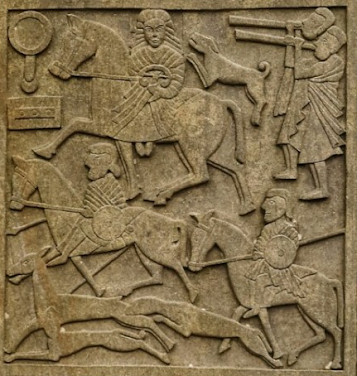
Hilton of Cadboll Pictish Stone

Dating to around 800 AD, from northern Scotland. The stone is broken and the lower section lost.

The other side once showed a cross, but a local landowner named Alexander Duff had that chipped off when he made the stone into a funeral monument for him and his three wives.

The original is in the National Museum of Scotland. You can get a better idea of what it once looked like from the copy that was carved to be set up on the site where the thing is supposed to have been found.

This is called a "Pictish" stone, and the central hunting scene does indeed look like Pictish work. 

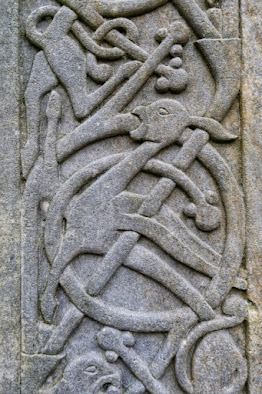
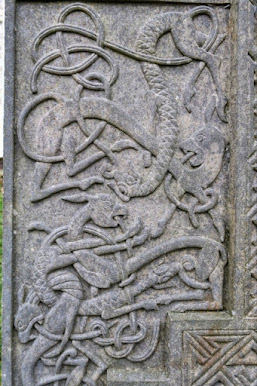
But to me the borders are one of the most Viking-looking works I know. They don't look like the other Pictish stones I know, and I have seen a bunch. So I did a bit of searching and found that there are a couple of others with carving like this, all of them dated to around 800 AD.


So I guess this style was developing in the northern world around that time, in Scotland and across the sea among the Norse. As to the identity of the people who set this up, that might be a tangled tale, since Scotland was full of Northmen by AD 850, intermarrying with locals. A skeleton from Orkney, buried with full Viking kit, was recently identified by DNA as a native. So the international spread of this style of carving may be a sign of many other exchanges and connections.


Saturday, March 19, 2022

Tim O'Brien, "The Things they Carried"

Tim O'Brien fought in Vietnam, and it nearly destroyed him. His unit took heavily casualties and when he wrote this 1990 book he had not got over it one bit. His pain oozes from every page. He says he was suicidal for years, and that what kept him going as much as anything else was writing.

The Things they Carried is a strange cross between a war memoir and a meditation on how impossible it is to write about war. I discovered it because my elder daughter read it in her high school writing class and has been recommending it ever since. I understood immediately why it makes a good text for young writers. In form it is a series of diverse attempts to convey the awfulness of the war and what it did to the men who endured it: straight-up narrative, commentary on narrative, descriptions of soldiers' lives after they came home, meditations on details like what men carried in their packs when they went on patrol. Some work better than others, but all are interesting.

For me, the best part was at the end, when O'Brien tries to explain why he became a writer. He writes a great deal about people who are dead. His war buddies, of course, but also a girl named Linda he had a crush on in the fourth grade, who died of a brain tumor:

The thing about a story is that you dream it as you tell it, hoping that others might then dream along with you, and in this way memory and imagination and language combine to make spirits in the head. There is the illusion of aliveness. . . . That's what a story does. The bodies are animated. You make the dead talk. They sometimes say things like, "Roger that." or they say, "Timmy, stop crying," which is what Linda said to me after she was dead. . . .

Lying in bed, at night, I made up elaborate stories to bring Linda alive in my sleep. I invented my own dreams. It sounds impossible, I know, but I did it. I'd picture a birthday party – a crowded room, I'd think, and a big chocolate cake with pink candles – and then soon I'd be dreaming it, and after while Linda would show up, as I knew would. . . . She would say amazing things sometimes. "Once you're alive," she'd say, "you can't ever be dead." . . .

We keep the dead alive with stories. 

Ukraine Notes

US Defense Department estimates at least 7,000 Russian fatalities, and they called this "conservative." That would imply at least 21,000 wounded; the ratio is usually 3:1 to 4:1. Call it 30,000 casualties out of 190,000, which is 16%, enough to seriously impact operations. And that's without factoring in desertions, which seem to be common. A high estimate of Russian losses could easily reach 50,000, which right there would explain why the Russian offensive has ground to a halt.

And here is a count of visually confirmed Russian vehicle losses:

  • 252 tanks (out of about 1200 on February 23) 
  • 488 armored personnel carriers, infantry fighting vehicles, etc. (out of about 3000)
  • 54 Tigr armored jeeps (heavily used by airborne and special forces)
  • 38 self-propelled artillery
  • 30 multiple launch rocket systems
  • 36 surface-to-air missile systems
  • 13 jet aircraft
  • 34 helicopters
  • 521 trucks
  • 2 trains

Those numbers have been going up even as I go back and forth to the list. Meanwhile Ukraine has lost at least 67 tanks but captured 106 Russian tanks.

And this from the Institute for the Study of War:

Ukrainian forces have defeated the initial Russian campaign of this war. That campaign aimed to conduct airborne and mechanized operations to seize Kyiv, Kharkiv, Odesa, and other major Ukrainian cities to force a change of government in Ukraine. That campaign has culminated. [Gone as far as it can go, in military lingo.] Russian forces continue to make limited advances in some parts of the theater but are very unlikely to be able to seize their objectives in this way. The doctrinally sound Russian response to this situation would be to end this campaign, accept a possibly lengthy operational pause, develop the plan for a new campaign, build up resources for that new campaign, and launch it when the resources and other conditions are ready. The Russian military has not yet adopted this approach. It is instead continuing to feed small collections of reinforcements into an ongoing effort to keep the current campaign alive. We assess that that effort will fail.

The ultimate fall of Mariupol is increasingly unlikely to free up enough Russian combat power to change the outcome of the initial campaign dramatically. Russian forces concentrated considerable combat power around Mariupol drawn from the 8th Combined Arms Army to the east and from the group of Russian forces in Crimea to the west. Had the Russians taken Mariupol quickly or with relatively few losses they would likely have been able to move enough combat power west toward Zaporizhiya and Dnipro to threaten those cities. The protracted siege of Mariupol is seriously weakening Russian forces on that axis, however. The confirmed death of the commander of the Russian 150th Motorized Rifle Division likely indicates the scale of the damage Ukrainian defenders are inflicting on those formations. The block-by-block fighting in Mariupol itself is costing the Russian military time, initiative, and combat power. If and when Mariupol ultimately falls the Russian forces now besieging it may not be strong enough to change the course of the campaign dramatically by attacking to the west. . . .

The culmination of the initial Russian campaign is creating conditions of stalemate throughout most of Ukraine. Russian forces are digging in around the periphery of Kyiv and elsewhere, attempting to consolidate political control over areas they currently occupy, resupplying and attempting to reinforce units in static positions, and generally beginning to set conditions to hold in approximately their current forward positions for an indefinite time. Maxar imagery of Russian forces digging trenches and revetments in Kyiv Oblast over the past several days supports this assessment. Comments by Duma members about forcing Ukraine to surrender by exhaustion in May could reflect a revised Russian approach to ending this conflict on terms favorable to Moscow.

Stalemate will likely be very violent and bloody, especially if it protracts. Stalemate is not armistice or ceasefire. It is a condition in war in which each side conducts offensive operations that do not fundamentally alter the situation. Those operations can be very damaging and cause enormous casualties. The World War I battles of the Somme, Verdun, and Passchendaele were all fought in conditions of stalemate and did not break the stalemate. If the war in Ukraine settles into a stalemate condition Russian forces will continue to bomb and bombard Ukrainian cities, devastating them and killing civilians, even as Ukrainian forces impose losses on Russian attackers and conduct counter-attacks of their own. The Russians could hope to break Ukrainians’ will to continue fighting under such circumstances by demonstrating Kyiv’s inability to expel Russian forces or stop their attacks even if the Russians are demonstrably unable to take Ukraine’s cities. Ukraine’s defeat of the initial Russian campaign may therefore set conditions for a devastating protraction of the conflict and a dangerous new period testing the resolve of Ukraine and the West. Continued and expanded Western support to Ukraine will be vital to seeing Ukraine through that new period.

Volunteers Raising Money and Supplies for Ukraine

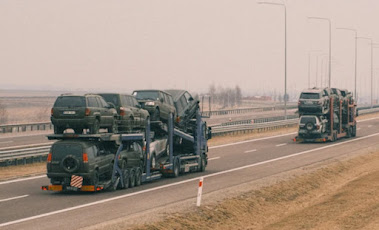
Fascinating story in the Washington Post today on the volunteer effort in Lithuania to raise money and collect supplies for Ukraine. Among other things they have collected hundreds of SUVs and pickup trucks, donated or sold at discount prices. One Lithuanian donor said, "We have no choice, they are fighting for us."

The convoy was carrying 45 vehicles — retrofitted Jeeps, ambulances, an armored bank truck and an army field kitchen — as well as 24 tons of diesel. It had traveled overnight from Lithuania as part of a swelling supply network racing to catch up with the return of war to Europe. More than a dozen volunteer drivers, including one whose relief work was normally limited to helping motorists stranded on the highway, had driven hood-to-taillight almost around-the-clock to rendezvous with Ukrainian fighters.

While governments negotiate over fighter jets and high-end weapon systems, soldiers on the ground are struggling to fill more basic needs. With Ukraine’s own factories shut down by shelling, its forces rely increasingly on volunteer, pop-up supply chains like this one for vital gear, including body armor, medical supplies and the pickup trucks and SUVs they covet as fighting vehicles.

A second convoy was scheduled to arrive later in the day, packed with generators, radios, surveillance drones, night-vision gear and, most coveted of all, almost 7,000 bulletproof vests and helmets. For the soldiers, they are a lifeline.

“That is what we need the most,” said Lt. Andrey Bystriyk, one of the many Ukrainian fighters who had traveled across his war-ravaged country to meet the convoys. His blue eyes teared up when he talked about the aid pouring in from neighboring countries.

“From the army, we get the gun and the ammunition and the uniform,” he said. “But under the uniform, what we eat, what keeps us safe, how we move around and fight — that comes from the people, our people and foreign people.”

I've been reading a lot of military blogs and the like lately, and one of these guys wrote yesterday about the reforms under way in the US Marines. They have abandoned tanks and cut back on artillery and other armored vehicles, instead spending the money on mobility, missiles, and weapons and equipment for infantry: night vision, other advanced optics, tactical drones, hand-held anti-tank and anti-air missiles, body armor, etc. He said, "Everything that has happened in Ukraine has confirmed the wisdom of this move." Properly equipped infantry is now, once again, the strongest force on the battlefield. And this is what makes volunteer effort so powerful in the Ukraine war: private people can't buy tanks or missiles – not in Europe, anyway – but they can buy night vision gear, body armor, bullet-proof helmets, light drones, and vehicles, all things that multiply the effectiveness of infantry. Not to mention, bandages, fuel and food.


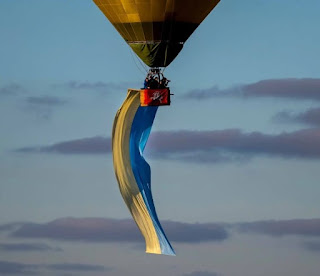
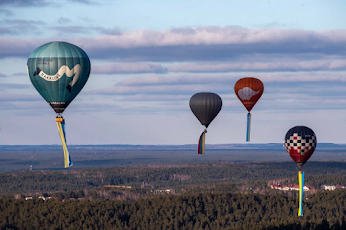
Hot air balloons over Vilnius, Lithuania, March 17

Friday, March 18, 2022

Esaias van Hulsen

Dutch goldsmith and engraver, 1570-1624. I was blown away by these when I saw them, but I discovered that they are very much part of a tradition called blackwork prints. But anyway I think these are amazing.


Links 18 March 2022

The Floor of Florence Cathedral, 16th century

According to this twitter thread, entrepreneurial capitalism is taking off in India, with all sorts of "incubators" and young people wanting to "launch ideas" instead of "working to survive."

Amazing photos of slime molds by Barry Webb.

Why attempts to "clean up" the "Great Pacific Garbage Patch" are foolhardy and possibly destructive.

CNN editor Nic Robertson on how Putin extinguished the hopes of millions of Russians. Essay, interview.

Iron arrowheads melting from the ice in Norway, likely used by reindeer hunters.

Strange little porcelain figurines by Sophie Woodrow.

Life at deep sea hydrothermal vents off California, very cool 4-minute video.

Chemists have developed AI systems to devise new helpful molecules, for example drugs. These chemists switched their software around and trained an AI to devise new poisons. It came up with hundreds, some of them predicted to be more dangerous than VX nerve gas. No, they didn't publish the details, but they do helpfully mention that this software is open source and widely available.

Michael Vickers, former US Deputy Secretary of Defense for Intelligence, in this video: "If there's a bigger strategic blunder in modern military history, I can't think of it. . . . I can't think of a more disastrous intelligence analysis . . .  Putin has zero chance of achieving any of his objectives. . . . He is wrecking his army."

Reconsidering Jack Kerouac and On the Road. My take is that literary attacks on the novel are almost beside the point, considering how huge an impact it has had on many thousands of young Americans.

The proposed Rivian electric truck factory in Georgia has brought out a determined opposition from environmentalists, Nimbyists, and conservatives who hate electric vehicles; some also hate George Soros, a major investor in Rivian, and don't like that Georgia is giving his company a big tax break. (NY Times)

Education and religion in America: "Teenage boys from working-class families, regardless of race, who were regularly involved in their church and strongly believed in God were twice as likely to earn bachelor’s degrees as moderately religious or nonreligious boys." (NY Times)

Storm uncovers a Roman shipwreck in just 2m of water, 50m from a popular tourist beach in Mallorca.

Weirdly fascinating Freddie de Boer essay from 2017 on our shared obsession with policing each other, "Planet of Cops."  Which I learned about from Scott Siskind's new essay on how the word "justice" has taken over the discourse.

American CIA officers are speaking publicly now (on background, of course) about the secret training program they ran in Ukraine in 2014-2017, in parallel with an openly acknowledged Army program. Among the topics covered were sniper training and secure communications. I suppose everyone wants to claim credit for helping Ukrainians fight so well.

What, exactly, is "burnout"? Is it the new trendy malady, like gout in the 1700s or nearasthenia fifty years ago? Or is it really a way to pat ourselves on the back for working so hard?

One business booming in Afghanistan is smuggling people over the border to Iran. (NY Times)

BBC report from the front lines in Kharkiv, 5-minute video.

When ornithologists fitted Australian magpies with GPS harnesses they thought were both unobtrusive and unremovable, the birds helped each other shed the harnesses by finding the only weak point, a tiny clasp, and biting it. All were removed within three days. This is either a rare example of altruism among adult birds, or they just really hate ornithologists. (NY Times, original article)

Francis Kéré of Burkina Faso has become the first African to win the Pritzker Architecture Prize. (My Modern Met, dezeen, his firm's web site)

Thursday, March 17, 2022

Russian Fascism

Wow, some straight-up 1930s Fascist rhetoric from Vladimir Putin this week, something you could use in a history course as a perfect example of the type:

Yes, of course, the West will rely on the so-called fifth column, on traitors. On those who earn money here, with us, but live there. And they live not only in the geographical sense of the word, but according to their thoughts, according to their slavish consciousness. I do not judge all those who have a villa in Miami, or on the French Riviera, who can't do without foie gras, oysters or the so-called gender freedoms. The issue here is not in that, but in the fact that many of these people by their very nature are mentally located exactly there, and not here, not with our people, not with Russia. This is, in their opinion, a sign of belonging to a higher class, a higher race. Such people are willing to sell their own mother if only they are able to sit in the hallway of the highest caste. They want to be like her [the caste, presumably], imitating her in every possible way. Yet they forget or do not understand that if they are needed by this so-called higher caste, it is only as expendable material used to inflict the maximum damage on our people.
The collective West is attempting to splinter our society, speculating on military losses, on the socio-economic effects of sanctions, in order to provoke civil unrest in Russia, using the fifth column to achieve its goal. And there is only one goal, as I have said: the destruction of Russia. But any people, the Russian people especially, are able to distinguish true patriots from scum and traitors, and will spit them out like gnats that flew into their mouths. Spit them onto the pavement. I am certain that this necessary and natural self-purification of society will only strengthen our country, our solidarity, our togetherness, and our readiness to answer any calls to action.

Wednesday, March 16, 2022

Populism in Wartime

Ross Douthat in the NY Times:

Putin’s war has struck two blows against populism, one direct and one indirect. First, there is the embarrassment involved for every populist leader, European or American, who has either offered kind words for Putin or at least held him up as an adversary whose statecraft runs circles around our own incompetent elites. Such flirtations have now largely ended in backpedaling and reversal, forcing populists to choose between self-marginalization or a shameless pivot. Which is to say: Don’t be surprised if Donald Trump somehow evolves into the biggest Russia hawk you’ve ever seen come 2024.

The more damaging blow, though, is the indirect one, the way the Ukraine invasion has revealed how uncertain and at sea the populist instinct becomes when it’s confronted with an adversary that doesn’t fit easily into its focus on internal Western corruption, its narratives of elite perfidy and folly.

This uncertainty isn’t confined to right-populists alone; rather, you see it among anti-establishment voices of all stripes at the moment — the left-wing gadflies who didn’t expect the Ukraine invasion because they did not expect Western intelligence to ever get something right, the critics of U.S. power who didn’t expect Ukrainian resilience because they assumed that any regime backed by our foreign policy elites would be too hapless to survive, the media personalities casting about for narratives that fit populist preconceptions because the bigger picture of Putinist aggression and Western unity does not.

Indeed American populism has a strong history, going back to before the Revolution, of thinking that international conflicts are just distractions from our real problems, likely ginned up by the bosses to justify their continued hold on power. American populism lacks a language for speaking about dangerous threats from outside.

Islamic Governance has Made Turks Less Religious

From a new academic paper by Murat Çokgezen, via Marginal Revolution:

This paper first evaluates the impact of a two-decade-long Islamization policy carried out by a pro-Islamist party, which came to power in 2002 in Turkey, on the attitudes of Turkish people toward religious values, religious practices, and clergy. In this regard, how the importance of religion, frequency of going to mosques, and trust in the clergy have changed among Turkish Muslims between 2002 and 2018 were examined by using World Values Survey data and employing logistic regression analysis. Estimation results indicated a reduction in belief in God, attendance to mosques, and trust in clergy, which imply the failure of the Islamization policy. Second, we explored what caused the failure by using the same data set and methodology. Our estimations suggested that the symbiotic relationship between the pro-Islamist government and religious clergy and institutions may explain the failure. As the government is identified with religion in the eye of the public, dissatisfaction with the government turned to dissatisfaction with religious values.

Unfortunately the paper is paywalled so I can't tell you how big the changes were. Since religious faith has declined across much of the world in the past 20 years, this might just be the international norm, not the fault of the Turkish government; but at any rate they are not succeeding in fighting that trend.

Historical Shadows

Some Ukrainian commentators have called the war currently unfolding, even if it continues to new phases with intermittent pauses, the final victory of Kievan Rus against both Muscovy and the legacy of the Golden Horde. Some really long historical shadows being cast.

–Boris Ryvkin

Monday, March 14, 2022

Museums in Crisis

One job that people really are quitting at a higher rate is "museum director." There are dozens of openings across the US, should you want such a position. But why would you? It is almost inevitable that within your first year you will be accused of racism, harassment, elitism, and insufficient support for Black/Trans/Asian/Immigrant/Some-other-category artists, besides having to struggle with declining visitation and revenue, plus increased moral scrutiny of the rich people who might bail you out, plus an overhanging cloud of worry that art museums are irrelevant anyway.

The "museum crisis" that has been going on for decades is only getting worse. As art critic Barry Schwabsky explains in The Nation, the root of the crisis is a decline in the importance of the aesthetic as an independent value. Art these days is less and less about form, and more and more about morality and politics. Not that there is anything new about art being political or ethical; there was a time when most elite art was made for churches and kings. But the art museum is a creation of the aesthetic era, and therefore is bound to decline as the rest of the world turns away from aesthetics. I was struck by this theory of the art museum's origins:

It’s noticeable that young people, including artists, bring different questions, different demands, to artworks than do many of their elders. The change is deeper than it may seem—perhaps a tectonic shift in art itself, which will mean rethinking the very idea of the museum. Jacques Rancière, in his 2011 book Aisthesis, speaks of how an “aesthetic regime of art” began to dominate in Europe in the late 18th century, succeeding earlier representational and ethical regimes of art and leading to the emergence of museums such as the Louvre. This aestheticization of art, he argued, was the result of the French Revolution: The king had been overthrown, and his works of art now belonged to the people by way of the state. But many of these works were essentially visual paeans to royalty, and more still were devotional works, testaments to the power of the church, which the revolutionaries were determined to suppress. How could these royalist and clerical images be considered glories of a free and secular nation?

The solution was radical: These objects made to honor king and church were recast, simply, as examples of sublime art—that is, of beautiful form and transcendent skill. Precisely for political reasons, an essentially aesthetic vision had to prevail. “Only one solution was available,” Rancière insisted, “to nullify the content of the paintings by installing them in art’s own space,” thereby “training a gaze detached from the meaning of the works.” In other words, through what later came to be known as formalism, any subject, even when the content of the work was one that could no longer be supported, could be admired for the sake of art. And therefore art comes from art: “Painters, from this point onward, imitate painting.”

I would add that class plays a big role here. Art museums were creations of the new upper class, where the rich bourgeoisie mingled with the remains of the aristocracy. Understanding art as aesthetics was one of the upper class's defining traits; art museums and concert halls were the temples where they worshipped their own aesthetic superiority. The collapse of these class assumptions is hitting art museums hard.

There are still millions of people, like me, who just really like art, and the social category of “artist” seems to be as fashionable as ever. Art museums will survive. But they will have to change, and it seems unlikely to me that they will retain their cultural importance.

Sunday, March 13, 2022

Scapegoating Begins in Russia

Multiple western media outlets are confirming rumors that Sergey Beseda, the head of the FSB's foreign intelligence branch – Moscow's top spy – and his deputy Anatoly Bolyukh have been placed under house arrest. The official charge is corruption, of which they are surely guilty, but everyone assumes they are being made the fall guys for the failure of the invasion of Ukraine to go as planned. If they endorsed intelligence estimates that said Ukrainians would not resist and Kyiv could be taken in three days, they certainly deserve to lose their jobs. In their defense, they were probably telling Putin what he wanted to hear, but here we see the dangerous limits of yes-manning.

Strikes me as important that the army is not being blamed, at least not yet.

Archangel Michael

Commander of the Army of God, Patron of Kyiv. Above, in the Hagia Sophia, Istanbul

Siennese School, 14th century.

From a book of hours, Flemish, 14th century 

Jaime Huguet, 1456

Lieven van Lathem, 1469

Raphael

Albrecht Durer

Guido Reni, 1635

Luca Giordano, 1660

St. Michael as the Archangel of the Apocalypse, one of the traditional Slavic icons; this one is 18th century.

Gustave Doré

By Emily Young,  part of a memorial to the victims of the 2005 bombings in London

Letters from Ex-Slaves

At the Washington Post, a collection of letters from ex-slaves to their former enslavers. Here are excerpts from one that was dictated by an ex-slave living in Ohio to his employer, to be sent to his former owner in Tennessee. It was later published in a local newspaper.

I want to know particularly what “the good chance” is you propose to give me. I am doing tolerably well here. I get $25 a month, with victuals and clothing; have a comfortable home for Mandy (the folks call her Mrs. Anderson), and the children, Milly, Jane, and Grundy, go to school and are learning well. The teacher says Grundy has a head for a preacher. They go to Sunday school, and Mandy and me attend church regularly. We are kindly treated. Sometimes we overhear others saying, “Them colored people were slaves” down in Tennessee. The children feel hurt when they hear such remarks; but I tell them it was no disgrace in Tennessee to belong to Colonel Anderson. Many darkeys would have been proud, as I used to be, to call you master.

Now if you will write and say what wages you will give me, I will be better able to decide whether it would be to my advantage to move back again.

As to my freedom, which you say I can have, there is nothing to be gained on that score, as I got my free papers in 1864 from the Provost-Marshal-General of the Department of Nashville. Mandy says she would be afraid to go back without some proof that you were disposed to treat us justly and kindly; and we have concluded to test your sincerity by asking you to send us our wages for the time we served you. This will make us forget and forgive old scores, and rely on your justice and friendship in the future.

I served you faithfully for thirty-two years, and Mandy twenty years. At $25 a month for me, and $2 a week for Mandy, our earnings would amount to $11,680. Add to this the interest for the time our wages have been kept back, and deduct what you paid for our clothing, and three doctor’s visits to me, and pulling a tooth for Mandy, and the balance will show what we are in justice entitled to. Please send the money by Adams Express, in care of V. Winters, Esq., Dayton, Ohio.

Saturday, March 12, 2022

Is Russia a Special Problem?

Western thinking about Russia has always fallen into two camps. One, which used to be led by George Kennan, holds that Russia is just a powerful nation like any other, looking out for its own interests, amenable to the usual diplomatic and economic leverage. This kind of thinking leads people like John Mearsheimer to argue that much of the blame for the Ukraine war lies with the west for pushing NATO expansion and threatening Russia in ways to which any nation would have to respond.

The other way of thinking holds that Russia is a special and strange place in ways that make conflict with the west inevitable. Historian Stephen Kotkin, author of a famous biography of Stalin, holds to this view, and he defended it in this interview with David Remnick of The New Yorker:

I have only the greatest respect for George Kennan. John Mearsheimer is a giant of a scholar. But I respectfully disagree. The problem with their argument is that it assumes that, had NATO not expanded, Russia wouldn’t be the same or very likely close to what it is today. What we have today in Russia is not some kind of surprise. It’s not some kind of deviation from a historical pattern. Way before NATO existed—in the nineteenth century—Russia looked like this: it had an autocrat. It had repression. It had militarism. It had suspicion of foreigners and the West. This is a Russia that we know, and it’s not a Russia that arrived yesterday or in the nineteen-nineties. It’s not a response to the actions of the West. There are internal processes in Russia that account for where we are today.

I would even go further. I would say that NATO expansion has put us in a better place to deal with this historical pattern in Russia that we’re seeing again today. 

This is, of course, one of the oldest debates, probably going back to discussions held around council fires about how to treat the tribe in the next valley. But anyway here is Kotkin's analysis of Russia:

Russia is a remarkable civilization: in the arts, music, literature, dance, film. In every sphere, it’s a profound, remarkable place––a whole civilization, more than just a country. At the same time, Russia feels that it has a “special place” in the world, a special mission. It’s Eastern Orthodox, not Western. And it wants to stand out as a great power. Its problem has always been not this sense of self or identity but the fact that its capabilities have never matched its aspirations. It’s always in a struggle to live up to these aspirations, but it can’t, because the West has always been more powerful.

Russia is a great power, but not the great power, except for those few moments in history that you just enumerated. [1721, 1815, 1945] In trying to match the West or at least manage the differential between Russia and the West, they resort to coercion. They use a very heavy state-centric approach to try to beat the country forward and upwards in order, militarily and economically, to either match or compete with the West. And that works for a time, but very superficially. Russia has a spurt of economic growth, and it builds up its military, and then, of course, it hits a wall. It then has a long period of stagnation where the problem gets worse. The very attempt to solve the problem worsens the problem, and the gulf with the West widens. The West has the technology, the economic growth, and the stronger military.

The worst part of this dynamic in Russian history is the conflation of the Russian state with a personal ruler. Instead of getting the strong state that they want, to manage the gulf with the West and push and force Russia up to the highest level, they instead get a personalist regime. They get a dictatorship, which usually becomes a despotism. They’ve been in this bind for a while because they cannot relinquish that sense of exceptionalism, that aspiration to be the greatest power, but they cannot match that in reality. Eurasia is just much weaker than the Anglo-American model of power. Iran, Russia, and China, with very similar models, are all trying to catch the West, trying to manage the West and this differential in power.
And this, part of Kotkin's response to the question, "What is Putinism?"
You have an autocrat in power—or even now a despot—making decisions completely by himself. Does he get input from others? Perhaps. We don’t know what the inside looks like. Does he pay attention? We don’t know. Do they bring him information that he doesn’t want to hear? That seems unlikely. Does he think he knows better than everybody else? That seems highly likely. Does he believe his own propaganda or his own conspiratorial view of the world? That also seems likely. These are surmises. Very few people talk to Putin, either Russians on the inside or foreigners.

And so we think, but we don’t know, that he is not getting the full gamut of information. He’s getting what he wants to hear. In any case, he believes that he’s superior and smarter. This is the problem of despotism. It’s why despotism, or even just authoritarianism, is all-powerful and brittle at the same time. Despotism creates the circumstances of its own undermining. The information gets worse. The sycophants get greater in number. The corrective mechanisms become fewer. And the mistakes become much more consequential.

Friday, March 11, 2022

Strange Defeatism about Ukraine

To me one of the strangest things about the war in Ukraine has been the hopeless defeatism of many western "experts", which has been reflected in the media. From day one we have been told, over and over, that the Russians' overwhelming military advantage means they are bound to win in the end – "win" here meaning take Ukraine's cities and overthrow its government. Consider this, from the commanding general of the US Marine Corps:

If one were to run a virtual wargame knowing how Russian forces were postured and understanding their capabilities, the computer model would have said Russia would be victorious in a matter of 72 to 96 hours.

Here's one I just found on Twitter:

At some point, we will have to stop encouraging Ukraine to continue fighting a losing battle. . . . Putin will continue attacking until Ukraine ceases to exist.

Meanwhile, here is part of the Institute for the Study of War's situation update for today, March 11:

Russian ground forces attempting to encircle and take Kyiv began another pause to resupply and refit combat units on March 11 after failed attacks March 8-10. Russian forces also appear to be largely stalemated around Kharkiv. Russian advances from Crimea toward Mykolayiv and Zaporizhya and in the east around Donetsk and Luhansk made no progress in the last 24 hours, and Russian forces in the south face growing morale and supply issues. . . .  Uncoordinated and sporadic Russian offensive operations against major Ukrainian cities support the Ukrainian General Staff’s assessment that Russian forces face growing morale and supply issues and have lost the initiative. 

The Kremlin likely seeks to increase its combat power by drawing Belarus into the war and leveraging Syrian proxies, in addition to ongoing efforts to directly replace Russian combat losses through individual conscripts that are unlikely to be well-enough trained or motivated to generate effective new combat power. Putin is reportedly conducting an internal purge of general offers and intelligence personnel and recalibrating Russia’s war effort to sustain combat operations far longer than the Kremlin initially planned. Russia likely requires a new wave of combat-effective reservists or recruits in a short period of time to achieve its objectives in Ukraine but is unlikely to be able to generate such a wave. 

I am not saying Ukraine is winning; as I have said repeatedly, I cannot tell who is winning, because I see very mixed signals. But anyone who thinks the Russians are "overwhelming" Ukraine is not paying attention. I don't even understand where this notion came from that Russia's forces have an overwhelming advantage. Sure, Russia has a much bigger army, but if you just count the forces in Ukraine, Ukraine has more troops on the battlefield. Ukraine has also been at war continuously since 2014, and they require all the conscripts that pass through their army to spend some time on the front lines. A higher percentage of Ukrainian troops had seen combat when the invasion started. Manning a trench and dodging the occasional mortar round is not like repelling an assault by a battalion of T-90 tanks, but in war even a little experience under fire gives veterans an advantage. It is certainly true that the Russian army in Ukraine has more tanks, but especially in the north they are not proving to be decisive. The Ukrainians have destroyed at least 200 of the 1200 or so tanks in the invading force. The Russians have a lot more aircraft, but they have been very reluctant to use them.

The one thing Russia clearly has more of is artillery, and they may end up pounding many Ukrainian cities to rubble. But that won't win the war.

The event that made me think this would be no easy victory for Russia was the failure of their airborne assault on Kyiv on the first night of the war. Their "elite" airborne troops landed as planned at Hostomel airport, but the Ukrainians drove them off. This would, I decided then, be no US-invasion-of-Panama cakewalk.

So why the relentless negativity? George Orwell once wrote that during World War II Britain's educated elite was always more defeatist than the masses; some of the elite, he said, went on being defeatist long after the war had obviously been won. He ascribed some of this to imagination. If you knew enough to understand what would be involved in defeating the Nazis, and could imagine what it would be like to live through that, it might just be easier to anticipate a swift defeat.

I wonder if this is at play in western reactions to the war in Ukraine. A swift Russian victory would have avoided the horror of the war we see unfolding before us: the thousands dead, the cities destroyed, the world economy teetering, the looming threat of escalation. The longer the fighting goes on, the greater the chance that Ukraine will emerge as an independent nation; but the longer the fighting goes on, the more will be lost, and the greater the chance that this will spiral into a European conflagration.

Links 11 March 2022

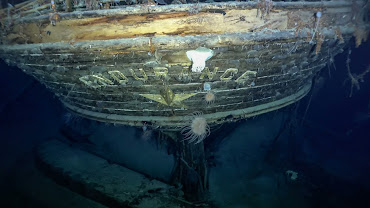
Finding the Endurance: NY Times, CNN, BBC, great video at YouTube.

New Pictish symbol stone discovered in Aberlemno, Scotland.

Fascinating tomb of a mummified freedman in Pompeii.

Excellent 1922 prediction of the world 100 years in the future, by W. L. George.

Curator's Corner with the Bush Barrow Chieftain, "Stonehenge's Richest Man," 8-minute video. 

As if deer weren't enough of a menace, now they're infected with Covid-19, serving as a reservoir and developing new mutations.

Creeks, which developers used to consider nuisances and put underground whenever possible, are now seen as key amenities that can raise the price of nearby real estate. Better check the 500-year flood line before you buy, though. (NY Times)

Japanese officials confirm that Sessho-sekithe, a stone said to contain the spirit of a deadly nine-tailed fox demon sent to kill Emperor Toba, has split in half, potentially releasing the demon from its 899-year confinement.

Review of The Quiet Before: On the Unexpected Origins of Radical Ideas by Gal Beckerman, which looks at the cultural developments that take place in obscure intellectual circles before revolutionary change burst on the world. In Beckerman's view the Arab Spring failed because not enough of this quiet foundation-laying had taken place.

Long, interesting review of a new biography of John von Neumann, towering genius and, some say, moral monster.

Meta-study of walking and mortality finds "Taking more steps per day was associated with a progressively lower risk of all-cause mortality, up to a level that varied by age." For older people like most of us at this blog that threshold was 6,000 to 8,000 steps per day.

Some winners of the Sony World Photography Awards.

Drone video of Ukrainian artillery ambush of Russian armored column NE of Kyiv. Authenticated by a bunch of Osint experts.

More Ukraine links: Institute for the Study of War, Military Land, Military Times, Google Map, Nathan Ruser's maps, constantly updated list of photo-verified equipment losses during the campaign.

Thursday, March 10, 2022

The Bad Old Days

Many images circulating of Russian vehicles in Ukraine flying Soviet flags.