
Friday, January 15, 2016

Trump vs. Cruz, the Cage Match
In the latest debate, Trump and Cruz spent so much time and energy bashing each other over Cruz's Canadian birth, what each had said about it when, and who could be tougher and meaner about it now, that nobody else could get much attention. I would be tempted to call it a contest in insult comedy, except that it wasn't funny. So, a new entertainment category: insult tragedy. Desperate for air time, Chris Christie decided to sink to their level, announcing that Obama is a "petulant child" whose "rear" he would kick out of the White House. When they weren't insulting each other or Hillary, they were painting a picture of an America mired in economic woes, besieged by terrorists, and bedeviled at every turn by "government regulations," a phrase that in Cruz's mouth comes out like the name of a satanic death cult. In these candidates' America there is a lot of "force and fury" but no sunshine. Between Trump's "America is a mess" and Cruz saying that Americans are "horrified" every time they open their papers, it was a grim night.
Right now it looks like a Trump vs. Cruz primary.
Right now it looks like a Trump vs. Cruz primary.
Thursday, January 14, 2016
Republicans, Democrats, and Ideology
Interesting piece by Ezra Klein about how Republicans and Democrats are different. He starts from a piece that arose when MSNBC asked its reporters who had been covering the Republican and Democratic primaries to switch roles. One wrote:
I was caught off guard by how specific and personal Democratic voters’ issues tended to be. One woman told me she had lost a job because she had to take care of a sick relative and wanted paid family leave. Another woman told me her insurance stopped covering a certain medication that had grown too expensive and she liked how Clinton and Sanders talked about lowering drug prices. One man told me his wages were stagnant at his hotel job and he was looking for policies to increase them.Klein says this effects politics at the highest levels:
"We’re talking about bread-and-butter issues," Phyllis Thede, an Iowa state representative backing Clinton, told me when I asked about her constituents’ top concerns.
By contrast, Republican voters tend to be excited by more abstract issues: One of the most common answers I get from Cruz voters when I ask about their leading concern is "the Constitution." There are fewer "I have a specific problem in my own life, and I’d like the government to do x about it" responses.
Democrats tend to project their preference for policymaking onto the Republican Party — and then respond with anger and confusion when Republicans don't seem interested in making a deal. Republicans tend to assume the Democratic Party is more ideological than it is, and so see various policy initiatives as part of an ideological effort to remake America along more socialistic lines.Obviously there is much more to contemporary ideology than this; for example, many Democrats are committed to the abstract principles of peace and racial justice. But I do have the impression that in America conservatives are more ideological than liberals. Take, for example, my own attitude toward health care. What I want is for everybody to get the care that he or she needs, without financial hardship. I care not a fig whether this is done by the government, private insurance companies, or Martians. I tend to think that a single payer system would do this best, but I am perfectly open to private schemes like the ones in Switzerland and Singapore, provided they are universal. But many Republicans have responded to Obamacare just as Klein says, as a sort of plot to make America a more socialist place where people rely more on the government and less on themselves. Many Republicans would say that while universal care is a worthy goal, it is not worth sacrificing the principle of independence to get it.
Criminal Immigrants
Roger Cohen:
Nationalism has always been something of a fraud, since every substantial block of territory is ethnically and culturally diverse; whatever cultural unity modern nation states have has been imposed by the state. But in our American "nation of immigrants" it is even more of a fraud. Is there anybody among Donald Trump's supporters today who thinks admitting all those Italians was a terrible mistake? How about the Germans who so offended Benjamin Franklin? The Irish who were so hated in the 1850s? We have always been a melting pot or salad bowl; and yet some people have always hated that. That just seems to be our way.
The United States, between the 1880’s and 1924, admitted about 4 million Italian immigrants. As Leon Wieseltier, a senior fellow at the Brookings Institution, observed to me, “We got Enrico Fermi, Frank Sinatra, Joe DiMaggio, Antonin Scalia — and Al Capone. Who in their right mind would suggest that the Italian immigration was not a great blessing for our country?”The argument that immigrants are criminals is rather silly, just another version of our ancient habit of displacing all blame onto outsiders. The more interesting arguments about immigration have to do with culture. Many people want their worlds to stay pretty much as they are, and mass immigration changes things. Vast swaths of London have about them little that is little English, just as many Parisian suburbs are not very French. Many small towns in Oklahoma and Nebraska are now more than half Hispanic, with more Spanish than English spoken in the streets and more taqueritas than diners. Personally I don't care, but many people do. After all, the basic point of nationalism is that each culture or "nation" should have its own independent state to insure the survival of that culture. Many Europeans still think this way, that the main point of Denmark or Switzerland is to preserve the Danish or Swiss way of life.
Call it the Capone Principle: Costs of immigration are outweighed by benefits.
Nationalism has always been something of a fraud, since every substantial block of territory is ethnically and culturally diverse; whatever cultural unity modern nation states have has been imposed by the state. But in our American "nation of immigrants" it is even more of a fraud. Is there anybody among Donald Trump's supporters today who thinks admitting all those Italians was a terrible mistake? How about the Germans who so offended Benjamin Franklin? The Irish who were so hated in the 1850s? We have always been a melting pot or salad bowl; and yet some people have always hated that. That just seems to be our way.
More on Americans and their Country


Looking closely at these graphs you can see that while the personal life numbers really don't change very much, the numbers for the United States jump all over the place. So it seems that people answer these questions in different ways. The "personal life" question inspired people to answer optimistically, with hope for themselves. The question about the whole country inspires a political answer which varies according to circumstance. Which makes me wonder: why do people change their minds so readily about how the country is doing? Why is there a national mood, and where does it come from? Obviously the economy is a big part of the story, but right now the economy is pretty good and the mood is still awful.
I keep thinking that this has something to do with the media, and with what politicians say. I think fear- and doom-mongers have a lot to answer for.
Wednesday, January 13, 2016
David Brooks Hungers for Wisdom
From an interview with "NY Times Columnist/Punching Bag" David Brooks:
You’ve been writing about your desire to live with a passion for meaning, about how you want to be more like people who display a generosity of spirit. You wrote that you want “to be better at balancing my life.” How’s that going?I also liked this line:
It’s going okay. Every day, I try to read something of some meaning. This morning, I read a book about how we find our callings. I always try to keep a book like that open. The question is: Am I a better person? I hope so. My mornings are sadder.
I had a student come up to me at the end of this class I taught at Yale, and he said, “Since I’ve been taking the class, I’m much sadder than I used to be.” And I took that as a win. Sadness is not quite the right word. Hunger and longing is what I mean. There’s a biblical verse, “Blessed are the hungry ones.” So I’m hungry for this sort of knowledge. I have this vision that if I do this long enough, I’ll be the sort of person who, when people come to you for advice, I’ll have answers, I’ll have wisdom. I’m not sure it will really work that way, but the one measurable thing I’ve noticed in my life is that people never used to confide in me, and now, they do. I don’t always know what to say, but I’m getting there.
While I was counting columns, I noticed a marked turn in the sources and readings you’ve been relying on. It’s a shift from social scientists to philosophers, clergy and novelists. Is that a purposeful change?
Yes. I’d written this book, The Social Animal, and it had a lot of social scientists in it. I don’t abandon that stuff; it’s very useful. But I’ve really become disillusioned—not completely—but halfway disillusioned with neuroscience. Ten years ago, I thought that was going to teach us a lot about who we are. And it does, a little. It teaches you the importance of emotion, how the amygdala is involved in everything. But I don’t think neuroscience has taught us anything that George Eliot didn’t already know. It doesn’t at all solve the problem of meaning. So I felt I had to go back to the Soloveitchiks or the Niebuhrs or George Eliot or Dostoyevsky, who didn’t have fMRI machines but were pretty good observers of human nature.
Universities and a lot of institutions became very amoral because they didn’t know what to say. We became such a diverse society that it became hard to know what to say without insulting somebody.Like Brooks, I hunger for wisdom, which is why I keep reading him even though I disagree with most of what he says. Unlike him, I have little interest in religious tradition. So I wander through my own intellectual world, wondering.
Our Electrical Grid is Under Attack!

I don't think paralysis [of the electrical grid] is more likely by cyberattack than by natural disaster. And frankly the number-one threat experienced to date by the US electrical grid is squirrels.Ponder the map above, which shows electrical grid disruptions caused by squirrels in 2015 alone. Since the Department of Homeland Security was formed, they have tracked zero successful attacks on the electrical grid by terrorists and 623 by squirrels.
- John C. Inglis, Former Deputy Director, National Security Agency 2015.07.09
What has Changed in America
Democrats are unhappy in this election season, and many are gravitating to Bernie Sanders because he promises to do something about the issue that gnaws at them: growing economic inequality. But what about the progressive goals that have been and are being achieved? One way to think about the new left-wing obsession with economics is that progressives have time to focus on inequality again because so much has been won in other battles. President Obama kept gesturing in that direction during his speech:
What is on Obama's mind is not really the state of the economy or the threat of terrorism, but the nature of American identity. Obama chose to throw his final arguments not his enemies in Congress, but at Donald Trump's pledge to make America great again. Matt Yglesias:
The social change that has been wrought in the western world over the past 75 years is extraordinary, and I think Obama was right to celebrate it.
Our brand of democracy is hard. But I can promise that a year from now, when I no longer hold this office, I’ll be right there with you as a citizen — inspired by those voices of fairness and vision, of grit and good humor and kindness that have helped America travel so far. Voices that help us see ourselves not first and foremost as black or white or Asian or Latino, not as gay or straight, immigrant or native born; not as Democrats or Republicans, but as Americans first, bound by a common creed. Voices Dr. King believed would have the final word — voices of unarmed truth and unconditional love.There's something to ponder, gay marriage listed not as a goal, but as a settled accomplishment.
In fact, it’s that spirit that made the progress of these past seven years possible. It’s how we recovered from the worst economic crisis in generations. It’s how we reformed our health care system, and reinvented our energy sector; how we delivered more care and benefits to our troops and veterans, and how we secured the freedom in every state to marry the person we love.
What is on Obama's mind is not really the state of the economy or the threat of terrorism, but the nature of American identity. Obama chose to throw his final arguments not his enemies in Congress, but at Donald Trump's pledge to make America great again. Matt Yglesias:
as he closes his term in office, Obama is closing the loop on the redefinition of American identity with which he launched his career, identifying himself firmly with the interests and sensibilities of those who believe that today's America — the America of "the Dreamer who stays up late to finish her science project" and "the protester determined to prove that justice matters" and "the son who finds the courage to come out as who he is" — is the greatest version of America that history has ever seen.I'm not fool enough to think that racism or sexism or homophobia has been defeated in America. But we have a half-black president, hundreds of thousands of married gay couples, and there's a woman running for president who can't get traction on the left because few leftists seem to think that just electing a female president would be a very big deal.
The social change that has been wrought in the western world over the past 75 years is extraordinary, and I think Obama was right to celebrate it.
Andrea del Sarto


The most excellent painter Andrea del Sarto, more excellent in his life than in his art, was deeply obliged to nature because of a rare talent in painting. If he had devoted himself to a more civil and respectable life and not neglected himself and his neighbors for his craving for a woman who always kept him poor and lowly, he would have stayed in France, where he was summoned by that King [François I] who adored his work and esteemed him greatly, and would have rewarded him on a grand scale. Instead, to satisfy his own appetite and hers, he returned home and always lived in a lowly manner, and was never paid more than poorly for his work, while she, whom he regarded as his only good, finally abandoned him as he lay dying.Portrait of a Young Man, 1517

And although [Andrea’s] assistants put up with the situation in order to learn something in his company, no one, great or small, got away without some malicious word or deed from her.Self Portrait


Tuesday, January 12, 2016

Everyone's Losing in America
Based on Pew survey data, Matt Yglesias concludes:
But mainly I just think that the mood in the country is sour.
Most Republicans think their side is mostly losing in the political process, and most Democrats also think their side is mostly losing in the political process.I suppose this is partly because people are focused on different things. Many Democrats care most about economic inequality, which is getting worse by the day. Many Republicans are focused on issues of public morality (e.g., gay rights) where Democrats really are winning. The Obama era has been a political mixed bag, so there is something for everyone to hate.
But mainly I just think that the mood in the country is sour.
New Discoveries at Must Farm


How Much Influence Can You Buy for $900 Million?
Charles Koch has been raising hundreds of millions to shape the Republican primaries and then help the Republican nominee get elected. But he doesn't feel like he's gotten much in return:
And does Koch really lie awake at night thinking his company might be nationalized? Seems a bizarre thing to worry about in 21st century America.
He says he is “disappointed” by the current crop of Republican presidential candidates, and resigned to having to support one with whom he agrees on only some issues. “It is hard for me to get a high level of enthusiasm because the things I’m passionate about and I think this country urgently needs aren’t being addressed.”Koch is a libertarian whose agenda only sometimes fits with the Republican mainstream. He hates talk about climate change, which most Republicans agree with, and wants lower taxes. But he also wants a less aggressive foreign policy and less talk about social issues, especially homosexuality. His ability to move the party in those directions is very limited. Big money matters in American politics but I think it is a mistake to say that the billionaires are in control. Ordinary Republicans of the "God, gays, and guns" variety are still very powerful in the party.
The Kochs’ political machine has presented all the candidates with a list of issues it wants on the agenda but, says Koch, “it doesn’t seem to faze them much. You’d think we could have more influence.”
So does the man that the left believes has too much influence in politics believe he in fact has too little? “I’m pleased that I can still speak and I’m pleased that it isn’t worse,” he says. “They haven’t nationalised all the industries like happened in the UK when the Fabians took over.”
I ask him to put his businessman’s hat on and to tell me whether he thinks his political spending is generating a positive return on investment. “I’m not confident,” he says. “I’d say there are some benefits. Ask me in 10 years.”
And does Koch really lie awake at night thinking his company might be nationalized? Seems a bizarre thing to worry about in 21st century America.
Monday, January 11, 2016
Polling in New Hampshire
Donald Trump: 32%
Ted Cruz: 14%
John Kasich: 14%
Marco Rubio 12%
Chris Christie: 8%
Carly Fiorina: 5%
Jeb Bush: 4%
Rand Paul: 4%
This is from Monmouth, which found that Trump had 26% support in November, so by their tally his lead continues to grow. Interesting that John Kasich polled so well; if he comes in second, that might really shake things up. I lost interest in him when he started spouting nonsense about Syria -- what's the point of a boring establishment candidate who talks as blithely about war as Trump does? -- but maybe he could catch fire with anti-Trump voters. Seems to me that a fourth-place finish would be very bad for Marco Rubio.
Ted Cruz: 14%
John Kasich: 14%
Marco Rubio 12%
Chris Christie: 8%
Carly Fiorina: 5%
Jeb Bush: 4%
Rand Paul: 4%
This is from Monmouth, which found that Trump had 26% support in November, so by their tally his lead continues to grow. Interesting that John Kasich polled so well; if he comes in second, that might really shake things up. I lost interest in him when he started spouting nonsense about Syria -- what's the point of a boring establishment candidate who talks as blithely about war as Trump does? -- but maybe he could catch fire with anti-Trump voters. Seems to me that a fourth-place finish would be very bad for Marco Rubio.
They is Here to Stay
The latest on the pronoun front:
Singular "they," the gender-neutral pronoun, has been named the Word of the Year by a crowd of over 200 linguists at the American Dialect Society's annual meeting in Washington, D.C. on Friday evening.Now we're just going to need a new way to distinguish between singular and plural.
....The Post’s style guide ratified this usage last month, which caused some grammar pedants to shriek. But as Post copy editor Bill Walsh explained, the singular they is “the only sensible solution to English’s lack of a gender-neutral third-person singular personal pronoun.”
What Happened to Philosophy?
Interesting little essay by Robert Frodeman and Adam Briggle on how philosophy has been changed by the rise of the modern university:
But on the other hand I have the sense that philosophy in its glory days, both in the ancient world and in the 17th to 19th centuries, was the product of a particular culture and world view. In both of those eras the upper class prided itself on its rationalism, and based part of its argument for its own perpetuation in power on its philosophical outlook. Reason was in the air; even people who opposed narrow rationalism did so in the name of some deeper idea of reason.
Modern philosophy is arcane not just because it became a university specialty, but because we have a different sort of elite and much less confidence in reason. It would be impossible now to write an argument for a reasonable approach to public life that would not be seen as a statement of partisan politics. Our understanding of private life is dominated by post-Freudian psychology, saturated with unreason. Our science is scarcely comprehensible to non-specialists, and what outsiders glimpse of cutting edge science seems downright mad.
In our world we still have tons of popular history, some of it by professional historians, and some respected literary figures sell lots of books. But is there such a thing as popular philosophy? It's an interesting question. I would nominate M. Scott Peck's The Road Less Traveled for this category, but of course it is sold as psychology or self-help. Otherwise I am having trouble coming up with examples. Does something like Chicken Soup for the Soul or Everything I Need to Know I Learned in Kindergarten count? I'd be interested in suggestions.
Early 20th-century philosophers thus faced an existential quandary: With the natural and social sciences mapping out the entirety of both theoretical as well as institutional space, what role was there for philosophy? A number of possibilities were available: Philosophers could serve as 1) synthesizers of academic knowledge production; 2) formalists who provided the logical undergirding for research across the academy; 3) translators who brought the insights of the academy to the world at large; 4) disciplinary specialists who focused on distinctively philosophical problems in ethics, epistemology, aesthetics and the like; or 5) as some combination of some or all of these.I understand what they are getting at. Another one of the foolish things I did when first exploring the internet was to join several philosophical discussing groups that seemed, from their titles, to be open forums for discussing the meaning of life and the place of scholarship therein. But they all turned out to be places where graduate students debated very technical points of contemporary philosophical discourse, using terminology I could barely understand.
There might have been room for all of these roles. But in terms of institutional realities, there seems to have been no real choice. Philosophers needed to embrace the structure of the modern research university, which consists of various specialties demarcated from one another. That was the only way to secure the survival of their newly demarcated, newly purified discipline. “Real” or “serious” philosophers had to be identified, trained and credentialed. Disciplinary philosophy became the reigning standard for what would count as proper philosophy.
This was the act of purification that gave birth to the concept of philosophy most of us know today. As a result, and to a degree rarely acknowledged, the institutional imperative of the university has come to drive the theoretical agenda. If philosophy was going to have a secure place in the academy, it needed its own discrete domain, its own arcane language, its own standards of success and its own specialized concerns.
But on the other hand I have the sense that philosophy in its glory days, both in the ancient world and in the 17th to 19th centuries, was the product of a particular culture and world view. In both of those eras the upper class prided itself on its rationalism, and based part of its argument for its own perpetuation in power on its philosophical outlook. Reason was in the air; even people who opposed narrow rationalism did so in the name of some deeper idea of reason.
Modern philosophy is arcane not just because it became a university specialty, but because we have a different sort of elite and much less confidence in reason. It would be impossible now to write an argument for a reasonable approach to public life that would not be seen as a statement of partisan politics. Our understanding of private life is dominated by post-Freudian psychology, saturated with unreason. Our science is scarcely comprehensible to non-specialists, and what outsiders glimpse of cutting edge science seems downright mad.
In our world we still have tons of popular history, some of it by professional historians, and some respected literary figures sell lots of books. But is there such a thing as popular philosophy? It's an interesting question. I would nominate M. Scott Peck's The Road Less Traveled for this category, but of course it is sold as psychology or self-help. Otherwise I am having trouble coming up with examples. Does something like Chicken Soup for the Soul or Everything I Need to Know I Learned in Kindergarten count? I'd be interested in suggestions.
Shirin Neshat, Women of Allah


Her works mainly explore gender issues in the Islamic world, particularly the various dimensions of women’s experience in contemporary Islamic society. The Iranian national identity in the twenty-first century is deeply rooted in the past and these women cannot ignore their cultural identities. Neshat believes that the 1979 Islamic Revolution in Iran led many Iranian women to become “brainwashed and submissive.” One of the themes of Neshat is to show how the compulsory veiling law in 1983 shows the power of Islamic laws placed significant limitations on Iranian women both in private and public domains.


Sunday, January 10, 2016
Ash Wednesday
II
Lady, three white leopards sat under a juniper-tree
In the cool of the day, having fed to satiety
On my legs my heart my liver and that which had been contained
In the hollow round of my skull. And God said
Shall these bones live? shall these
Bones live? . . .
Let the whiteness of bones atone to forgetfulness.
There is no life in them. As I am forgotten
And would be forgotten, so I would forget
Thus devoted, concentrated in purpose. And God said
Prophesy to the wind, to the wind for only
The wind will listen. And the bones sang chirping
With the burden of the grasshopper, saying
Lady of silences
Calm and distressed
Torn and most whole
Rose of memory
Rose of forgetfulness
Exhausted and life-giving
Worried reposeful
The single Rose
Is now the Garden
Where all loves end
Terminate torment
Of love unsatisfied
The greater torment
Of love satisfied
End of the endless
Journey to no end
Conclusion of all that
Is inconclusive
Speech without word and
Word of no speech
Grace to the Mother
For the Garden
Where all love ends.
Under the juniper-tree the bones sang, scattered and shining
We are glad to be scattered, we did little good to each other,
Under a tree in the cool of the day, with the blessing of sand,
Forgetting themselves and each other, united
In the quiet of the desert. This is the land which ye
Shall divide by lot. And neither division nor unity
Matters. This is the land. We have our inheritance.
IV
The silent sister veiled in white and blue
Between the yews, behind the garden god,
Whose flute is breathless, bent her head and signed but spoke no word
But the fountain sprang up and the bird sang down
Redeem the time, redeem the dream
The token of the work unheard. unspoken
Till the wind shake a thousand whispers from the yew
And after this our exile.
--T.S. Eliot
Lady, three white leopards sat under a juniper-tree
In the cool of the day, having fed to satiety
On my legs my heart my liver and that which had been contained
In the hollow round of my skull. And God said
Shall these bones live? shall these
Bones live? . . .
Let the whiteness of bones atone to forgetfulness.
There is no life in them. As I am forgotten
And would be forgotten, so I would forget
Thus devoted, concentrated in purpose. And God said
Prophesy to the wind, to the wind for only
The wind will listen. And the bones sang chirping
With the burden of the grasshopper, saying
Lady of silences
Calm and distressed
Torn and most whole
Rose of memory
Rose of forgetfulness
Exhausted and life-giving
Worried reposeful
The single Rose
Is now the Garden
Where all loves end
Terminate torment
Of love unsatisfied
The greater torment
Of love satisfied
End of the endless
Journey to no end
Conclusion of all that
Is inconclusive
Speech without word and
Word of no speech
Grace to the Mother
For the Garden
Where all love ends.
Under the juniper-tree the bones sang, scattered and shining
We are glad to be scattered, we did little good to each other,
Under a tree in the cool of the day, with the blessing of sand,
Forgetting themselves and each other, united
In the quiet of the desert. This is the land which ye
Shall divide by lot. And neither division nor unity
Matters. This is the land. We have our inheritance.
IV
The silent sister veiled in white and blue
Between the yews, behind the garden god,
Whose flute is breathless, bent her head and signed but spoke no word
But the fountain sprang up and the bird sang down
Redeem the time, redeem the dream
The token of the work unheard. unspoken
Till the wind shake a thousand whispers from the yew
And after this our exile.
--T.S. Eliot
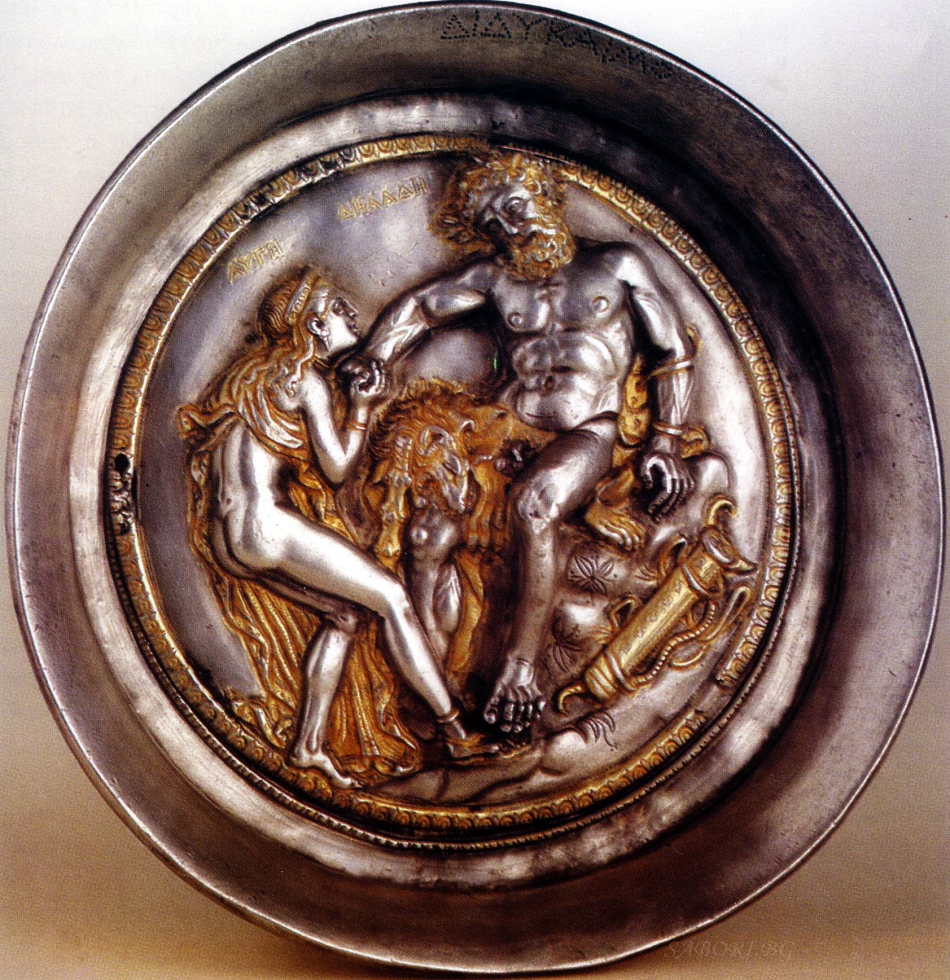
The Rogozen Treasure


there is only one Satok whose name may stand on a vessel like that: Prince Satokos/Sadokos, son of Sitalkes.Satokos is dated to around 431-429 BCE. Another vessel bears a symbol that some experts date to the late 6th century. So the collection was clearly built up over time, from diverse sources. These treasures may have circulated as gifts among Thracian kings and nobles, or perhaps they were booty from wars.


Friday, January 8, 2016
Barack Obama as a Literary Critic
As a 22-year-old college senior, Obama wrote a letter to his then girlfriend, Alexandra McNear, who had been assigned a paper on T.S. Eliot's The Wasteland.
Mendelson finds it disheartening that his once political hero has this deep streak of pessimism:
I haven’t read “The Waste Land” for a year, and I never did bother to check all the footnotes. But I will hazard these statements—Eliot contains the same ecstatic vision which runs from Münzer to Yeats. However, he retains a grounding in the social reality/order of his time.This comes via Edward Mendelson, who says that it "exemplified literary criticism at its best." Mendelson also thinks that Obama's sympathy for the reactionary Eliot tells us something a bit disturbing about his politics:
Facing what he perceives as a choice between ecstatic chaos and lifeless mechanistic order, he accedes to maintaining a separation of asexual purity and brutal sexual reality. And he wears a stoical face before this. Read his essay on Tradition and the Individual Talent, as well as Four Quartets, when he’s less concerned with depicting moribund Europe, to catch a sense of what I speak.
Remember how I said there’s a certain kind of conservatism which I respect more than bourgeois liberalism—Eliot is of this type. Of course, the dichotomy he maintains is reactionary, but it’s due to a deep fatalism, not ignorance. (Counter him with Yeats or Pound, who, arising from the same milieu, opted to support Hitler and Mussolini.)
And this fatalism is born out of the relation between fertility and death, which I touched on in my last letter—life feeds on itself. A fatalism I share with the western tradition at times. You seem surprised at Eliot’s irreconcilable ambivalence; don’t you share this ambivalence yourself, Alex?
Obama sees that Eliot’s conservatism differs from that of fascist sympathizers who want to impose a new political hierarchy on real-world disorder. Eliot’s conservatism is instead a tragic, fatalistic vision of a world that cannot be reformed in the way that liberalism hopes to reform it; it is a fallen world that can never repair itself, but needs to be redeemed. Behind this insight into Eliot’s conservatism is Obama’s sense that the goal of partisan politics is not the success of one or another party or program, but the means by which private morality can be put into action in the public sphere. So the liberal Obama can respect the conservative Eliot, because both seek what are ultimately moral, not political, ends.I am another left-wing another admirer of Eliot, so I found this very interesting. Like, it seems, Obama, I also find that my hopes for a better world are tempered by a biological pessimism about the human organism. Really it is amazing that smart baboons like us can create complex societies that function at all, and equally amazing that we are able to sustain such spiritual optimism in the face of the apparently indifferent universe.
Mendelson finds it disheartening that his once political hero has this deep streak of pessimism:
I doubt that “a fatalism I share with the western tradition” is desirable in a practical politician.I completely disagree. I can point to several famously practical politicians who shared that same fatalism: Abraham Lincoln, Martin Luther, Oliver Cromwell, Cardinal Richelieu, George F. Kennan. I think Obama's rather low expectations of the world have helped him thrive amid the storms of his time in office, and anyway I prefer his pessimism to the raging optimism that sometimes gripped his predecessor.
A Gray Day in Washington


A Culture of Order in a Disordered World
This is from an old piece by William Lind laying out his model of the four generations of modern warfare:
The First Generation of Modern War runs roughly from 1648 to 1860. This was war of line and column tactics, where battles were formal and the battlefield was orderly. The relevance of the First Generation springs from the fact that the battlefield of order created a military culture of order. Most of the things that distinguish "military" from "civilian" - uniforms, saluting, careful gradations or rank – were products of the First Generation and are intended to reinforce the culture of order.
The problem is that, around the middle of the 19th century, the battlefield of order began to break down. Mass armies, soldiers who actually wanted to fight (an 18th century's soldier's main objective was to desert), rifled muskets, then breech loaders and machine guns, made the old line and column tactics first obsolete, then suicidal.
The problem ever since has been a growing contradiction between the military culture and the increasing disorderliness of the battlefield. The culture of order that was once consistent with the environment in which it operated has become more and more at odds with it.
Subscribe to:
Posts (Atom)

