Friday, January 14, 2022

Links 14 January 2022

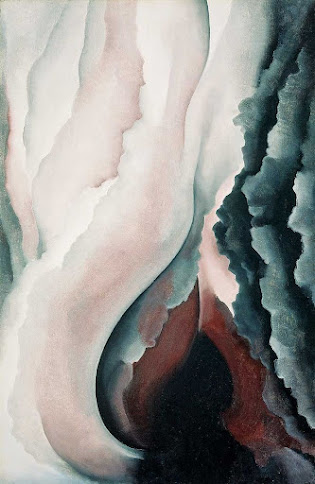
Georgia O'Keeffe, Dark Iris no.II, 1927

Investigating the child mummies of Palermo.

Kevin Drum wants to start thinking about what "living with Covid" would mean.

Also from Drum, a little news item about a smallpox outbreak in Massachusetts in 1932, complete with vaccine mandates and opposition to them.

At a place called Blackgrounds, British archaeologists unearth an Iron Age town that became a thriving trading settlement in the Roman period, part of the extraordinary archaeological effort tied to the HS2 train line project.

The bizarre story of the trebuchet that Cortez's men built at the Aztec capital of Tenochtitlan.

The coal piles in the historic mining town of Madrid, New Mexico are an environmental hazard, and the town is regularly flooded with coal-laden runoff. But the ruined landscape is key to the town's historic charm, which leads to it being a frequent movie set, so nobody can agree on what to do about the hazard. (Washington Post)

Metal animal sculptures by Korean artist Kang Dong Hyun.

The spiral lock was a complicated sort of fold that made it nearly impossible to open a letter without damage, which could therefore show that letters had not been read in transit. Europeans made much use of them between the 1500s and early 1800s. Much correspondence between monarchs was sent in this way. (New York Times)

Using big data and machine learning we can now make accurate scientific predictions without having any idea what the underlying theory might be. This makes many scientists uncomfortable; they want to know why. But does that make sense? And does machine learning show that our theories don't explain the world nearly as well as we would like to think?

New book asks the question, does Slaughterhouse Five prove Kurt Vonnegut had PTSD? But what kind of questions is that, anyway? (Washington Post)

Spanish badger digs up hoard of Roman coins that had been buried in a cave.

The woman whose hobby is buying letters, photographs, and other memorabilia at flea markets, then trying to find family members and return them. (Washington Post)

Study of English horse bones finds that medieval war horses were not very big by modern standards, 14 hands and shorter.

The Webb space telescope, sailing through space, has completed its complex unfolding operation, which made astronomers very nervous; there were hundreds of possible "failure points." The telescope still has a week to go to reach its final orbit, and then NASA says to expect 5 months of fine-tuning before we get the first real images.

Turkish archaeologists say they have identified the bones of a man and dog who were killed together by the tsunami caused by the eruption of Thera, around 1600 BC.

When Scott Alexander/Siskind first became a famous blogger, he complained a lot about how hard it is for nerdy guys to get dates, etc. Last week he got married, at the age of 37.

Jerry Coyne ponders an online list of 800 genders and ways of defining gender.

US college enrolments declining: Fall 2021 enrolment was down 465,000 from Fall 2020, or about 3%. Enrolment is down 6.6% since the Fall of 2019, the last pandemic-free semester, including an 11% decline in degree-seeking students at four-year colleges. (Washington Post)

David Hume's political conservatism was born from a deep suspicion of democratic multitudes. He was particularly worried that lies would prove more popular than the truth: “Nothing indeed can be a stronger presumption of falsehood than the approbation of the multitude.” I agree, but I don't think aristocratic elites have a better record on that score.

Virginia's new Republican Lieutenant Governor, Winsome Sears, is the first black woman to hold statewide office. An immigrant from Jamaica, she is mostly a moderate but has lately been a loud foe of wokeness and wants to "move on" from slavery.

Back in 1996, scientists examining a piece of Mars that fell to earth as a meteorite said that it contained evidence of Martian life. New study disagrees.

Thursday, January 13, 2022

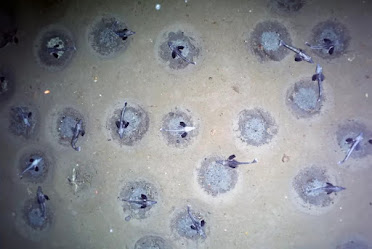
Nesting Icefish

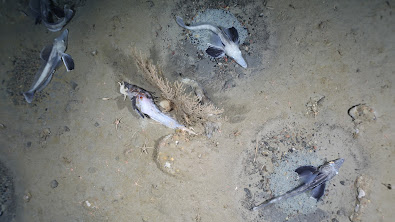
Scientists on a German icebreaker called the RV Polarstern were towing an underwater camera across the floor of the Weddell Sea off Antarctica. They were investigating this area because comparatively warm water – 3.6 Celsius, or 38.5 Fahrenheit – was welling up there. They found that someone else was interested in this warm water: about 60 million nesting icefish

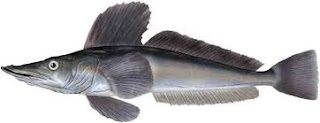
This species of icefish (Neopagetopsis ionah) lay about a 1,700 eggs in each of these seafloor nests, which the adults then tend. The fish had previously been known to nest in colonies, but the biggest colony seen before had about 40 nests. This one extended across 240 square kilometers of sea floor (93 square miles). It seems that the rising "warm" water is full of zooplankton, on which newly hatched icefish feed, so the adults were all trying to bring forth their babies into this rich environment.

Incidentally the crocodile icefish (including Neopagetopsis ionah) are the only vertebrates that completely lack hemoglobin. They just let oxygen dissolve in their blood plasma and somehow get by with that.

South American Gargoyles

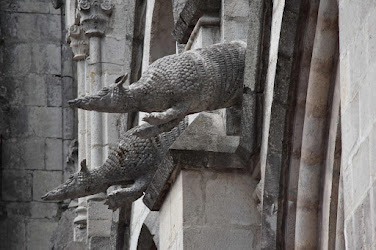
Basílica del Voto Nacional – Basilica of the National Vow – is a neogothic church in Quito, Ecuador, construction begun in 1884 and still not finished. I just discovered today that its gargoyles are mostly native South American animals.


Wednesday, January 12, 2022

Nok Sculpture from Nigeria

According to various online sources, including the Met and Louvre, the modern story of Nok sculpture began in 1943. In that year, tin miners working near the village of Nok in central Nigeria dug up a terracotta head. As we will see in a minute, this cannot possibly have been the first time modern people stumbled across one of these, but anyway that was the find that launched scholarly investigation of these intriguing sculptures.

It can't have been the first because hundreds of fairly intact specimens are now known, along with tens of thousands of fragments. They turn up all over the region, especially in three major archaeological sites at Nok, Taruga, and Samun Dukiya. They do not seem to be from tombs; the best guess is that most were set up on the surface in various prominent places. Some must have been intentionally buried to have survived so well, but most were not and so ended up smashed.


The Nok culture seems to have been established before 1500 BC by immigrants who came into the region from the north, on the borders of the Sahara. That is where their main crop, millet, grows naturally. They were making iron by 1000 BC; there is no agreement as to whether this was a local discovery or diffusion from Egypt and Nubia. The oldest sculptures seem to date to around 900 BC, and they were made down to around 500 AD.

Just cruising around the internet over the past half an hour I have begun to doubt that end date, because objects in very similar styles are listed by museums with dates as late as 900 AD, and I found one wooden sculpture very much like these from the 19th century.

The most famous examples are human heads, so you often see these described as "Nok heads." But most of the heads are broken and used to have bodies, and there is lots of other stuff. The biggest human forms are nearly life sized, while the smallest heads are the size of cherries.

They are made of clay, built by coiling up a long clay rope just like many pots were made. The fine features were then carved into the partially dried form before firing.

Fascinating objects that tell us a lot about the people who made them, for example that they rode horses.

More are being found all the time, by both official and unofficial archaeologists, so the body of Nok work keeps growing, and we keep learning more about these ancient people.

Catoctin Mountain

I spent a rare day in the field today, up on Catoctin Mountain where they are going to repave a historic road through a park.

Ancient oak tree that was growing at the edge of a cleared pasture, with stone wall nearby.


Pre-Civil War road marker, 10 MI TO AMMITS TOWN.


I was tasked to pay particular attention to the places where culverts run under the road, since they are being replaced and this will involve more digging than just repaving the road will. I thought it would be a pain to find them all, but it turned out to be ridiculously easy. The snow had mostly melted off the road but not above the pipes running under it, and all the culverts were marked with bold white stripes.

Sunday, January 9, 2022

Mary Oliver, "Wild Geese"

You do not have to be good.
You do not have to walk on your knees
For a hundred miles through the desert, repenting.
You only have to let the soft animal of your body
love what it loves.
Tell me about despair, yours, and I will tell you mine.
Meanwhile the world goes on.
Meanwhile the sun and the clear pebbles of the rain
are moving across the landscapes,
over the prairies and the deep trees,
the mountains and the rivers.
Meanwhile the wild geese, high in the clean blue air,
are heading home again.
Whoever you are, no matter how lonely,
the world offers itself to your imagination,
calls to you like the wild geese, harsh and exciting —
over and over announcing your place
in the family of things.

1986

Saturday, January 8, 2022

Hieronymus Bosch, the Puzzle

One of my Christmas presents, which my daughters and I put together this week. Very interesting because even though I knew this painting before, I kept finding more little things that I had not known about, or had forgotten.

The triptych was done around 1500 by Netherlandish painter Hieronymus Bosch, about whom very little is known. This makes interpretation of the painting a game anyone can play.

The left-hand panel shows Adam and Eve with Jesus in the Garden of Eden. 

The right-hand panel shows hell.

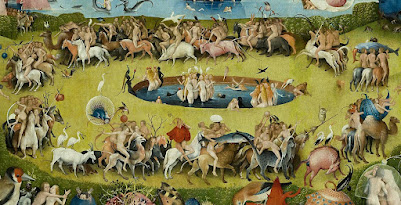
The central panel is called The Garden of Earthly Delights, but there is no agreement about what it depicts or how we should view it. It looks like an earthly or semi-earthly utopia, people frolicking happily without worries, or clothes. Art historians have dreamed up theological or Biblical contexts within which this could be just that, a very happy place. Some experts think, though, that it is a depiction of sin, with the hell panel there to remind you where it leads. But then yet again Bosch's depiction of hell doesn't look all that bad, with giant musical instruments and whimsical figures like the ones who populated medieval manuscript margins. And this just looks too happy to me to have been dreamed up by the sort of person who obsesses about the foulness of other people's fun. So, a mystery.

This is a famously weird painting, but how original is it, as art? There isn't anything else exactly like it. But many of the whimsical elements could have been copied from manuscripts, and there was a whole genre of depictions of Folly in the late 1400s, with which Bosch's garden has much in common. One thing that strikes me as unusual is the half architectural, half organic towers in the back, with their curlicues; I can't remember ever see anything like this before. Even allowing that most of the individual elements were cribbed from manuscript margins, the whole composition is strikingly original.

One of my discoveries from doing the puzzle was this charming elephant. Incidentally the mountain with the birds is a standard medieval manuscript image, brought in from the Middle East.

In the midground of the Garden, women frolic in a pool while men ride around them in troops, apparently trying to get their attention. 

Interesting that several of the figures in the Garden are African, doing exactly the same things as the white figures.

I like the guys who thought a really big fish would impress the ladies, although you also have to give points to the guy riding the cat-unicorn.


More strange details. And a very good way to spend time with my daughters.

Miocene Fossils from McGraths Flat, Australia

Amazing fossils from 15 million-year-old deposits in Australia, preserved in iron-rich rocks. 

The exquisite details include feathers, tiny parasites riding on larger organisms, even pollen grains. 

This spot seems to have been an Oxbow Lake in a rain forest ecosystem. As to how this happened, the excavators are not sure:

The secret to the fossils’ preservation is up for debate, but McCurry thinks it would have happened over hundreds of years rather than in a sudden event.

Iron-rich water, maybe from nearby outcrops, could have flowed into a shallow billabong, periodically deoxygenating the water, killing the organisms or encasing flora and fauna in sediment that turns into the rocks found in the field.

Close-up of the sawfly above, showing its head, and a microscopic image showing the pollen grains still visible there. Astonishing.

A larval mussel riding on the fin of a fish as a parasite.

Tiny flowers.

Longhorn Beetle. Original publication, long story at the NY Times.

The Enemy is the System

Interesting NY Times focus group, bringing Democrats together to talk about January 6. While the participants are angry with or disgusted by the Republican leadership, many of them are somewhat sympathetic to the rioters, because they think the system is so broken that rioting is at least an understandable response:

Susan (from Texas): I’ve gained a more nuanced view of what led to that. So all of this stuff that’s happening — what Harold refers to as all the lawlessness. It’s an inevitable boiling point of flawed systems that were put into place and have only gotten worse over the years. And with all these flawed systems that are put into place, everybody’s got to find an enemy. And some people might realize that the true enemy is the system which keeps us all in a harsh place unless you’re the top of the top. But some people, they buy into these lies that they’re told by people in order to keep their power, such as, oh, it’s the immigrants coming in and stealing jobs. It’s the blue-haired liberals and all that. It’s like, no, that’s not who the enemy is. The enemy is the system that needs either a complete makeover or severe reform in order to protect the livelihoods of the people, not the rich who are just gonna run the planet into the ground and move on to the next one.

 And this:

Tracy: I think it was the frustration of the American people. I’m not saying it was right, but I believe it was more of the American people fed up. People are fed up with politics, telling you lies, and this, that, and the other. They stormed the Capitol for different reasons. But it was mainly the frustration of the American people.

Right vs. left divisions obscure it, but there is a sense in which the dominant theme in American politics is a populist revolt against the system.

Friday, January 7, 2022

RIP Peter Bogdanovich

Peter Bogdanovich (1939-2022)  had a Hollywood life in several senses. Growing up, he loved one thing: movies. They consumed his childhood. He then turned his passion into a career, first by interviewing and writing about famous directors, than by becoming one: The Last Picture Show (1971), What's Up Doc? (1972), Paper Moon (1973). What an incredible story, to go from a poor kid who loved movies to an adolescent who idolized great directors to a director at the top of his profession.

Then everything went wrong. He divorced his wife and took up with Cybill Shepherd. He somehow lost his touch as a director, made a bunch of failures. He left Shepherd for a Playboy model, Dorothy Stratten, and made a film so she could appear in it, but then her estranged husband murdered her before killing himself; Bogdanovich is supposed to have spent hours alone watching Stratten's scenes over and over. The movie flopped. Upset with how the studio handled its promotion, he bought the rights and tried to promote it himself, lost a pile of money and went bankrupt.

After disappearing for a while he resurfaced in the 1990s as a television actor, appearing in several TV shows and The Sopranos, but he never again came close to the roaring success he enjoyed in the 1970s.

It makes me wonder, again, what a good life is: one that is safe and happy, or one that takes you to the heights, and the depths? Is the kind of passion that drove Bogdanovich to the top of Hollywood a good thing, or ultimately a catastrophe for the people it touches? And should we feel any regret about loving the art that such people produce on their way to personal Armageddon?

Links 7 January 2022

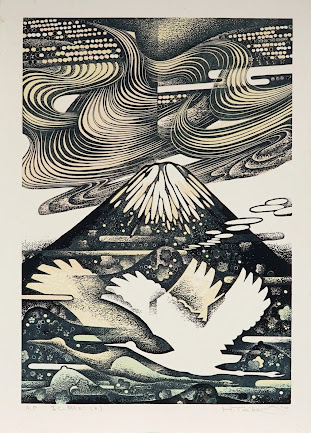
Hiroshi Tomihari, Mountain Cranes Sky

Scott Siskind turns a review of the new film "Don't Look Up" into a meditation on narratives, the pursuit of truth, and the ambiguity of "Trust Science" or "Believe Experts."

Dark and fascinating photographic Tarot deck by Nicolas Bruno. And more here.

A new way of dividing people politically: bulldozer vs. vetocracy.

Year-end posts from Kevin Drum: Why 2021 was better than 2020, the Ten Most Interesting Charts of 2021, and the Top Ten Worst Trends.

Alana Newhouse, "Everything is Broken," a cry from the heart against our crumbling world. Winner of one of David Brooks' Sydney Awards. I disagree with a lot of it; eg., Newhouse is especially upset that things can now be changed by decree overnight, but that has been a complaint of conservatives since the Reformation and probably longer. Still, it is a good expression of that sort of worldview, and meshes with some of my complaints about competence.

Reviewing advances in green energy, batteries, biotech, and other fields, Noahpinion says "The 2020s are going to be a very cool decade."

Sadeck Waff's choreography for the paralympics, 3 minute video.

The vaccine used to eradicate smallpox in the 20th century was actually made using a virus called vaccinia, which is related to smallpox and cowpox but not the same as either; nobody knows where it came from (best guess is horse pox) or how it came to be the strain used in inoculation. (Wikipedia)

The best coin and other hoards of 2021.

The NY Times thinks Doris Lee (1904-1983) is an "Unjustly Forgotten Artist," but after looking at her work I think she is remembered about as much as she deserves.

German artist Jörg Gläscher made some interesting waves by piling up sticks in a forest.

At the Wara Art Festival in Japan, people make giant animals out of rice straw. Definitely a tradition we should bring to the US. We have plenty of straw and tons of frustrated artists.

In 1957, Los Angeles banned backyard trash burning, part of its efforts to fight "smog." Predictably, this led to protests by people waving American flags and shouting about freedom.

At the Washington Post, a round-up of recent doings in QAnon land: infighting, fund-raising mania, and accusations that the movement itself may be a Deep State operation.

Kevin Drum asked his readers to list things that might become "can you believe it used to be like this" memes on TikTok, and about a hundred responded. Many of their memories focus on the trials of television watching, like having to get up to physically turn the knob to change channels, and having to futz with the antenna to get a clear picture. One that resonated with me was how much dog poop there used to be in cities before cleaning up after your pet became the norm, something I really hated.

Review of a big new book on the culture of dueling.

Among other things, Scott Sumner is a highbrow film buff; here is his extensive ranking of the all films he has reviewed, including his all-time bests. With comments.

A North Korean who risked his life crossing the DMZ to reach the South, in 2020, just risked it again crossing back in the other direction. (NY Times) Several others have done the same, feeling like they were treated horribly in the South. A glimpse of why most Koreans have doubts about reunification.

In Poland, policies came into effect on January 1 that raise already existing cash payments to families that have a second, third, or fourth child, as well as bigger tax breaks for large families. This program will consume about 17% of Poland's GDP. The version in place since 2015 has greatly reduced child poverty, but on the other hand it has not budged the birth rate.

Long, strange NY Times piece about Britney Spears, emphasizing that during her conservatorship she used dance to establish a semblance of freedom. Ok, but there is not a word in this piece about the mental health issues that led to the conservatorship being set up in the first place. If Spears was fighting for control, maybe her own demons were an issue? I emphasize this because I feel strongly that mental health issues are a big part of everything that happens in the world, and I find it baffling when they are left out.