Tuesday, March 6, 2012

RIP Ralph McQuarrie

Ralph McQuarrie, who will always be known as the artist of Star Wars, has died at 82. George Lucas wrote the story, but he had only a vague idea of what his world should look like. It was McQuarrie who imagined that. Just a glance at these concept drawings shows how much the movie owed to McQuarrie, who knew what everything from helmets to space ships ought to look like. McQuarrie was by then already a veteran sci-fi artist. He worked on the original Battlestar Galactica tv series and went on to design the spaceship from Close Encounters of the Third Kind and the aliens of Cocoon.


Monday, March 5, 2012

Eric Jager, The Last Duel

This delightful little book is a great way to get back in touch with what is fascinating about medieval history. In the 1380s, two Norman squires named Jean de Carrouges and Jacques Le Gris had a falling out. They were neighbors, they served the same lord (the Count of Perche), and they had once been comrades in arms. But, after a dispute over a parcel of land and quarrels over their lord's favor, they became enemies. Their quarrel escalated until, in 1386, de Carrouges' wife Marguerite accused Le Gris of rape.

This dramatic charge, involving two prominent families with connections among the high aristocracy, riveted France. To some, the charge of rape seemed like an obvious fabrication, another move in the ongoing feud between the two men. But Marguerite stuck to her story under intense scrutiny, despite the shame it brought on her and her family, and she convinced many of her truthfulness. To make the case even more dramatic, when de Carrouges brought charges against Le Gris before the Parlement of Paris, he demanded trial by battle. Trial by battle, the ancient heritage of Frankish and Viking warriors, had fallen out of favor in the later Middle Ages. The church turned against it, and everywhere the fact-finding powers of the judicial inquest steadily replaced the various kinds of ordeals. By 1386 the Parlement hardly ever granted requests for such trials. But this time they did. Jager suggests that they did so to avoid taking sides in a dispute that had divided the aristocracy, with many leading men on both sides. The king was only a teenager and the government weak, making it all the more tempting to avoid rendering a verdict that might anger powerful people.

A date for the duel was set in November of 1386. But the king, on campaign in Flanders, sent word that he wished to preside over the duel in person, so it was delayed for six weeks. It was eventually  held a few days after Christmas. Despite the bitter cold, a crowd of thousands assembled, the elite of the kingdom surrounding the king in the royal box. Jager sets the stage well, describing the elaborate ceremony of the duel, the crowd, the awful finality of the event. For the loser would die one way or another, either in the battle or, if he yielded, by execution for swearing false oaths. Marguerite de Carrouges also faced death, since if her husband failed she would also be convicted of perjury.

As Jager tells the story it illustrates much about medieval culture: the obsessive struggle for land, office, and honor; the profession of arms; the elaborate judicial system; the public fascination with this duel to the death. Jager is a competent writer and skillfully maintains the reader's suspense, which is why I won't say who won the duel. He is also happy in his sources. The complete record of the trial survives, and the event was recorded by several chroniclers, including the famous Froissart. It is a fine book and if anybody ever gives me a chance to teach my Age of Chivalry class, I will use it.

To me, as a historian, the most telling part of the story was the aftermath. The winner was made one of the king's household knights and became famous and wealthy. This happened to other men of the fourteenth century who had the chance to live or die in epic terms, like the survivors of the Combat of the Thirty. After all, few medieval people really had that chance. Medieval wars, like all wars, were mostly decided by the clever deployment of superior resources, and soldiers spent more time foraging for food than fighting honorably. Most dispute were settled by the maneuvers of lawyers or the payment of cash. Politics was largely the sort of sordid squabbling over land and offices that started the feud between Le Gris and de Carrouges. So when a noble man really did lay his life on the line for his honor, or his lady, the world took notice, and he could live off his deeds for the rest of his life.

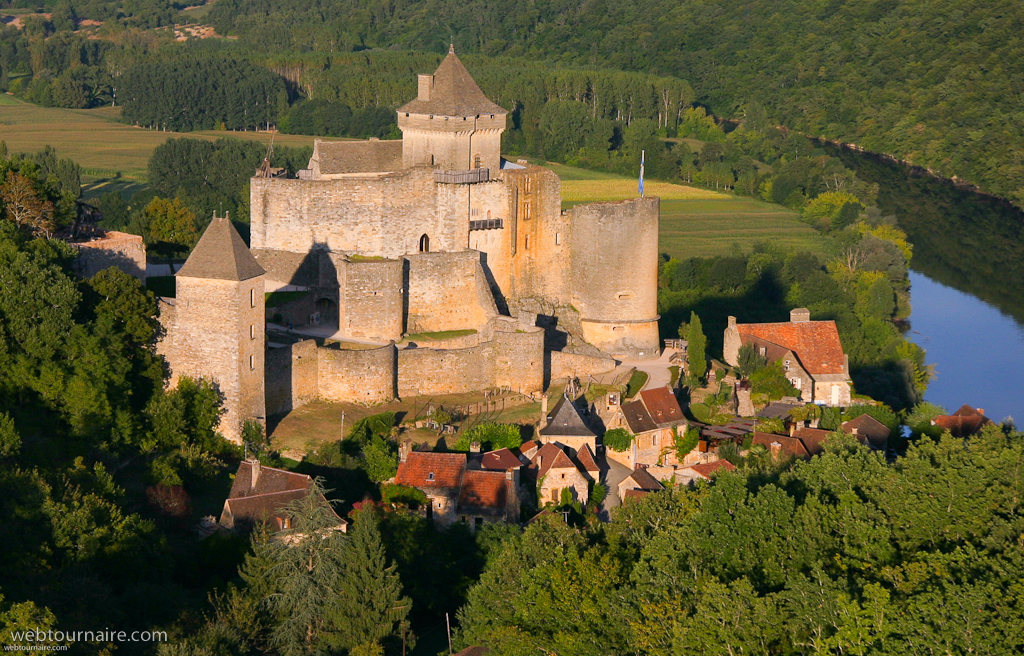
French Castles from the Air

Castelnaud.


Chateau Gaillard.


Chaetau de Coucy.


Chateau de Gisors.


Chateau de Beynac.

Blandy le Tours.

Chateau de Murasy.

Chateau Beaumont.

These are from a French outfit called Webtournaire that flies people around in balloons or on motorized parasails, and I honestly cannot think of anything I would rather right now do than fly over French castles.

Sunday, March 4, 2012

Ramsingh Urveti, I Saw a Peacock with a Fiery Tail

Astonishing picture book from Tara Press. Ramsingh Urveti works in the style of Gond tribesmen in central India. From BibliOdyssey.


Katie Peterson

Katie Peterson is a young conceptual artist given to creating things like records made from glacial ice, that are installed in a gallery and played until they melt, or "The Dying Star Letters", which are letters the artist writes whenever she hears that a star has exploded. To which I can only shrug. But as parts of these strange projects she sometimes creates marvelous images that soar above the tendentious pseudo-scientific phrasing. Above, Lightbulb to Simulate Moonlight, 2010.

All the Dead Stars, 2009.

Into this Desert Lies the Tiniest Grain of Sand, 2010.

100 Billion Suns.

Thoughts for the Day, Rumi Edition

I find that Rumi's verses never pale for me, no matter how much they are quoted by people who don't understand them, no matter how beloved they are to the mush-minded. He was profound to a degree that misuse cannot touch. So, a little page of Rumi quotes:
You were born with wings. Why choose to crawl?

Do not be satisfied with the stories that come before you. Unfold your own myth.

If you are irritated by every rub, how will your mirror be polished?

When I am with you, we stay up all night. When you're not here, I can't go to sleep. Praise God for the difference between these two insomnias.

Sit, be still, and listen,
because you're drunk
and we're at
the edge of the roof.

Where there is ruin,
There is hope for a treasure.

For one moment, quit being sad.
Hear blessings dropping their blossoms
All around you.

The Illuminated Rumi

A fabulous illustrated manuscript in the Walters Museum, created in Bahrat, India around AD 1663. The text is the Persian poems of Jalal al-Din Rumi, known as the Masnavi-i ma 'navi. The entire manuscript is online in a zoomable form. Rumi: "Let the beauty of what you love be what you do."


Saturday, March 3, 2012

Still Fighting about Fluoridation

Amid renewed pushes from health authorities to fluoridate water, the conspiracy theories so big in the 50s are circulating again. And whereas back then you had to attend John Birch Society meetings to hear about fluoridation as government mind control, I suppose now you can just look it up on the Internet.

"Have you ever heard of a things called fluoridation, fluoridation of water? . . . Do you realize that fluoridation is the most monstrously conceived and dangerous communist plot we have ever had to face?"

A Ninth Century Riddle

Se pareba boves                           He led oxen
alba pratalia araba                    he plowed white fields
& albo versorio teneba              and he held a white plow
& negro semen seminaba         and sowed black seed

I'll post the answer in the comments later.

Osirak and Iran

In 1981, Israeli F-16s bombed the nearly completed Osirak nuclear reactor in Iraq. Israeli Prime Minister Menachem Begin saw the reactor as a key step toward Saddam Hussein's acquiring nuclear weapons, which they viewed as an intolerable threat. He said:
We chose this moment: now, not later, because later may be too late, perhaps forever. And if we stood by idly, two, three years, at the most four years, and Saddam Hussein would have produced his three, four, five bombs . . . another Holocaust would have happened in the history of the Jewish people.
Which sounds exactly like what Benjamin Netanyahu has been saying lately about Iran's nuclear program.

But careful study of the history of Iraq's nuclear program, made possible by Saddam's overthrow and the capture of many secret documents, shows that bombing Osirak may actually have speeded up Iraqi efforts to get a bomb. Colin Kahl:
To begin with, Hussein was not on the brink of a bomb in 1981. By the late 1970s, he thought Iraq should develop nuclear weapons at some point, and he hoped to use the Osirak reactor to further that goal. But new evidence suggests that Hussein had not decided to launch a full-fledged weapons program prior to the Israeli strike. According to Norwegian scholar MÃ¥lfrid Braut-Hegghammer, a leading authority on the Iraqi program, “on the eve of the attack on Osirak . . . Iraq’s pursuit of a nuclear weapons capability was both directionless and disorganized.” . . .

By demonstrating Iraq’s vulnerability, the attack on Osirak actually increased Hussein’s determination to develop a nuclear deterrent and provided Iraq’s scientists an opportunity to better organize the program. The Iraqi leader devoted significantly more resources toward pursuing nuclear weapons after the Israeli assault. As Reiter notes, “the Iraqi nuclear program increased from a program of 400 scientists and $400 million to one of 7,000 scientists and $10 billion.”

Iraq’s nuclear efforts also went underground. Hussein allowed the IAEA to verify Osirak’s destruction, but then he shifted from a plutonium strategy to a more dispersed and ambitious uranium-enrichment strategy. This approach relied on undeclared sites, away from the prying eyes of inspectors, and aimed to develop local technology and expertise to reduce the reliance on foreign suppliers of sensitive technologies. When inspectors finally gained access after the 1991 Persian Gulf War, they were shocked by the extent of Iraq’s nuclear infrastructure and how close Hussein had gotten to a bomb.

Israel’s 1981 raid didn’t end Iraq’s drive to develop nuclear weapons. It took the destruction of the Gulf War, followed by more than a decade of sanctions, containment, inspections, no-fly zones and periodic bombing — not to mention the 2003 U.S. invasion — to eliminate the program. The international community got lucky: Had Hussein not been dumb enough to invade Kuwait in 1990, he probably would have gotten the bomb sometime by the mid-1990s.
Bombing Iran will not keep the theocratic regime from getting a nuclear weapon. Instead it will only make them more determined to get one, and it would also entrench them in power at a time when a majority of Iranians has probably turned against them. The right strategy toward Iran is to encourage democracy and wait for a new generation to take power that is less interested in jihad and more concerned about the welfare of the people.

Friday, March 2, 2012

Not so Grim, Really: Angel Meadow, Manchester

Headline in the Manchester Guardian:
Archaeologists Reveal Grim Secrets of Angel Meadow, Manchester's Filthiest Slum
Read the article, though, and you are left wondering what the "grim secrets" are. All the bad stuff comes from historical records, and especially Engels, who said that Angel Meadow was a "hell on earth."  The archaeology revealed four small houses, placed very close together, each with two rooms measuring 10 feet square. Each house had a fireplace. The houses were probably damp -- a "meadow" in England was usually a place too wet to plow -- but they look rather snug. They were tiny by our standards, but not by those of the time.

And this is what archaeologists usually find in slums. Not dramatic stories about alcoholic ruin, tuberculosis, crime, and whatever other horrors troubled the residents of Angel Meadow, but evidence that life went on: houses, hearths, dishes, bottles, bones, buttons, and so on. Look at those old photographs; does Angel Meadow look that terrible? Or the remains of  those houses above, with solid brick walls and stone floors. Compared to the wigwams and pit houses of prehistoric Indians, or frontier log cabins, or the sod house Laura Ingalls lived in at Plum Creek, these look like decent places to live.

Archaeology does not reveal what was really terrible about life in urban slums: disease, miserable working conditions, and so on. Instead it reveals that the residents were full-fledged members of their own cultures, living in more or less the same way that their richer neighbor did. Archaeology has completely changed my own view of nineteenth century urban life. The conditions that made the notorious slums bad were more psychological than material, more about hopelessness and a sense of abandonment than absolute material deprivation.
Old maps and rent records have helped me to identify William’s two-storey home as one of the four buildings unearthed by the team from Oxford Archaeology North as they search for clues about life in the slum. They were damp and overcrowded back-to-back houses with just two rooms measuring 10ft square, and with slate roofs and dank cellars. William paid an extortionate weekly rent of four shillings and nine pence, but it was a step up the property ladder for him – just six years earlier he had been living in a cellar. Site director Chris Wild from Oxford Archaeology North said: "These were among Manchester’s poorest housing conditions. A whole family lived here. They had a fireplace. Often they didn’t even have furniture. They were just living on straw on the floor.

Read more at: http://menmedia.co.uk/manchestereveningnews/news/s/1487068_digging-up-the-past-archaeologists-reveal-grim-secrets-of-angel-meadow-manchesters-filthiest-slum
Old maps and rent records have helped me to identify William’s two-storey home as one of the four buildings unearthed by the team from Oxford Archaeology North as they search for clues about life in the slum. They were damp and overcrowded back-to-back houses with just two rooms measuring 10ft square, and with slate roofs and dank cellars. William paid an extortionate weekly rent of four shillings and nine pence, but it was a step up the property ladder for him – just six years earlier he had been living in a cellar. Site director Chris Wild from Oxford Archaeology North said: "These were among Manchester’s poorest housing conditions. A whole family lived here. They had a fireplace. Often they didn’t even have furniture. They were just living on straw on the floor.

Read more at: http://menmedia.co.uk/manchestereveningnews/news/s/1487068_digging-up-the-past-archaeologists-reveal-grim-secrets-of-angel-meadow-manchesters-filthiest-slum
Old maps and rent records have helped me to identify William’s two-storey home as one of the four buildings unearthed by the team from Oxford Archaeology North as they search for clues about life in the slum. They were damp and overcrowded back-to-back houses with just two rooms measuring 10ft square, and with slate roofs and dank cellars. William paid an extortionate weekly rent of four shillings and nine pence, but it was a step up the property ladder for him – just six years earlier he had been living in a cellar. Site director Chris Wild from Oxford Archaeology North said: "These were among Manchester’s poorest housing conditions. A whole family lived here. They had a fireplace. Often they didn’t even have furniture. They were just living on straw on the floor.

Read more at: http://menmedia.co.uk/manchestereveningnews/news/s/1487068_digging-up-the-past-archaeologists-reveal-grim-secrets-of-angel-meadow-manchesters-filthiest-slu
Digging up the past: Archaeologists reveal grim secrets of Angel Meadow, Manchester's filthiest slum

Read more at: http://menmedia.co.uk/manchestereveningnews/news/s/1487068_digging-up-the-past-archaeologists-reveal-grim-secrets-of-angel-meadow-manchesters-filthiest-slum
Digging up the past: Archaeologists reveal grim secrets of Angel Meadow, Manchester's filthiest slum

Read more at: http://menmedia.co.uk/manchestereveningnews/news/s/1487068_digging-up-the-past-archaeologists-reveal-grim-secrets-of-angel-meadow-manchesters-filthiest-slum
Digging up the past: Archaeologists reveal grim secrets of Angel Meadow, Manchester's filthiest slum

Read more at: http://menmedia.co.uk/manchestereveningnews/news/s/1487068_digging-up-the-past-archaeologists-reveal-grim-secrets-of-angel-meadow-manchesters-filthiest-slum
Digging up the past: Archaeologists reveal grim secrets of Angel Meadow, Manchester's filthiest slum

Read more at: http://menmedia.co.uk/manchestereveningnews/news/s/1487068_digging-up-the-past-archaeologists-reveal-grim-secrets-of-angel-meadow-manchesters-filthiest-slum
Digging up the past: Archaeologists reveal grim secrets of Angel Meadow, Manchester's filthiest slum

Read more at: http://menmedia.co.uk/manchestereveningnews/news/s/1487068_digging-up-the-past-archaeologists-reveal-grim-secrets-of-angel-meadow-manchesters-filthiest-slum
Digging up the past: Archaeologists reveal grim secrets of Angel Meadow, Manchester's filthiest slum

Read more at: http://menmedia.co.uk/manchestereveningnews/news/s/1487068_digging-up-the-past-archaeologists-reveal-grim-secrets-of-angel-meadow-manchesters-filthiest-slum
Digging up the past: Archaeologists reveal grim secrets of Angel Meadow, Manchester's filthiest slum

Read more at: http://menmedia.co.uk/manchestereveningnews/news/s/1487068_digging-up-the-past-archaeologists-reveal-grim-secrets-of-angel-meadow-manchesters-filthiest-slum
Digging up the past: Archaeologists reveal grim secrets of Angel Meadow, Manchester's filthiest slum

Read more at: http://menmedia.co.uk/manchestereveningnews/news/s/1487068_digging-up-the-past-archaeologists-reveal-grim-secrets-of-angel-meadow-manchesters-filthiest-slum
Digging up the past: Archaeologists reveal grim secrets of Angel Meadow, Manchester's filthiest slum

Read more at: http://menmedia.co.uk/manchestereveningnews/news/s/1487068_digging-up-the-past-archaeologists-reveal-grim-secrets-of-angel-meadow-manchesters-filthiest-slum
Digging up the past: Archaeologists reveal grim secrets of Angel Meadow, Manchester's filthiest slum

Read more at: http://menmedia.co.uk/manchestereveningnews/news/s/1487068_digging-up-the-past-archaeologists-reveal-grim-secrets-of-angel-meadow-manchesters-filthiest-slum

Dan Richards and his Mountain Lion, or, Hunters and Conservation

This photograph has Dan Richards, President of the California Game Commission, in political trouble. Richards shot the big cat in Idaho, where hunting them is legal. Western Outdoor News had this to say about the story:
California Fish and Game commissioner Dan W. Richards travelled deep into the wicked terrain of Idaho's Flying B Ranch to fulfill a long-held goal. "It was the most physically exhausting hunt of my lifetime. Eight hours of cold weather hiking in very difficult terrain. I told the guides I appreciated the hard work. They were unbelievably professional, first class all the way," he said. Richards said he took the big cat over iron sights using a Winchester Centennial lever action .45 carbine. Asked about California's mountain lion moratorium, Richards didn't hesitate. "I'm glad it's legal in Idaho."
Among those Californians calling for Richards to resign is Lieutenant Governor Gavin Newsom, who sent a letter to Richards saying
As president of the commission, I am sure you understand that merely complying with the conservation laws of California is not the standard by which the Commission or its members are measured. As is stated on the Commission's website, your actions should be in the 'best interest of the resource and truly reflect(s) the wishes and needs of the people.' 
According to the Huffington Post, thousands of people have signed online petitions calling for Richards' removal.

I have to write about this because it exposes a big fault line in Americans' understanding of each other. I don't have an opinion about whether Richards should resign; he is a political appointee, and he probably should have known that letting a hunting magazine publish that picture would cause a furor. But there is absolutely no contradiction between hunting and conservation, or between Richards' dual roles of mountain lion hunter and chief of mountain lion preservation. In America, hunters care much more about the conservation of wild areas and wild animals than the average non-hunter.

This makes many liberal urbanites scratch their heads; how can those rednecks claim to love animals while  shooting them?  (A blogger at LA Weekly wrote, "Richards is a lifetime member of both the Society for the Conservation of Bighorn Sheep and the National Rifle Association. Huh.") But if you tell the same people that ancient hunter gatherers revered the animals they hunted and practiced careful conservation, they nod and get warm feelings about Indians and their nature-loving ways. Modern hunters are not so different. When he set out on foot into the snow-covered mountains, with a simple gun, Richards was after the experience that defined manhood for millennia: face-to-face confrontation with a dangerous animal. And don't try to tell me that Indians only hunted for food, because that's crap. They sometimes hunted for the thrill of it, or for tribal initiations, or to get valuable feathers and claws, for lots of other reasons.

It is a plain historical fact that the biggest promoters of game conservation in America have been hunters. Quick, name a President who made wilderness preservation a big part of his political program -- if you didn't think first of big-game hunter Teddy Roosevelt, you should probably read a little more. One of the most successful programs to bring back a wild species has been the restoration of the wild turkey across eastern North America, an effort led and funded almost entirely by hunters.

Ok, sure, there are bad hunters who just like to shoot guns and see something bleed, the rarer the better. But there are also many people who hunt (including some of the Indians I know) who do so as a way to assimilate to nature and experience the wild world in the deepest possible way. If mountain lions themselves are not wicked, then humans who act as predators are not necessarily wicked, either.

In our crowded continent, wild animals have to be managed. For some species in some places, that means recruiting hunters or even paying them to kill as much as they can -- e.g., deer in Maryland. For others, like mountain lions in California, preservation requires a hunting ban. It is the job of the Game Commission to make these determinations based on the data, not to get all emotional about cute, fuzzy animals.

And listen up, liberals, if you want small town Americans to stop voting Republican, you had better stop calling them names for practicing what is really one of the oldest of all human activities, and one of the most ennobled by tradition.

Christchurch Cathedral to be Demolished

Christchurch Anglican Cathedral in Christchurch, New Zealand was badly damaged in their 2011 earthquake, and the church just announced that the building will have to be demolished. The cathedral was only 130 years old. This makes me mindful of how we lucky we are that so many medieval buildings survive in Europe.


Thursday, March 1, 2012

Giant Dinosaurs had Giant Fleas

Fossils of 150-million-year-old fleas have been unearthed in China, and they are huge: up to 2 cm long for females (left), four times as long as the longest modern fleas. They couldn't jump, though.

J.H. Pierneef

 
J.H. Pierneef (1886-1957) was an Afrikans-speaking South African, and he is often said to be the leading Afrikans painter. I don't know if I like these so much because they are good, or because I have seen so few paintings of the African landscape. Above, Leadwood trees - Bushveld, 1944.

The Baobab Tree, 1934, which fetched the highest price ever paid for a work of South African art (£826,400).

Acacia Trees. Pierneef fell out of favor during the revolutionary epoch, not because of his own politics (he seems to have steered cleared of controversy as much as possible) but because his paintings so resolutely avoid depicting Africans. The landscape is vacant, just waiting for Europeans to explore or claim it. Tourist art, said detractors, if not outright imperialistic. But of course fashions change, and now wealthy white South Africans are eager to own these.

Camelthorn Tree, Kalahari, 1956

House in Old Pretoria, 1917.

Besides paintings, Pierneef did a number of striking linocuts. Above, North Transvaal.

In 1929 Pierneef was commissioned to do a series of 32 paintings for the Johannesburg Railway Station. These, above and below, have recently been installed in a new museum built by billionaire Anton Rupert in Stellenbosch.


Mitt Talks Sense on Birth Control, and then Changes his Mind

Here's the thing about Mitt Romney. He starts out by saying about the most intelligent thing any politician ever said about birth control:
The idea of presidential candidates getting into questions about contraception ... I'm not going there. Contraception is working just fine, let’s just leave it alone.
But then he had to semi-reverse himself by supporting the so-called "Blunt amendment" designed to change administration policy on insurance for birth control, and then got into an argument with reporters about whether he had reversed himself, and then his staff had to issue a "clarification" explaining what he really meant.

Olympia Snowe Resigns

Saying:
Everyone has to stand back and understand, what is the essence of public service? It's all about solving problems. What are our obligations to the country and to the people we represent? It's the coming up with effective solutions, sitting down and working with the issues. Sitting around table and sorting through the differences.

You can never solve a problem without talking to people with whom you disagree. The United States Senate is predicated and based on consensus building. That was certainly the vision of the founding fathers. And if we abandon that approach, then we do it at the expense of the country and the issues that we need to address to put us back on track. . . .

We are not working out issues anymore. We are working on a parallel universe, with competing proposals, up or down votes. And you know, as the National Journal said recently, we’re coming close to a parliamentary system. Well, that’s not how the Senate was designed. That’s not how our founding fathers envisioned the United States Senate and the overall Congress.
Indeed we are moving toward a Parliamentary system, in which nothing can be done unless one party holds the Presidency and both houses of Congress. That might actually work better than the old insistence on cross-party coalition building, but only if the voters consistently support a single party rather than splitting their votes, and only if the Senate changes its rules to abolish the filibuster.

Bah to New Claims of Ice Age Europeans in America

Dennis Sanford is at it again, still hawking his claim that Europeans made it to America 20,000 years ago. He started this argument back in the 1990s, based on alleged similarities between Clovis Points (right) and the Solutrean spear points of Europe (left). That argument never impressed me; how many ways are there of working stone? Is it really surprising that two different cultures would hit on similar technologies? Stanford once wrote that "the idea of independent invention is an unsupported opinion and not a tested hypothesis," which is a pretty bold claim considering how many things have been independently invented by different human cultures. (Agriculture? Writing? Bronze?) There are groundstone celts in North America that look exactly like groundstone celts from Neolithic Europe, and nobody seems to think that implies contact.

Now Sanford is back with a new book, coauthored with Bruce Bradley, and what they say is new evidence:
A remarkable series of several dozen European-style stone tools, dating back between 19,000 and 26,000 years, have been discovered at six locations along the US east coast. Three of the sites are on the Delmarva Peninsular in Maryland, discovered by archaeologist Dr Darrin Lowery of the University of Delaware. One is in Pennsylvania and another in Virginia. A sixth was discovered by scallop-dredging fishermen on the seabed 60 miles from the Virginian coast on what, in prehistoric times, would have been dry land.
Actually none of this evidence is new, and all of it has problems. Darrin Lowery's sites are hugely controversial, and as I understand it none of his radiocarbon dates is really in very close association with his stone tools. The Pennsylvania site referred to here is Meadowcroft, which I don't think proves anything, and anyway I am joining a boycott of discussing that site until they actually publish a report of the findings. (The excavation was finished 25 years ago, so the report is a bit overdue.) The Virginia site is Cactus Hill, which is a very interesting site, but I think the evidence from there (artifacts from below the Clovis zone) has the same problem as the Buttermilk Creek site in Texas, i.e.,the artifacts could have moved down through the soil. The artifacts dredged up by scallop fishermen consist of a fascinating stone tool and, separately, a piece of mastodon tusk that dates to 22,000 years ago, but there is no evidence that these two things are associated. They were found lying in a local museum years after their discovery, and all sorts of things might have happened to them in between.

Sanford is also pointing to what he says is genetic evidence of European genes in the Native American gene pool, specifically the mitochondrial DNA marker  known as haplogroup X2A. Modern Asians don't have it, but a few Native Americans do. So? The Asians of 15,000 years ago were not the same as Asians today, and it is stretching the data very far to say that they cannot have had it. As most people see it, the genetic evidence actually points more firmly all the time to a single, Siberian origin point for Native Americans.

I don't mean to sound dogmatic about this. I regard the question of when and how people got to the New World as very much open. I take the skeptical tone here because the bias in the scientific press is so strongly in favor of new discoveries and new ideas, which are always trumpeted as "overturning" orthodoxy and "proving" that the old fuddies are wrong. It is a good problem because the evidence conflicts. On the one hand you have the Clovis first theory, which presents a coherent story of arrival from Asia around 13,500 years ago and the subsequent spread of a single culture throughout the Americas. If there were other people around, how did the Clovis people spread from Canada to Tierra del Fuego in a couple of centuries? On the other hand you have an ever-increasing number of sites with radiocarbon dates that are older, sometimes much older, than Clovis. Two problems with the alleged pre-Clovis cultures have always been, first, they they look nothing alike, and, second, that they span a huge range of time. If you accept radiocarbon dates of 18,000 BP, what do you say about dates from South America of 33,000 and even 55,000? Could a human population have existed in the Americans for 25,000 years without leaving more evidence than a handful of controversial sites? I would say not. But could a human population have existed here for even 5,000 years without leaving more evidence?

In recent years, though, there has been some movement in North America toward a less chaotic picture of pre-Clovis people. Pentagonal bifaces like the ones above have been found at at a couple of sites; these are from the deep layer at Cactus Hill, and some also came from Meadowcroft (or so it is said, pending publication) and other places, all in the 18,000 to 16,000 BP time frame. Darrin Lowery's Eastern Shore sites, buried under several feet of wind-blown soil, are also interesting, as are the mastodon and mammoth butchering sites in Wisconsin and Washington. So, who knows, maybe there were a few people in North America then. But it certainly is not proved, and Dennis Sanford's latest sally does not deserve the glowing, excited response it is getting in too many places.