Monday, November 20, 2023

Gudea's Temple

The Hebrew Bible makes God out to be an architect who likes to hand people detailed plans, notably for the Ark and Solomon's temple. This, it turns out, was another notion the Israelites inherited from the older civilizations of Mesopotamia. 

One of those who received such instructions was Gudea of Lagash, who is famous mainly because of the wonderful stone sculpture of him above, now in the Louvre. Notice that the king is praying, a pose he assumes in all his statues; clearly he wanted to be thought of as a pious man.

Here is another sculpture of Gudea, headless but with a lot of surviving text. The text on the sculpture records his encounter with the war god Ningursu:

In the dream was a man, who was as huge as heaven, as huge as earth. As to his upper part he was a god, as to his wings he was the Imdugud bird, as to his lower part he was the hurricane. At his right and left there crouched a lion. He commanded me to build a temple, but I did not fully understand him…A second hero was present. He had his arms bent and held a slab of lapis lazuli in his hands and set down thereon the ground-plan of the temple to be built. He put before me the hod, ceremonially purified, arranged the brick-mold for me, similarly purified, and fixed in it the ‘brick of decision of fate’.

Helpfully, Gudea had the plan carved on his statue; it is sitting in his lap.

And, says the statue text, Gudea did build the temple as instructed, shaping the first brick himself:

…poured luck-bringing water into the frame of the mold; While he did so drums were beaten. He smeared the mold with honey, best quality oil, fine best quality oil; He raised the holy hod, went to the mold, Gudea worked the mud in the mold, performed completely the proper rites, splendidly brought into being the brick for the temple.

Now news comes from the British Museum that a temple matching this plan and dating to the right period has been found in the Sumerian city of Girsu, a satellite of Lagash, complete with an inscription identifying it as a temple of Ningursu built by Gudea. I think that is part of the temple above, at least this picture accompanies multiple news stories about the temple discovery.

Dr Sebastien Rey, director of the British Museum’s project in Iraq, said: 

This shows that Gudea did indeed build a temple after being told to do so in a dream, and reveals that Sumerians were capable of scaling models up and down. The plan matches the temple site perfectly.

Which is really kind of amazing. Here we have a king who reigned for twenty years some time around 2100 BC – there are several different ways to interpret Sumerian dating – who left us a bunch of texts boasting about his temple building, including a plan he said a god gave him in a dream. That plan has been in a European museum for 140 years. And now we have uncovered the foundations of that very temple.

But here's something I wonder about. What if you were the architect who actually designed this temple, and instead of getting credit for your work you have to listen to your king telling everyone that a god gave him the plan in dream. How would you feel about that?

Anthony Doerr, "All the Light We Cannot See"

All the Light We Cannot See (2014) is a fine novel in the "saccharine tragedy" genre; bittersweet, I suppose the publisher would call it. I just listened to it and enjoyed it, and I must not be the only one, since it sold 15 million copies. But I have some questions about this kind of book.

All the Light We Cannot see narrates the lives of a blind French girl named Marie-Laure and a German boy named Werner who are, we discover early on, fated to meet in 1944 as war rages around them. The story sets up two moral poles: the horror of Nazism and war, and the enduring wonder of human life. We swing between them, seeing the nightmare loom and then burst upon Europe, but always around and under it are the miracles that we may, Doerr seems to be saying, take too much for granted: the love of family members for each other, the creativity of ordinary people, level-headed bravery in the face of crisis, the long thread of history, the way life endures and goes on no matter what we suffer. Perhaps especially Doerr dwells on the power of radio, of ghostly voices drawn from the ether, the way it can propel a dictatorship or connect two people thousands of miles apart. Thus the title, since radio is light we cannot see.

Terrible things happen in All the Light We Cannot See. Some of them are at least vaguely heroic, but others are drearily random, the humdrum banality of death in a decade when 60 million were killed. We see the horror of Nazism mainly through the eyes of Werner. Werner is a brilliant orphan boy who becomes the neighborhood radio repairman, a conceit lifted from the memoirs of Richard Feynman, at times word for word. This brings him to the attention of a Nazi party functionary who recommends him for a special party school. Thanks to his score on the entrance exam, and his blond hair and blue eyes, Werner is admitted. He thinks this will be a school for the academic elite, but no; it is a training ground for Nazi leaders of the future Reich, with more emphasis on shedding humanity than on learning physics. You are a volley of bullets, the school commandant tells the students; you should not think, but obey with force and fury. The weak are bullied without mercy, but the strong earn only officer's commissions that doom most of them to early death.

Meanwhile, Marie-Laure deals with her existence as a motherless blind girl, to which are then added the grim realities of invasion and occupation, and the deaths of people around her.

There is no shirking of horror here; people we care about die, while those who survive are hardened. And yet alongside the tragedy there is always the sweetness, the devotion, the love, the purity, the reverence for the miracles of life. It has the effect, sometimes, of saying, really, it's not so bad, people still love each other, still marvel at wonderful things.

I can see certain people being irritated by this book; there were a couple of places where I was a little irritated, and I'm basically a sentimental sop.

On the other hand.

It seems to me that if you want to be an optimist about human life, and you don't think God will sort it all out after we die, you have to take a sentimental position something like Anthony Doerr's. You have to say, yes, there is horror, yes, Nazis, yes, World War II, but look at how this old man loves his blind niece. Look at these people from different nations and generations bonding over their love of science, connected by the magic of radio. Look at how we make this suffering into beautiful stories that bring tears to our eyes but joy to our hearts.

I don't think you have to believe that the joy and beauty outweigh the misery and horror; you simply have to think that the misery and horror do not cancel out the joy and beauty, that those things remain wonderful and good no matter what else happens. To some, that is sentimental nonsense; to others, it is art.

Sunday, November 19, 2023

Illuminated Manuscripts from Medieval Ethiopia

The Met has two remarkable illuminated manuscripts from medieval Ethiopia, which I just discovered this week. This one contains the four canonical gospels in Amharic, along with twenty full-page illuminations. It was compiled and illuminated at a monastic center in northern Ethiopia some time around 1400.

Ethiopian art was obviously influenced by Byzantium, but it also drawns on local traditions.


I find in these works a fascinating mix of the familiar and the strange, of sophistication and naivete, that draws my eye and charges my imagination.


I love what the artist did with the standard ancient trope of the arched table. 

And then there is this strange work, an illustrated copy of a devotional poem called The Organ of Mary.

This looks much more African to me, especially the textile-like colors and patterns of the decoration. The scribe of this work signed his name, Baselyos.

The illuminator also signed his name, using a mark that has been found in other manuscripts. This used to be interpreted as a night heron, and thus our painter was dubbed The Night Heron Master. These days people think the bird is the ground hornbill, so now we have the Ground Hornbill Master.

Under whatever name, a fascinating fusion of classical and African traditions.

The Dangers of Talking about Mental Health

The latest on teenage mental health concerns a program called WISE that was supposed to teach high school students "social-emotional skills":

Last month, the journal Behavior Research and Therapy published a study of 1,071 Australian teenagers who were observed from 2017 to 2018: One group participated in WISE Teens; another group participated in a standard health-class curriculum. Compared with the teenagers who got the standard education, the students in WISE Teens reported more depression, more anxiety, more difficulty managing their emotions and worse relationships with their parents.

As to why that would be, maybe

by focusing teenagers’ attention on mental health issues, these interventions may have unwittingly exacerbated their problems. Lucy Foulkes, an Oxford psychologist, calls this phenomenon “prevalence inflation” — when greater awareness of mental illness leads people to talk of normal life struggles in terms of “symptoms” and “diagnoses.” These sorts of labels begin to dictate how people view themselves, in ways that can become self-fulfilling.

I find this depressingly predictable. So far as I can see, the trend over the past century has been that the more we talk about mental health problems, the worse they get. The more we talk about PTSD, the more soldiers suffer from it. The more mental health care we offer to students, the more they need it.

Which is not to say that mental health problems are not real, and ancient. But so far as we can measure, the mental health of young people now is worse than it has ever been. Our lives keep getting better, but how we feel about them does not. Depression is more common among young Americans today than it was among young Germans or Russians who came of age during World War II.

Some people are crazy and can't make it without help. Some are fine. But there seems to be a vast middle ground of people who have issues that might be manageable or might lead to crisis, depending on – well, depending on all sorts of things, in ways I don't think we understand. But for many of them, it seems that worrying too much about themselves makes things worse, and that the best thing would be to stop looking inward and get on with life instead.

There is a model of our youth mental health crisis that goes like this: what kids need is activity, to be busy, to be around their peers, to be around adults, to work and play and look outward into the world. But we keep telling them to look inward. To look into their souls and figure out who they are, what their passions are, to explore their dreams, to find their identities. Worrying too much about who you are, in this model, leads to anxiety and depression.

Some of that is, as people have been pointing out since Kierkegaard, a consequence of freedom. The more choices we have, the more we worry about them; the more freedom we have to choose our own identities, the more we wonder who we are; the more we wonder who we are, the more depressed we become. Your identity used to be something you inherited, a place in a system of family, clan, tribe and nation that mostly determined what you would be. In many ways, that sucked, but so, it seems, does freedom.

One possible issue is that our society is now full of mental health talk, but at a level that raises more questions than it answers. It may be that some of the kids who were depressed by a fairly trivial intervention like WISE would get better after prolonged therapy or some other serious care. But I'm not really sure about that.

I feel like we have fallen into an uncanny valley where we know enough about mental health problems to see how real and common they are, but not nearly enough about how to treat them. I linked here a few years ago to a study that claimed almost every area of medical care had gotten better over the past 20 years, except mental health care, which has not improved at all.

But if that is true, it raises a serious question about how to respond. The thing is, we really do have a lot of freedom. We live in a world with a hundred different possible educational paths and ten thousand different careers. Advice to "get busy" just raises the question: get busy at what? In our world, you have to make choices; that is the real glory of our world. But maybe it is also our curse.

Saturday, November 18, 2023

R.I.P. A.S. Byatt

Possession remains one of my favorite books, a perfect combination of scholarship, satire, love, and hope. A few lines:

This is where I have always been coming to. Since my time began. And when I go away from here, this will be the mid-point, to which everything ran, before, and from which everything will run. But now, my love, we are here, we are now, and those other times are running elsewhere.

Think of this - that the writer wrote alone, and the reader read alone, and they were alone with each other.

For my true thoughts have spent more time in your company than in anyone else's, these last two or three months, and where my thoughts are, there am I, in truth.

We must come to grief and regret anyway - and I for one would rather regret the reality than its phantasm, knowledge than hope, the deed than the hesitation, true life and not mere sickly potentialities.

I cannot let you burn me up, nor can I resist you. No mere human can stand in a fire and not be consumed.

Old Parkland

When Texas real estate tycoon Harlan Crow isn't sending his good friend Clarence Thomas on expensive vacations, he spends part of his time on a project called Old Parkland. (The original section is complete, but I have read that an expansion is in the works.)

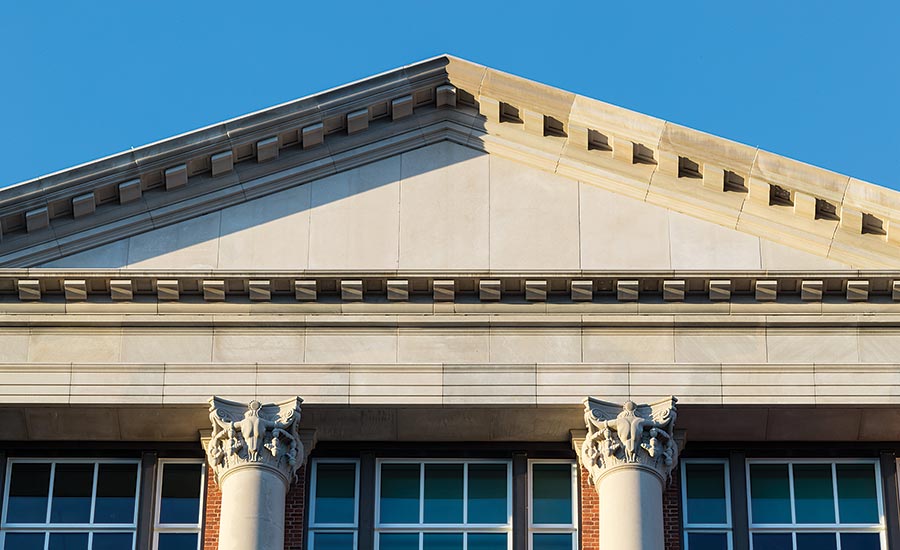
Parkland was the first public hospital in Dallas, and over the years it grew into a complex of neoclassical buildings; above is the main hospital building of 1913. Then it became obsolete, and after serving for some years as a mental health facility it was mostly closed. But it was in a valuable downtown location, and Crow took a fancy to the old property. (JFK died in a completely different, modern facility.)

Crow and his team renovated old buildings and built new ones in a semi-classical style, ending up with a spectacular complex that has become office space for hedge funds and other top-dollar renters as well as a meeting space for conservative organizations. The rotunda building is one of the new structures, along with the sculpture of Dawn and (I think) everything else you see in the picture above.

I find this project fascinating for reasons that are deeply personal in complicated ways, so, sorry, this post is going to be half about Old Parkland and half about me. As all my readers know, I am no fan of modernism, and the closer it gets to brutalism the more it makes my stomach churn. But I have never been comfortable with contemporary neoclassicism, either. Parkland interests me because while there are things about it I like very much, I can't love it because so much about it feels contrived. I am happy Crow built this instead of another assemblage of glass rectangles, but I feel like we could still do much better. And, you know, why can't we come up with our own vocabulary of decoration rather than relying on systems developed in 350 BC or 1250 AD? There is also a political angle about which I have similar feelings, as I will explain.

The best thing about Old Parkland is that Crowe laid out a ton of money to top-notch craftsmen to pursue beautiful work in wood, stone, and metal. That's a real wooden floor, constructed by master woodworkers who give it top billing on their company web site; no doubt they were thrilled to have a client say, "damn the expense, give me your best work."

This kind of revelling in what the best artisans can do is one of the things I miss most in modernism. I love things beautifully made by real experts who have sunk years into their crafts, giving us details that startle and amaze.

There is also some lovely architectural work; fans of neoclassicism are particularly fond of the bell tower, which has been called the most beautiful neoclassical structure of the past half century. I would tell you who designed it, but the architect is listed as The Beck Group, a firm with dozens of architects; who says a committee never created anything nice?

I am of two minds about the proliferation of cow skulls. On the one hand, I was just complaining about the slavish re-use of Classical motifs, but on the other, this feels to me like Texas cornpone.

Noble western animals (there is also a grizzly bear in this set), along with a famous line from Montequieu on the need for independent powers within the government.

An interior like this conveys something of the promise and peril of neotraditional architecture. On the one hand this is an interesting space with many lovely details, but on the other it feels, to me, a bit fake, like a stage set hurriedly thrown up inside a warehouse. As you can see, the architects did regularly stray from basic Classicism and bring in details that look more like early twentieth-century Craftsman work.

Overall view of the new buildings at the inner end of the complex,

which sure beats the heck out of L'Enfant Plaza.


Crow also laid out a lot of money to neoclassical sculptors, with mixed results. Which is not really a complaint; when you commission new work from real artists you always run the risk of getting something strange, and kudos to Crow for patronizing people capable of surprising us.

One of the distinctive things about Old Parkland, and probably the thing most central to Crow's personal vision, is the theme of patriotic virtue. So we get sculptures of Washington and Hamilton interspersed with textual exhortations to be good.

Which sort of culminates in this work, Non Sibi by Chas Fagan, celebrating the heroes of 9-11. That's the "let's roll" moment on Flight 93.

I don't want to be too snarky about this, that was a real moment of heroism that might have saved hundreds of lives. Public sculpture is also, at least sometimes, supposed to resonate with the public, and I bet this resonates with far more Americans than anything abstract ever will.

So it isn't that I much mind anything that is depicted at Old Parkland; my gripes have more to do with what is left out. For starters, Abraham Lincoln; to me, a roll of American heroes that has room for Hamilton and random Revolutionary soldiers (and buffalo and grizzly bears) but not Lincoln smacks of neoconfederate reaction. It smacks of writing certain very important things out of the story to make it narrower, to make it the story of one kind of person and one kind of idea. The real story is something very different.

I am an American patriot in a profound way; I love this country, and I feel lucky to have been born here at the height of our power and glory. But I find the patriotism of people like Harlan Crow weirdly limited, and I mean weirdly; I just don't get how you can love America while leaving out so much of what makes our story amazing. Ours is not just the story of robust manly heroes of liberty. It is the story of mad adventures, utopian dreamers, scheming traitors, desperate immigrants, clever inventors, cruel slave drivers, bold rebels, stubborn prairie farmwives, masters of gerrymandering, apocalyptic prophets, drag queens, self-sacrificing saints, libertarians, communists, death-crazed gunmen, hippies, yippies, video game designers, the Society for Cutting Up Men, the Black Panthers, the Federalist Society. It is a story of riotous cultural invention: blues, jazz, rock and roll, honty tonk, grunge, emo, abstract expressionism, pop art, comic books, superheroes, science fiction, the hollywood blockbuster, the Lindy, the Twist, the Twitter thread, the flame war.

What makes me uncomfortable about Harlan Crow's vision is the same thing I dislike in histories written by the woke: the narrowness. I hate the exclusion, the insistence on defining one path as the only correct one and shunning everything else. In my sculpture park, every statue of a Hamilton or Washington will be accompanied by one of Susan B. Anthony or Eugene Debs or Andy Warhol. I hate the refusal to see the ambiguity of everything, to recognize the excellent qualities even of awful or desperate people, to understand that a world in which everyone agreed on how to live would be a dismal, boring place. American history is the history of disagreement and conflict, and if you hate that then as far as I am concerned you don't really love this country.

To get back to architecture: what I like about Old Parkland is the way it broadens the horizons of contemporary design, rejecting the spare modernism that we have too much of already. What I dislike is that it rejects the modern straightjacket only to don a different one, the limitations of patriotic neoclassicism. Not entirely, which is how the project ended up producing much that is worthy of praise: the wonderful wooden floors, the amazing ironwork, the beautiful, luxurious spaces. 

What Old Parkland achieves is the expression in brick and stone of a certain outlook on the world, both politically and aesthetically. That outlook is mercantile, traditional, Texan, patriotic in a certain limited sense. That was probably Crow's aim, and he achieved it. But Crow's outlook is very different from my own, which is why I can admire this from afar but not welcome it into my heart.

Art and Politics

When artists turn to activism or introduce politics into a work of art, it’s usually taken as something virtuous, an act of conscience on behalf of justice. But artistic and political values are not the same; in some ways they’re opposed, and mixing them can corrupt both. Politics is almost never a choice between good and evil but rather between two evils, and anyone who engages in political action will end up with dirty hands, distorting the truth if not peddling propaganda; whereas an artist has to aspire to an intellectual and emotional honesty that will drive creative work away from any political line. Art that tries to give political satisfaction is unlikely to be very good as either politics or art. 

–George Packer

Friday, November 17, 2023

Links 17 November 2023

Attic Black-Figure Kyathos with Perseus Chasing Gorgons, c 500 BC

Minnesota is accepting suggestions for a new flag design. Gotta love the laser-eyed loon (F15).

Enormous mosaic floor in central Turkey keeps getting larger as more is uncovered; extraordinary.

The orcas off Spain are escalating, and have now sunk four sailboats.

A claim about the future of naval warfare: "The future of ocean warfare is vast numbers of merchant ships and fishing vessels armed with portable rockets and drone swarms. The warships will be important but as command control platforms monitoring merchant ships. Future warships will be sheep dogs." Lots of fringe military types think missiles and cheap drones have rendered big, expensive weapons obsolete.

The B-21 bomber has completed its first test flight. Among the reveals was that the first plane is nicknamed Cerberus.
Clay pot full of beads found at site in Jordan dated to 3,600 BC.

The New York legislature has passed a law to ban non-compete clauses, which I think is one of the simplest and easiest things we could do to make our economy more just. About half the states have banned them already. Now New York financial leaders have launched a frenzied effort to get governor Hochul to veto the bill. (NY Times) The evil capitalists never give up without a fight.

Tyler Cowen says more Palestinians should migrate to Latin America. Those countries already have significant Arab minorities (around 10 million in Brazil) without any particular issues. Heck, Palestinians are already a big part of the elite in Haiti. On the other hand, the migrants so far have been mainly Christian, so a major influx of Muslims might create a different dynamic.

Mass graves of headless victims found in China, dates to the Neolithic. Evidence for warfare in the Neolithic continues to mount, or any way some kind of intense violent conflict.

Yusef Salaam, one of the Central Park Five, who spent seven years in prison for a crime he did not commit, has just been elected to a seat on New York's city council. More at his his wikepedia page.

Speaking of second acts, Q-Anon Shaman Jacob Chansley plans to run for Congress. I guess he really liked the place last time he was there.

Since the Brexit vote in 2016, Britain has had five Prime Minsters; seven Foreign Secretaries; seven Home Secretaries; and nine Ministers of Education. All from the same party. Great job, Tories!

And in Trump land: "Spokesman denies that Trump rhetoric echoes that of dictators like Hitler and Mussolini and declares that those who say it does will find 'their entire existence will be crushed when President Trump returns to the White House.'"

During the pandemic, Americans founded new businesses at a record pace, and that seems to be continuing. Part of the cause may be the $2 trillion the government showered on us; some people seem to have spent their share launching their own companies. Another part may be an increased devotion to working from home, controlling our own schedules, and so on. (NY Times, Kevin Drumoriginal paper)

Robin Hanson argues that the world will end up being ruled by the Amish and other high-fertility groups.

Major exhibit at the Met titled "Africa & Byzantium," highlighting the importance of, and connections between, Constantinople, north Africa, Egypt, and Ethiopia. (NY Times, Met)

Tuesday, November 14, 2023

On Not Getting Married, or, Nobody Better Tell Me What to Do

The latest sign of the ongoing disintegration of society is the viral spread of this painting, The Hesitant Fiancée by Auguste Toulmouche. Back in 1866 this represented, one assumes, the displeasure of a young woman at a marriage being pressed on her by her wealthy family.

Now that arranged marriage has disappeared from the lives of most of us, including all the people reposting this painting, it represents – what?

At the NY Times, Callie Holterman summarizes some of the ways this meme has been used:

Others on the app have used the painting as a punchline in response to phrases like “You’re overreacting” and “You really should smile more.” 

One commentator

thinks the painting has taken off online because so many women respond to the frustration on the bride’s face in a situation in which she is expected to appear grateful. The painting shows that women have been bristling at such societal expectations for centuries, she said.

And:

Joan Hawk, an owner of Bedford Fine Art gallery in Bedford, Pa., which has sold some of Toulmouche’s work, wondered whether the painting’s resurgence had to do with young women’s changing attitudes toward marriage. The light in the painting highlights the bride’s face, which, Ms. Hawk said, communicates something along the lines of: “Ugh, do I really have to go through with this?”

I see something deeper. To me, this is a symbol of the unending struggle between self-affirmation and social reality, between freedom and belonging. 

All the liberatory crusades of the past 250 years have sought to free us from this basic problem. We demanded the right to choose our spouses, our careers, our living arrangements, our sexualities, our genders, our beliefs; we insisted on pursuing our passions and chasing our dreams. And yet here we are, still frustrated with other people and their expectations. Somehow, despite our extraordinary freedom, we still feel confined, still feel that we are always lashing out at limits and barriers and people trying to control us. And we always will, because that is the price of living with other human beings.

The only way out is through loneliness, and I think it tells us something important about our world that millions have essentially chosen that path.

To the extent that posting The Hesitant Fiancée is just a good-natured way to share a bit of grumbling about our nagging relatives or annoying bosses, that is healthy. Everybody has these feelings. But to the extent that represents a belief that all demands on us are illegitimate, that is precisely our problem.

I was primed to react this way to a silly little story about TikTok memes by another Times piece. This was Anna Louie Sussman's reaction to all the talk about how people should get married, which includes this gem:

Harping on people to marry from high up in the ivory tower fails to engage with the reality on the ground that heterosexual women from many walks of life confront: that is, the state of men today.

If you're thinking I'm going to fault her for saying that and claim it shows there's something wrong with women, well, no. She's probably right. She's right because, I would say, men are even more susceptible than women to the call of freedom, and this manifests in everything from a refusal to tell your partner where you're going to criminality. Many, many American men bristle at any sort of restriction on what they can do and say. This turns some of them into Trump supporters and a few into meth dealers, but it makes it hard for many of them to maintain relationships.

We are just not, as a society, in a mood for compromise. It shows in our politics. It shows in the decline of every kind of communal organization. And it shows in the difficult many people have finding love and settling into marriage.

Aging Populations and Rising Wages

Piece in the NY Times today about Vermont, which has the oldest population in the US, from which I extract these:

At Lake Champlain Chocolates, the owners take shifts stacking boxes in the warehouse. At Burlington Bagel Bakery, a sign in the window advertises wages starting at $25 an hour. Central Vermont Medical Center is training administrative employees to become nurses. Cabot Creamery is bringing workers from out of state to package its signature blocks of Cheddar cheese. . . .

Vermont’s unemployment rate was 1.9 percent in September, among the lowest in the country, and the labor force is still thousands of people smaller than before the pandemic. Employers are fighting over scarce workers, offering wage increases, signing bonuses and child care subsidies, alongside enticements such as free ski passes. When those tactics fail, many are limiting operating hours and scaling back product offerings.

This is presented as a sort of doomsday demographic scenario, but does that sound like a crisis to you? OMG, companies have to pay a living wage to attract workers!

My own business has already experienced this transition in the form of a severe shortage of archaeological field techs. Our field crews used to be made up mainly of recent graduates with anthropology or history degrees who would work as field techs for a few years, bouncing from company to company and project to project – shovelbumming, it's called – before either moving on to a more lucrative field or going to graduate school to get the master's degree you need to hold a professional position.

But that pipeline is pretty much broken. You may have heard that college students these days are much more career oriented, and it seems that many fewer of them major in anthropology with no idea how they plan to make a living.

Hence, the shortage. Our starting wage has risen from $13.50 an hour to $22.00, with more generous provisions for travel time to projects and the like, and we still have trouble finding people. Like bakeries in Vermont, we're paying good techs $25 an hour. As a result we're scheduling more projects to be done with smaller crews (often two techs) over longer time frames. 

The drying up of the field tech pipeline means fewer people getting into archaeology and deciding to get the crucial master's degree, which translates into a growing shortage of junior archaeologists. Their wages have also climbed, and the shortage means that some mid-level jobs that used to be filled by more experienced people are now filled by newly-minted MAs. I had an interesting experience a few years ago when a new state regulator told me she was excited to read the report I had submitted for review "because I've never read a CRM report all the way through before."

I am not discounting the challenges here; there is a lot of stuff in our world that only gets done because we can pay people miserable wages to do it. Taking care of the elderly is the most obvious, and the most likely to become a severe economic and social challenge.

But imagine a world in which no one is economically exploited, because everyone has the leverage to demand a decent wage, and everyone can afford to quit and go elsewhere if their bosses abuse them. To me that isn't a crisis, it's a fantastic opportunity.

Sunday, November 12, 2023

Dawoud Bey Documents Landscapes of Slavery

African American photographer Dawoud Bey (born 1953) has a new exhibit touring now titled "Elegy." These images document landscapes where enslaved people worked and suffered, mainly in Louisiana and Virginia. Above is a recent picture taken on the Richmond Slave Trail, which winds through the weedy woods that now occupy the site of Richmond's old docks. Richmond was a significant site for arrivals of slave ships from Africa and then a major port for the export of slaves toward the south and west in the 1820-1860 period. Bey's photographs of this strange place are collectively titled "Stony the Road," 2023. The title come from James Weldon Johnson's "Lift Every Voice and Sing" (1917):

Stony the road we trod,
Bitter the chast'ning rod,
Felt in the days when hope unborn had died;
Yet with a steady beat,
Have not our weary feet
Come to the place for which our fathers sighed?
We have come over a way that with tears has been watered.
We have come, treading our path through the blood of the slaughtered,
Out from the gloomy past,
Till now we stand at last
Where the white gleam of our bright star is cast.

Conjoined Trees, Field, 2019

In This Here Place, 2019

Irrigation Ditch, Louisiana, 2019

Sugarcane II, 2019

More at the NY Times.

Saturday, November 11, 2023

Mirror Worlds

John Dee's obsidian mirror, made in Mexico

If you want a simple definition of magical thinking, try this: the world we see can't possibly be all there is.

This basic belief manifests in a thousand different ways, but the one I'm going to focus on today is this: there are other worlds besides the one we live in, and there are ways to cross from one world to another, in both directions. To which a common corollary is, magical power comes from other worlds. The basic paradigm here is the shaman, whose souls leaves his or her body and travels to other worlds in search of knowledge and power, but there are of course many other versions. 

In worldwide folklore, one way to access other worlds is with a mirror. This idea appears to be extremely ancient, and it persists to this day in the form of superstitions about covering mirrors after a death in a house and so on. Horror movies love it. One of the amusing things I stumbled across researching this post was detailed instructions on how to create a photograph that seems to show your face and its monstrous reflection.

Egyptian mirror, c. 1500 BC

Mirrors have been endlessly fascinating to humans since we first learned to make them, and they appear in our lore in, again, a million ways. They are just cool objects to play with and think about. 

J.W. Waterhouse, Echo and Narcissus, detail

Our reflections fascinate us. What are they, and what is their connection to us? There is worldwide folklore that associates the reflection with the soul and asserts that injuries to the reflection can hurt the person. (E.g., vampires have no reflections because they have no souls.) There is an even vaster lore in which the reflection soul is trapped, either by an enemy sorceror or a sinister being residing in the reflecting pool. One school of thought maintains that the story of Narcissus as it comes down to us is an altered, civilized version of an ancient story in which Narcissus' soul was trapped by the spirit of a pool. Which is, incidentally, an important caveat about mirror lore, especially in the modern world, which is that it sometimes gets mixed up with denunciations of vanity.

(Here is an excellent Japanese folktale about a mirror spirit that traps humans in a well. If you want more, James Frazier collected hundreds of examples in The Golden Bough, along with the often parallel lore of shadows.)

Mirrors can show you ghosts, or fairies; they can show you the past or the future; they can show you the truth or confound you with demonic lies; they allow sorcerors to project their power out of their bodies, but they can also become gateways that allow enemies to come in and make mischief.

Mirrors, as reflective surfaces, can be used as traps. The most common interpretation of the mirrors Mongolian shamans wear on their costumes is that they hold the helping spirit that guides the shaman through the other worlds, or else the "wind horse" on which the shaman rides. But it is typical of mirror lore that other shamans have different views, for example that mirrors confuse evil spirits, allowing the shaman to bypass them. The mirror is an object of power in a way that seems to transcend the particular interpretation put on it.

The Chinese have what may be the most extensive mirror lore, along with a great many surviving bronze mirrors. These were retained in families for generations and became part of ancestor worship, on the theory that they retained some essence of all the people who had gazed into them.

The Aztec and Maya loved mirrors; that's a Maya king above, staring at a propped-up mirror.

This was a magical, shamanistic act, as you can see in this wonderful painting. On one side of the mirror is the shaman, on the other jaguar spirit that resides in the other lands; speech flowing from this being shows that he is imparting knowledge to the shaman.

One thing that makes modern mirror lore different from older stories is that we have much better mirrors. Many old stories depend on the ambiguity of what could be seen an in imperfect surface like a bowl of water or a polished disk of bronze. For example, one of the standard tricks of "cunning folk" across Europe was to catch thieves by asking victims to stare at the image on a small piece of tin and identify the face they saw; one supposes that they saw the person they already suspected. One could search for one's future spouse in the same way.

So it was a commonplace that what was gleaned from gazing into mirrors might be obscure. As St. Paul wrote, seeing "through a glass darkly" is quite different from seeing face-to-face. 

These days mirror lore is dominated by the monstrous: ghost stories, urban legends like Bloody Mary, horror movies with mirror monsters, and so on. Mirrors have joined the vast horror complex by which we make our safe lives more interesting.

The theme of the monster in the mirror has spun off into a hundred metaphorical uses, from a way of understanding anorexia and poor self esteem – which spawned a Sesame Street meme in which Elmo is the monster in the mirror, telling kids that they are ok – to an article I just found called  "Covid-19 is our monster and our mirror."

All of which, I think, points to something important about folklore and magical thinking: the what (mirrors are magical) has a way of overriding the why and the how. There is something interesting, uncanny, hard to grasp: dreams, reflections, coincidences. Around these basic themes stories grow like thorny vines around Sleeping Beauty, reflecting the preoccupations of the people who tell the stories. A mirror can hold a shaman's wind horse or a Confucian gentleman's great-grandfather; it can be a symbol of faith or self-loathing; it can be an instrument of power or a crack that allows in demons from hell. It can be, really, anything we can imagine.