Wednesday, January 25, 2023

Chan Chan

Restored Facade of the Ciudela Tschudi at Chan Chan

Chan Chan is a huge archaeological site in the harsh desert of coastal Peru, near the mouth of the Moche River. The city served as the capital of the Chimu Empire, and around 1400 AD it may have had 60,000 inhabitants. It was built almost entirely of mud, probably the largest city ever built without stone or wood. But it must have been a very strange place.

What we know about the Chimu comes from Spaniards who got most of their information from Incas, the great enemy of the Chimu, so everything comes with a lot of caveats. It was the Inca who destroyed the Chimu Empire, in 1470. According to those same sources they easily took Chan Chan after a short siege by cutting the canal that supplied the city with water.

Basic map of the site

Detail of the center of the site

There are in Chimu two distinctly different kinds of space. Much of the area was taken up by ten huge, walled compounds the Spanish called ciudelas. The biggest of these measures 220,000 square meters, or 54 acres. They included enormous empty courtyards, vast audience chambers, and other extravagant wastes of real estate.


Many of the walls were decorated with relief carvings.

Some people clearly lived within the walled compounds, but most of the inhabitants lived outside them in small, mud-walled dwellings that archaeologists call Small Irregular Aglutinative Rooms, SIARs for short. These were on the order of 3x3m (10x10 feet) and don't look like nice places to live. The contrast is very stark. Our sources confirm the class divisions, telling us that the Chimu were strictly divided into three castes: royalty, who had gold in their blood, aristocracy, who had silver in theirs, and commoners, whose blood was made of dirt. That may have been invented by a Spanish priest who had read Plato, but it does convey the vast inequality of the place.


Why ten huge palaces? Well, the Spanish told a story about that. They said that each Chimu king built his own palace and lived there with his 50 to 100 wives. When he died, his wives were all buried with him and the palace became a temple devoted to the spirits of the king and his consorts. His personal wealth now belonged to this temple compound, used to insure perpetual memorialization of the ruler. A hereditary caste of priests, possibly drawn from the king's children with lesser wives, lived off that property.


Modern archaeologists are not so taken with this view. For one thing there isn't much evidence that the function of the palaces ever changed, and some have imagery that suggest they were devoted to a particular god. Also there are only ten, and the Chimu state seems to have endured for 600 years. So maybe each was the dwelling of a particular elite family. Either way, the elite of Chimu lived in spatious compounds separated from the common, SIAR-dwelling masses by walls up to 10 meters (33 feet) tall. So far as we can tell, most of the commoners were craftsmen who worked for the elite, building and decorating the palaces and supplying them with luxury goods.


The Spanish looted the heck out of Chan Chan; in fact some of Pizarro's men formed a partnership based on Catalan mining law to do a thorough job of it. They wrote of melting down doors coated in gold and silver. Nonetheless a great deal of wonderful stuff has been found there, much of the most spectacular stuff from a series of tombs within the Pyramid of the Moon.

The dry desert conditions have preserved much wonderful art in feathers, like this tabard.


I have to say it changed my imagination of the place to see these feather outfits, basically Chimu bikinis with matching headdresses.

A huge amount of pottery has been found, much of it in effigy forms like this.


More wonders.


Chan Chan is an amazing place, but it also sets me thinking about the vastly unequal societies that created most of the past's wonders, and the suffering common people endured in the shadows of the palaces.

Against Decolonization

The word "decolonization" has radically changed meanings since African nations achieved independence. During the independence struggle it meant throwing off European rule and creating new, African nations. Now it means somehow cleansing the mind and the culture of dubious European ideas and asserting the primacy of African languages, ideas, and institutions. This seems like it might be an extension of the earlier meaning, but I think it demands rejection of the actual words and ideas of the revolutionary generation. Men like Nkrumah, Julius Nyere, Jomo Kenyatta, and Nelson Mandela did not reject European thought. Most of them were Marxists, Nationalists, or both; many at least said they believed in the full equality of women; they all made use of European languages to spread their message across the world; and they explicitly rejected many parts of African culture, such as tribalism and fear of scorcery. What the woke are pleased to call decolonization is actually quite controversial among African intellectuals:

One of the most ambitious counterarguments to this movement is presented by Olúfẹ́mi Táíwò in his provocative new book, Against Decolonisation. Táíwò, a professor of African political theory and philosophy at Cornell University, laments how a concept that once referred to escaping political and economic subjugation by powerful states has come to mean something far less precise. According to Táíwò, “because modernity is conflated with Westernism and with ‘whiteness’—and all three with colonialism—decolonisation (the negation of colonialism) has become a catch-all idea to tackle anything with any, even minor, association with the ‘West.’” Táíwò argues that such undisciplined uses of “decolonization” have a perverse effect, stymieing attempts to understand, let alone improve, the situation of formerly colonized peoples. 

In Against Decolonisation, Táíwò’s focus is on Africa. He traces the origin of a prominent strand of decolonization theory to the writings of Ngũgĩ wa Thiong’o, a Kenyan novelist and author of Decolonising the Mind (1986), a book whose thousands of citations attest to its global influence. It memorably recounted Ngũgĩ’s experience as a schoolboy in 1950s Kenya. Being caught speaking his first language, Gĩkũyũ, anywhere near school resulted in canings, fines and being made to wear signs saying “I am stupid” or “I am a donkey.” Given this history, Ngũgĩ argued that one of the most effective political acts of African writers is to publish in their indigenous languages. When it came to his novels and other literary works, Ngũgĩ had already switched from English to Gĩkũyũ. “This book,” he wrote in Decolonising the Mind, “is my farewell to English as a vehicle for any of my writings.” Henceforward, both his fiction and nonfiction would be available to English-speaking readers only in translation.

Ngũgĩ’s condemnation of Western languages as vehicles of African expression is representative of a larger African decolonization project, which goes beyond Mills’s comparatively mild version, and which sometimes characterizes engagement with Western concepts and values as a form of “epistemicide” or “mental de-Africanization.”

But, of course, writing in a language like Gĩkũyũ cuts the writer off from the huge audience he or she might have in English or French, and from most of the international debate about Africa's future. This review goes on to point out that while Ngũgĩ wa Thiong’o has indeed published all his fiction in Gĩkũyũ since 1986, most of his non-fiction has appeared first in English. Trying to earn your living as an intellectual comes with certain burdens.

Táíwò is also irritated by a tendency to see all of African history as dominated by its relations with Europe:

In opposing this view, Táíwò invokes a vast command of African philosophy and history. Against Decolonisation ranges over everything from Africans’ enthusiastic embrace of Christianity in the pre-colonial period of “informal empire” to the Fante Confederacy of nineteenth-century Ghana, whose founding document “ranks alongside the Polish constitution of [1791] as one of the earliest attempts at liberal constitution-making in the world.” These and other details are marshalled to support an alternative reading of African history, one that considers European colonialism “an episode, not an epoch.” Táíwò’s historical framing emphasizes the role Africans themselves have played in shaping contemporary Africa, a theme reflected in his subtitle, “Taking African Agency Seriously.” To exaggerate the influence of colonialism, Táíwò charges, can itself show disrespect to Africans.
But the real issue concerns what we might call modernization. In throwing off colonial chains, is Africa also supposed to dispense with western science, engineering, and thinking about human rights? In some parts of the world we have seen calls to teach native wisdom in parallel with western science, which seems like a dubious path toward modernity. Many activists have also dismissed European ideas about democracy and rights because Europeans did not practice them in the colonies, and they have sought to build free societies on an indigenous basis; but this has failed everywhere it has been tried. 
Táíwò is at pains to distinguish two different meanings of “decolonization.” The first, which he considers illuminating, refers to a colony achieving self-government. The second refers to the goal of avoiding any idea, practice or institution that “retains even the slightest whiff of the colonial past.” This broader understanding of decolonization is the one Táíwò opposes. Where the first definition identifies a crucial step toward African societies becoming fully modern, home to liberal-democratic governments that follow the rule of law, respect rights and ensure the well-being of their people, the second undermines that unfinished project by rejecting modern political goods as artifacts of colonialism.

Indeed African dictators have often insisted that things like elections and a free press are remnants of colonialism that Africa must leave behind, with predictable results. Not, mind you, that I think Parliamentary democracy is necessarily the best system for every African nation right now, but neither is cynical Afrocentrist dictatorship. In recent decades many African thinkers have drawn from European apostles of freedom, from John Stuart Mill to Bakunin, to argue for their own rights.

To me it seems obvious that the way forward for humanity is to take the best from every part of the world, or the parts we like best, and build a future from all those blocks. Rejecting the vast heritage of the west is not going to help anyone move forward.

Tuesday, January 24, 2023

News from the French Neolithic

From INRAP, preliminary reports on the 2022 excavations at a site known as Camp de Sarlier in Aubagne in southern France. The site was a village in the Middle Neolithic,  (4600-3500 BC). Above is the plan of a large building with an area of more than 100 square meters.

And a smaller structure. The hourglass shape is very unusual and I can't figure out what the point would be.

Polished flint ax.

And a pit under excavation; most of what I see is cow bones.

This site was reused in the Iron Age as a cemetery, so there are also a bunch of graves from the 1st millennium BC. Above, a torc, and below, ankle bracelets. This is how I want to spend my retirement.

Monday, January 23, 2023

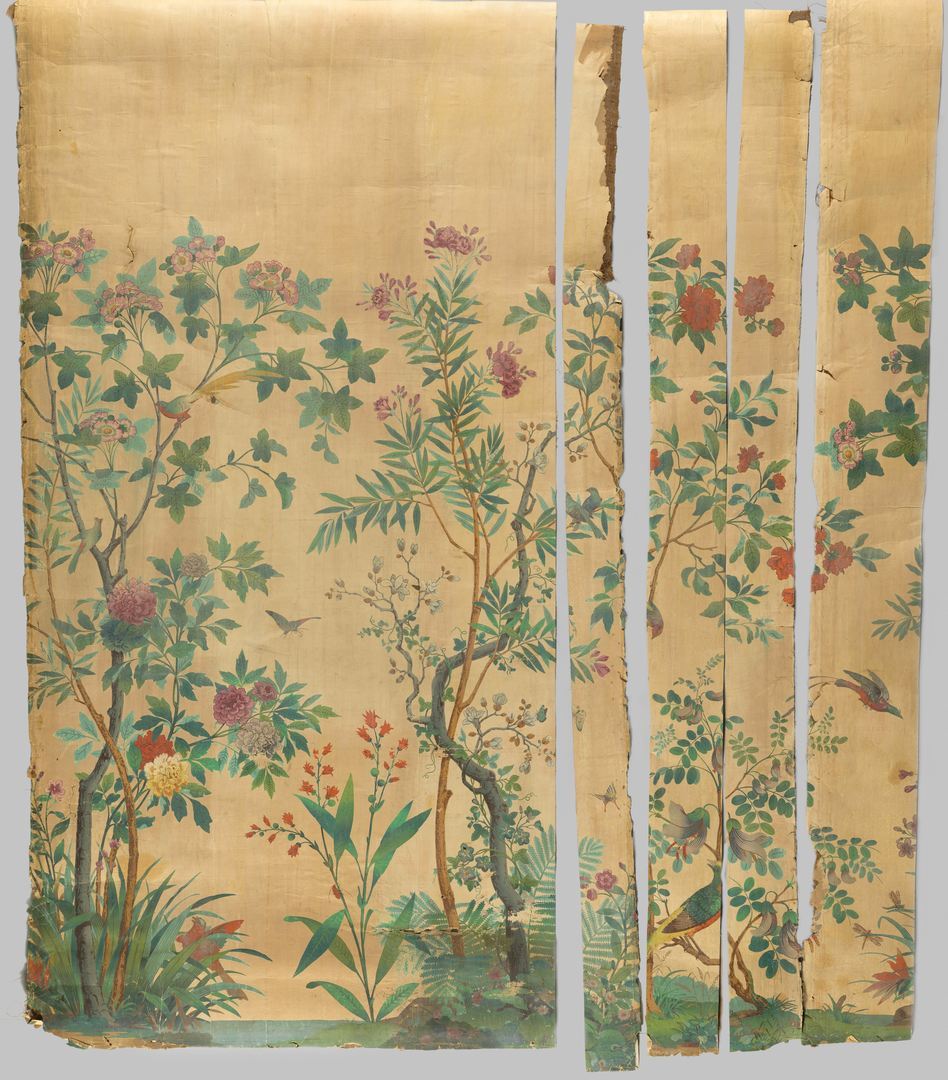
Chinese Wallpaper from the 1700s


 Via No Brash Festivity

ChatGPT Arguing with Itself

Ted Lieu in the NY Times:

Imagine a world where autonomous weapons roam the streets, decisions about your life are made by AI systems that perpetuate societal biases and hackers use AI to launch devastating cyberattacks. This dystopian future may sound like science fiction, but the truth is that without proper regulations for the development and deployment of Artificial Intelligence (AI), it could become a reality. The rapid advancements in AI technology have made it clear that the time to act is now to ensure that AI is used in ways that are safe, ethical and beneficial for society. Failure to do so could lead to a future where the risks of AI far outweigh its benefits.

I didn’t write the above paragraph. It was generated in a few seconds by an A.I. program called ChatGPT, which is available on the internet. I simply logged into the program and entered the following prompt: “Write an attention grabbing first paragraph of an Op-Ed on why artificial intelligence should be regulated.”

Thoughts on the Russian Civil War

I've just finished listening to a pretty good book, Antony Beevor's Russia: Revolution and Civil War, 1917-1921 (2022). It set me thinking on three big questions, starting with how the Bolsheviks managed to win despite only commanding the loyalty of maybe 20 percent of the people. Beevor's telling emphasizes one of the common explanations, that the Reds were the only faction who knew exactly what they wanted, and the only ones willing to give up everything else to achieve their goal.

The story goes like this: In February, 1917, with the war going badly and the country fed up, a mostly peaceful revolution forced Tsar Nicholas II to abdicate. Due to series of strange family events, the Tsar ended up naming no successor. Hence, Russia became a republic by default. The existing Parliament felt they had no mandate to rule alone, so they declared themselves the Provisional Government and hatched a plan to hold elections for a Constitutent Assembly that would decide what sort of government Russia would have going forward. The Provisional Government punted all important questions to the non-existent assembly, which meant that no major decisions could be taken, for example, about continuing or ending the war. Into this vacuum stepped the Bolsheviks. Their leadership assembled in St. Petersburg – Lenin and several others from exile, Stalin from remotest Siberia, others from hiding – and began plotting their own course. 

In October the Bolsheviks staged a coup and took over St. Petersburg, overthrowing the provisional government with the assistance of a few regiments of soldiers and the sailors of the Baltic Fleet. Most of the Russian empire did not recognize the Red regime, so at that moment most of Russia had no government at all. Russia had a very large army, but they were mostly at the front facing the Germans and Austrians. Many of them were sick of the war and wanted it to end, so the main promise the Bolsheviks made straight off was to end the war and bring all the soldiers home. Beevor has some great material on what happened when the soliders decided to enact their own revolutions. Many regiments voted on whether to stay at the front or go home; others jailed their officers and took over running themselves; some tried to send their own peace envoys. Lenin stuck to his promise to end the fighting, even though it meant signing the Treaty of Brest-Litovsk, which even Trotsky thought was too humiliating to consider.

Meanwhile, the Constituent Assembly was elected and even met once, in early 1918, before the Baltic Fleet sailors shut the assembly down and chased its members out of St. Petersburg. All the non-Bolshevik parties who had put their faith in the assembly then had to choose whether to join with the Bolsheviks or join the war against them. Most chose war. So how did they lose?

First, they were far from unified. The biggest factions were Socialists and Tsarists, who hated each other only slightly less than they hated the Reds. The number one plank in the platform of the Socialists was to distribute all land to the peasants, while the number one plank of the Tsarists was to maintain the landlord class. Many factions were actually fighting for national independence: Poles, Finns, Latvians, Lithuanians, Estonians, Georgians, Armenians, some Cossacks, some Siberians. Both the Socialists and the Tsarists badly wanted to hold the whole Russian empire together, so the Whites, as they came to be called, were never able to work effectively with the nationalist groups even though they all hated the Bolsheviks. The Bolsheviks on the other hand did cooperate with some of the national groups, especially in the Baltic states. They made a serious attempt to conquer Poland but when that failed they signed an armistice with the Poles and got on with fighting their other enemies. After all, if they won the civil war they could always deal with the problem of rebel nationalities later.

The Whites were in fact only able to hold on as long as they did because of foreign support. France and Britain had been providing Russia with arms since 1916, to keep the eastern front alive; by the end  of 1917 this aid was massive. (Incidentally this was all theoretically a loan to the Russian government, and the allies insisted that any faction they supported promise to repay all of it, which of course gave the Bolsheviks a propaganda card they played at every opportunity.) The aid continued through the revolutionary period and on into the Civil War, directed toward anti-Bolshevik groups. The British, French, Americans, and Japanese also sent substantial military forces of their own, the British, through Persia and Iraq into the Caucasus and Central Asia, the British and French through the Black Sea to Sevastopol and Odessa, and all the parties through Vladivostok into Siberia.

One of the Bolshevik's advantages was that they controlled the center of the country, around St. Petersburg and Moscow, while their enemies were all out of the periphery. The Reds were thus able to move forces from one front to another, which was almost impossible for the Whites. The Bolsheviks also had allies in every part of the country in the form of radicalized miners and factory workers, and they used their prowess at conspiracy to deploy this force. For example it happened several times that when a battle was shaping up over a White-held city, the workers in the city would rebel at just the right moment to weaken and distract the White forces. The Reds were able to arrange strikes by coal miners at key moments to deprive their enemies of fuel for the railroads; this was especially important in their conquest of Siberia, where everything depended on movement along the rails. 

The Reds were also led by a generation of hard-bitten men shaped by years of suffering, secrecy and exile: Lenin, Stalin, Trotsky, and others. White leaders kept flinching at key moments, failing to drive attacks home or withdrawing from positions that could have been defended. The Bolshevik leadership rarely failed from want of toughness or nerve. One key moment came in October, 1919, when a White army was advancing from Estonia toward St. Petersburg – renamed Petrograd, by then, so this is called the Battle of Petrograd – which looked on the verge of falling. Trotsky got in his personal armored train and steamed into the city, along the way having his printing press – of course Trotsky's train was equipped with a printing press – print up thousands of leaflets calling on the workers to resist the oppressive army of the bourgeois powers. He rallied the dispirited Red troops, even personally leading one detachment into a skirmish, proclaimed that the city would be defended to the last ounce of blood, and, once the Red forces had recovered and been reinforced by troops arriving from Moscow, led them in a dramatic counter-attack that broke the White army and sent them reeling back. When the Whites needed leadership like that, they rarely got it. Instead they got epic corruption, to a degree that shocked the British and French officers sent to aid the cause; a British officer reported on one occasion that a White retreat was slowed by fifty railcars full of loot the White officers were trying to abscond with. 

I suspect ideological clarity was also important. If you were a White soldier, what were you fighting for? Freedom? Land reform? The return of the Tsar? The glory of Mother Russia? But the Bolsheviks always had an answer at the ready: for the worldwide revolution of the working people, the elimination of class, the achievement of real equality and democracy. Of course the Bolshevik-ruled areas looked nothing like that, but they had already mastered the trick of putting utopia off into the future. The civil war obviously had to be won before the fruits of communism could be realized. The intervention of foreign forces helped them to make this argument; if the capitalist powers were not terrified of the workers, why would they be fighting in Russia?

So the secret of Red victory would be, in this telling: unity, clarity, and ruthless action.

The second interesting point about the Russian Revolution and Civil War is that despite three years of horror, following on the heels of three years of war, to which we need to add the global flu pandemic and a terrible typhus epidemic in Russia, life somehow went on. A typical section of Beevor's book says that a region is conquered by some army or another. They proceed to loot the whole place, seizing "all the grain, even the seed grain," torturing the peasants until they reveal where they have hidden all their food and valuables, raping all the women, burning various villages and towns, and so on. If the conquerors are Whites, they immediately carry out a bloody pogrom against the local Jews, on the theory that all Jews are Bolshevisks. Sometimes Bolshevik soldiers carry out pogroms of their own, on the theory that if things are bad, Jews must be somehow responsible. Secret police follow close behind the army and set up shop in newly occupied towns, torturing hundreds of people, murdering many of them. Corpses pile up everywhere: in basements, in churches, along the sides of roads and railroads, in crude mass graves. Hordes of refugees take to the roads, carrying all their valuables, quickly becoming infected with typhus-carrying lice. Every account of a retreat is full of people lying down along the sides of roads to die, or freezing in unheated rail cars, or being caught in the open by Cossacks and masscred. All the women seem to end up selling their bodies for food. Starvation is everywhere, from Moscow to Central Asia. Some of this is just rhetoric; I mean, if women were selling their bodies for food, that implies somebody had food, right? But the real toll was bad enough; Beevor leans toward the high end of recent estimates of casualties, around 12 million dead.

And yet: the railroads ran, coal was mined, steel was made, fleets of boats sailed the rivers, governments were organized, with committees that met and made decisions. The Whites did not run out of ammunition until the end, and the Reds never did. Diplomats made and arranged treaties, which governments approved. People got married, had children, went to church, plowed, planted, worked. A civilization, it seems, is a hard thing to destroy.

The third question that comes to my mind concerns the "Russian people." The civil war was an undending tale of murder, torture, rape, and general brutality. Even many Russians at the time said that this was just what the Russian people were like; Beevor quotes several White leaders as saying that Russia needs a Tsar or a dictator to keep these impulses under control, that Russian democracy was a sham because it would only lead to violent anarchy. And this is of course what many Ukrainians say now, that Russians are just bloody-minded rapists by nature. Against this theory one might argue that during the Civil War, Ukrainians were every bit as brutal as Russians; the worst anti-Jewish pogrom of the war was carried out by Ukrainian nationalists in Kyiv, and that was just one of many massacres they perpetrated.

And where, you might ask, were the moderates in all this, liberals or conservatives, the people who believed in peace and coexistence? So far as I can tell, they existed but were totally irrelevent. In this war, only the bloody-minded fanatics mattered; in the end it was a fight between Bolsheviks and militant nationalists who were starting to sound a lot like fascists. It's a sobering tale for any moderate person to read.

Saturday, January 21, 2023

Hiroshi Tomihari

Hiroshi Tomihari, born 1936, is a Japanese artist who long specialized in woodblock prints. Above, White/Black.

The Noble Being in the Rough Tides, 1998.

Kairakuen Garden, 1983.

Big Flight, 1982

Floating City, 1981

Mountain Cranes Sky. Below others I found without titles or dates.


Friday, January 20, 2023

Links 20 January 2023

Photograph of the Earth taken from the Korean lunar orbiter Danuri

In Norway, which has no racial diversity to speak of and famously uncontentious politics, the children of poor families lag far behind in school, and despits decades of well-funded government efforts the problem is getting worse.

Scott Siskind on different kinds of conspiracy theories.

Major deposit of rare earth oxides found in Sweden; the government plans to mine them, which would be the only rare earth mine in Europe. Right now Europe imports most of its rare earth metals from Russia and China, and this mine might help them achieve some independence.

Mass grave containing 38 skeletons, 37 of them without heads, found in the ditch that had surrounded the Neolithic village site of Vráble in Slovakia. This likely dates to around 4950 BC, at the end of the early Neolithic, the same period as the cannibal/massacre site at Herxheim. More evidence that this was a violent and troubled time.

Why have Trump, Biden, and Hillary all been caught with documents marked "secret" in their homes? Because, says Matthew Connelly in the NY Times, our leaders use imagined threats to our National Security to keep their political doings from the public by classifying everything they do as "secret," and since the material is not really important or sensitive they treat it casually. It is typical of the whole business that when these cases break we are not even told what those documents were or whether they contained any actual sensitive information.

Demography and politics in Northern Ireland.

Lawsuit in DC over the smell of marijuana smoke; the article says some cities are considering bans on smoking in residential buildings.

China's government says its population shrank last year, with 9.6 million births and 10.4 million deaths. Since many people emigrate from China, the population actually shrank by more than that difference. (NY Times, PBS) And note that outside experts think China's official statistics understate the problem.

Facing a lawsuit from the adjunct they fired, Hamline University changes their tone and says they were wrong to call showing a 14th-century Persian painting of Muhammad "Islamaphobia." Sometimes Americans' love of suing each other drives me crazy, but the threat can rein in appalling institutional behavior. (NY Times, Star Tribune)

Study finds that pandemic preparedness did no good: "aside from vaccines, pretty much nothing has much effect on the spread of COVID-19."

AI chatbots can write papers better than most undergraduates; what will this do to college education? (NY Times) And, really, why bother learning to write when AI can do it better than most college graduates ever will? I don't think the enormity of this has set in yet.

During the drought, Los Angeles built a system of diversions and cisterns to trap rainwater, and during this month's storms they have captured enough water to supply 800,000 people through the year. In California there is no shortage of water, just bad water management.

New Zealand's PM Jacinda Arden resigns, citing burnout. Not surprising, considering she was also raising the child she gave birth to while in office. The basic problem with trying to lead a small country like New Zealand is that the state of the economy is almost entirely governed by outside forces, but people still blame their government when things go wrong. New Zealand has been caught up in world events in other ways as well, for example a violent riot against vaccine mandates and a mass shooting by a right-wing crank. The one promise Arden made that she might have had the power to keep was to build 100,000 homes to ease the islands' housing crisis, but she never came close, so she leaves that problem to her successors.  (NY Times, BBC

RIP David Crosby; Southern Cross and Suite: Judy Blue Eyes were part of the soundtrack of my young adulthood.

Ukraine Links

Using a drone to steal a radio from enemy troops, short video.

Animated map showing recent Russian advances around Bakhmut.

Some new data suggests that Ukraine is firing artillery shells twice as fast as the NATO nations can manufacture them.

How Russian logistics have adapted to Ukrainian attacks and kept their army fighting.

Another major American arms delivery, with more armored vehicles. And donations of artillery pieces from Denmark and Sweden.

Rumors of a Russian attack toward Zaporizhia. 

Thursday, January 19, 2023

Why is Construction Productivity Declining?

I have spent a few years of my life hanging around construction sites, and this is a question I have often pondered. The construction business is inefficient and I have had the feeling that the problem has gotten worse over the course of my career. Now I find some data that confirms my intuition:

The rising lines are two measures of productivity in the economy as a whole, the declining ones those measures for the construction industry.

This has something to do with environmental requirements, such as stormwater management and archaeology. But I don't think those are major causes; stormwater management has become routine, so it should not still be dragging productivity down, and archaeology is part of a small number of projects.

Safety is unquestionably a cause; construction is much safer than it used to be, and this takes time and money.

I think a big factor is that more and more construction is done in crowded places where accomodations to limited space, traffic, and so on are part of the deal. For example, the recent work along I-66 in northern Virginia was done so as to minimize lane closures, and they built ten miles of new temporary lanes to keep traffic flowing. Other times work is done at night, which I am sure is less productive, or in limited daytime hours, like between 9 and 3. Work in cities may also have limited hours, and things like getting dumptrucks to the site may require complicated traffic workarounds and stationing people in the street all day to direct traffic. Crowding also means having to pay for parking space and sometimes wasting a lot of time moving vehicles around. Building on sites that have been built on before (brownfields) is more complex and expensive than building on farm land (greenfields), so the more we build in cities, the more expensive construction is in general. Rebuilding or restoration is more complex and expensive than building from scratch.

There is also a bureaucratic factor that is internal to the industry. A civil engineer once explained to me that 20 years ago if the builders noticed a place in the plans where things didn't line up quite right, the supervisor would get together with an experienced carpenter and work out a fix. Now they send the plans back to the architect – this is called an RFI, request for information – and the architect has to generate a whole new set of plans with a fix. Partly this is just everyone being risk-averse; partly it has to do with the LEED environmental certification, which requires that buildings be built exactly as they were planned.

The number of required inspections keeps going up. Some of this is local regulation, some is environmental rules, some is corporate policy by the builder or the developer. Risk aversion and lack of trust generate bureaucracy and delays.

I think there are also labor supply issues; every architect I know complains that builders don't have people who know how to do stuff like install fire alarms and construct ventilation systems.

In general I would say that construction costs keep going up because we keep trying to minimize the harm that building does to workers, neighbors, the environment, and the community, and that costs money and takes time.

Monday, January 16, 2023

One Born Every Minute

From Matt Levine, here is part of the SEC complaint against the people running a fraud called CoinDeal:

The Securities and Exchange Commission charged Neil Chandran, Garry Davidson, Michael Glaspie, Amy Mossel, Linda Knott, AEO Publishing Inc, Banner Co-Op, Inc, and BannersGo, LLC for their involvement in a fraudulent investment scheme named CoinDeal that raised more than $45 million from sales of unregistered securities to tens of thousands of investors worldwide.

According to the SEC’s complaint filed in the U.S. District Court for the Eastern District of Michigan, Chandran, Davidson, Glaspie, Knott, and Mossel falsely claimed that investors could generate extravagant returns by investing in a blockchain technology called CoinDeal that would be sold for trillions of dollars to a group of prominent and wealthy buyers. 

Chandran, a recidivist securities law violator and convicted felon, claimed to own a unique blockchain technology that was on the verge of being sold for trillions of dollars to a group of reputable billionaire buyers (“CoinDeal”). Chandran further claimed his business required interim financial support until the sale transaction closed. Together with and through other named Defendants, Chandran targeted mostly unsophisticated investors with false and misleading promises and representations that investments in CoinDeal would soon yield extremely high returns from the imminent sale of his business. Ultimately, there was no sale, and no distribution of proceeds, because CoinDeal was a sham. . . .

Chandran typically provided status updates on the supposed deal, including but not limited to: the involvement of foreign central banks and the United States Department of Homeland Security; the latest board meetings of the consortium of wealthy buyers; the role of certain political figures; and the causes of “temporary” delays to the sale closing. These updates were designed to lull investors and induce them to continue investing in CoinDeal.

One of the excuses they used to explain why the payout was delayed was that business titans were jockeying for leadership:

Based on information from Chandran, Davidson falsely stated, during a teleconference on March 6, 2021, that Billionaire 1 and Billionaire 2 were each under consideration as the potential CEO for the CoinDeal business enterprise. Billionaire 1 is the founder and executive chairman of a large online retailing company. Billionaire 2 is the CEO of an electric car company. During the same teleconference, Davidson falsely stated that CoinDeal had a market capitalization of $50 trillion.
Trillions!

The best part is this table that was sent to investors showing their potential returns:

So the top investoris were promised a return of 56 million percent. What you have to wonder is, if you're getting all those billions, why do you also need a free Bentley?

Incidentally, defendant Linda Knott was not part of the original CoinDeal group; she heard about them, invested $1,000 of her own money in their scam, and then set up a fund that would allow people who didn't have the $500 minimum investment to get on the CoinDeal gravy train. According to the SEC, she raised $749,000 this way, pocketing $79,000 and investing the rest in CoinDeal.

What an astonishing collection of fools. As Levine says, CoinDeal's email list would be worth a fortune.

Saul Bellow, Allan Bloom, "Ravelstein," and Materialism

From my old web site:

I've just finished reading Saul Bellow's Ravelstein (2000), and it inspired me to wonder what kind of person I am. The story behind this interesting little novel is itself quite interesting, full of ironies and ambiguities, and to explain my reaction I have to tell something of this story.

Ravelstein is Bellow's tribute to his friend Allan Bloom, a philosophy professor at the University of Chicago. The book is narrated by a man much like Bellow, called Chick, and tells the story of a man much like Bloom, called Abe Ravelstein. The real Bloom acquired fame and wealth by writing, at Bellow's urging, The Closing of the American Mind (1987), a book about why his students in the 70s and 80s preferred rock music to Plato. The answer, insofar as Bloom provides one, is to be found in a widespread intellectual decay that began with the phenomenology of Heidegger and other philosophers of the "continental school." This rather offbeat conclusion led one reviewer to suggest that "Allan Bloom" could not possibly be a real person; he must, instead, be a character in a Saul Bellow novel. Indeed, Bellow's books are full of intellectual cranks much like the Bloom of his bestseller, and since Bellow's fiction has been described as "a higher form of autobiography," one can see why the two men were friends.

In Ravelstein, Bloom actually became a Saul Bellow character, or rather was transmuted into one. (Bellow also gives us a savage portrait of a woman much like one of his ex-wives; since he has savaged all four of his ex-wives in print, you have to wonder how he keeps getting women to marry him; but that's a topic for another day.) The main focus of Bellow's novel is on the contrast between Chick, a man who, despite some success as a writer, remains in his own imagination a rather small and pathetic person, and Ravelstein, who lives every moment to the fullest. Ravelstein's devotion to philosophy is one part of a life devoted to the best of everything: the best in ideas, to go with the best art, wine, clothes, etc. After a lifetime of struggling to live large on a professor's salary, falling ever deeper into debt, Ravelstein is freed by his bestseller to pursue his taste in fine things to the limit. As the book opens he has flown to Paris, where he stays in the same hotel as Michael Jackson, takes Chick and his wife out for an extraordinary meal, and spends $4500 on a new Lanvin jacket. Chick later tells us that Ravelstein has replaced everything in his apartment, from the linens to the phone, and installed a state-of-the-art entertainment center where he watches Michael Jordan with his favorite students. As he lies dying of AIDS, Ravelstein's main concern is that the custom Lexus he has ordered for his lover, a beautiful young Asian man, be exactly perfect.

(Incidentally Bellow got some grief for revealing that Bloom was gay, a fact that was never mentioned during the vociferous public debate over The Closing of the American Mind; but Bellow said Bloom was not closeted and just didn't talk about his sexuality much, so there was no secret to conceal.)  

Trying to put Ravelstein together with what I remember of The Closing of the American Mind, I am left thinking that to Bloom his students' indifference to Plato mattered because it represented their estrangement from all that is best in human life. A kid who doesn't get The Symposium will probably never appreciate a 1929 Chateau Latour, a custom-made suit, true friendship, a Bach cantata, a Matisse drawing, a leather-upholstered Lexus, or the beauty of Michael Jordan's jump shot. Ravelstein complains, as he sips espresso in his new Lanvin jacket and Hermes tie, that those who don't understand what Plato was saying about Eros will never find meaning or happiness in their lives.

While I can see the appeal of Ravelstein's life, it seems to me that anyone who understands what Plato was saying about Eros would know that there is a difference between a $4500 sport coat and true friendship. One matters, and one does not. As I thought this, it immediately occurred to me what Ravelstein would say to my objections: he would say that I am a bourgeois pedant. And proudly so! I am the heir to a very long tradition of pedantry, the tradition that asserts the superiority of the spiritual to the material. Socrates, after all, had no use for fancy clothes; it is in the prologue to The Symposium that an acquaintance sees him going to the party and says, "Socrates! You're wearing shoes! Where are you going so dressed up?" I represent the school that cries foul whenever idealism is dismissed as a charade, or an economist argues in a footnote that median income is the best measure of the happiness of a society, or a cynic portrays politics as a game played by powerful men in which ideology is just one of the weapons and the people merely the playing field. Since I am an agnostic, and I do not really acknowledge the existence of anything that is not material, you may be wondering on what basis I prefer love or truth to the best hotel room service. I don't know, and that is why this book has set me to thinking so hard about myself.

All I can say is that while I wouldn't mind being able to fly to Paris on a whim, and I love fine music deeply, and I enjoy good wine and smooth sheets, high living doesn't seem to be very important to me, or, more to the point, to my happiness. I value my friends, my family, the pleasures of being with them and conversing with them, and the freedom to explore the universe with my mind; those are the things that make me happiest. Somewhere below those, I value the beauty of the world and the beauty of art, the comfort of my home, democracy, honesty, wit, and the pleasures of my body in sex, sport, and work. Ravelstein's life strikes me as empty in many ways, especially in having no partner and no children. I get that he was gay before adoption was a reasonable possiblity for gay people, but if our goal here is to live life to its fullest, I think he missed out on a lot.

Ravelstein also seems more a spectator than a participant in other, less significant ways. He watches basketball, listens to music, and reads philosophy, but he plays neither a sport nor an instrument and he doesn't seem to do any original philosophizing, either. My jump shot isn't as pretty as Michael Jordan's, but I bet it's better than Allan Bloom's ever was, and I always thought philosophy was supposed to help us think in new ways, not just recycle Plato on Eros. Perhaps my preferences show that I don't really understand what is best in life. I would rather play basketball in my own mediocre way than watch real excellence, which is something like saying, you know, Michelangelo is neat, but I'd rather do my own doodling than look at old pictures. And my ideas—well. They are mine, though, and they don't seem to keep me from enjoying Plato, any more than admiration for Churchill is reason not to run for the school board. Life, as the ad says, is not a spectator sport.

If you think I'm wandering in mental circles, perhaps you are right. On the other hand, the evidence I have suggests that I am a lot happier than the notoriously sour Saul Bellow. Given his wealth, his unhappiness can't possibly stem from the lack of fine linens and a state-of-the-art entertainment center. No doubt the real roots of his disenchantment with the human condition are in his own unhappy family life, and his four failed marriages probably say more about him than his views of Michelangelo or Michael Jordan. My own marriage is a thing more precious to me anything Bellow's money could buy, or even, despite my writing ambitions, his Nobel Prize. Neither Bellow's brilliant cynicism nor Ravelstein's extraordinary zest for life seems to me to offer anything comparable to the love, loyalty, and human connections I have managed, in my own mediocre way, to find for myself. I have grounded my own search for excellence in my love for my wife and my children, in my loyalty to my friends, and in my fidelity to foolish abstractions like truth, justice, and freedom. I offer no defense of my choices except that, so far, they seem to be working ok for me, and that is all, I think, we can really expect of life.

May 12, 2001 

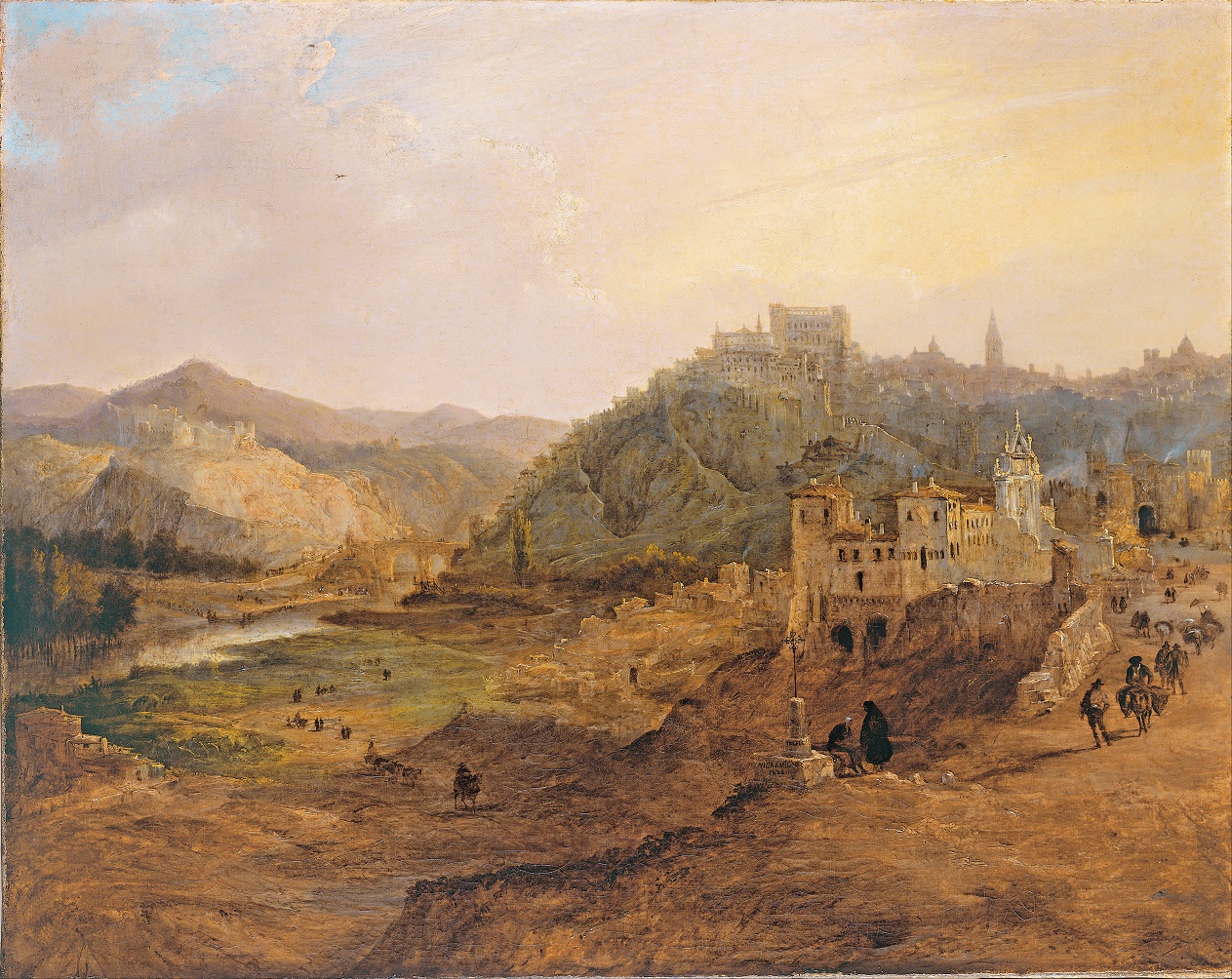
Jenaro Pérez de Villaamil y d'Huguet

Jenaro Pérez de Villaamil y d'Huguet (1807 – 1854) was a Spanish Romantic painter. He interests me partly because you will very rarely see a complete image of any of his paintings, but little snippets of his work are all over the place. The one above was the banner image from an exhibit of Spanish romanticism that toured Europe a few years ago.

A typical painting looks something like this.

But you are much more likely to find something like this online, with the busy foreground removed and only the vague, looming background left.

View of Toledo from the Cross of the Canons.


And details.

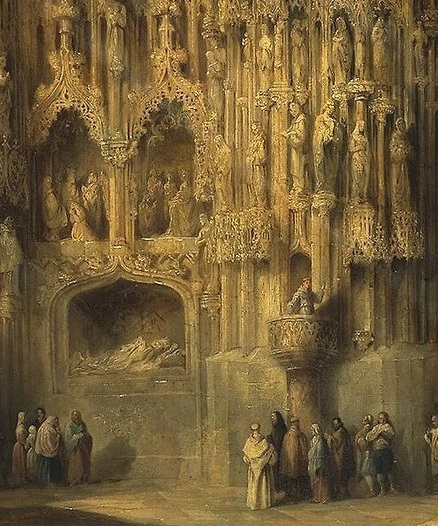
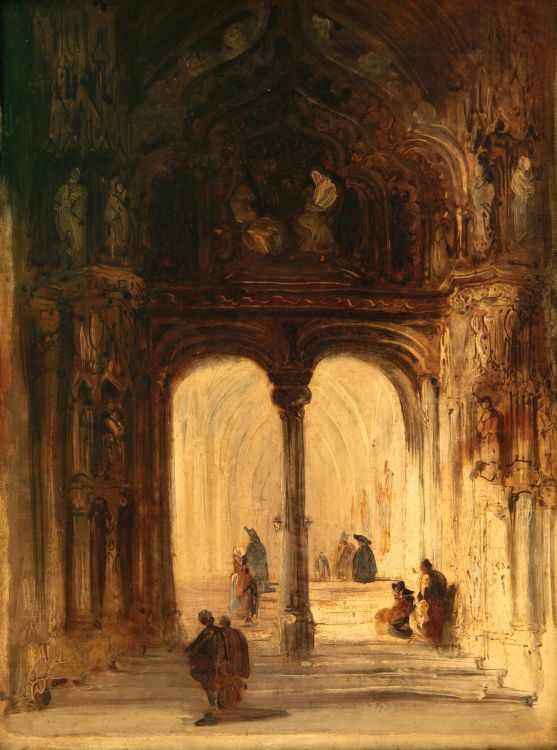
Seville Cathedral.


And details.


So let's just dispense with whole paintings and see some of the details that fascinate.


Saturday, January 14, 2023

The Eternal Curmudgeon: Thoughts on Gulliver's Travels by Jonathan Swift

From my old web site:

During the course of driving back and forth 85 miles to my latest project, I've been listening to Gulliver's Travels (1703) on tape. I found it an altogether rewarding experience, if in the end somewhat disturbing. European civilization has rarely had a harsher, keener, or more bitter critic than Swift, and surely it never had one with greater mastery of words. The book is full of magnificent passages, dripping with scorn. Among the talking horses called Houyhnhnms, Gulliver is asked what European wars are about, and he answers that the causes

were innumerable, but I should only mention a few of the chief. Sometimes the ambition of princes, who never think they have land or people enough to govern; sometimes the corruption of ministers, who engage their master in war in order to stifle or divert the clamour of the subjects against their evil administration. Difference in opinion hath cost many millions of lives: for instance, whether flesh be bread, or bread be flesh; whether the juice of a certain berry be blood or wine; whether whistling be a vice or a virtue . . . . Neither are any wars so furious or bloody, or of so long continuance, as those occasioned by difference in opinion, especially if it be in things indifferent.
And here is his account of a chief minister of state:
a creature wholly exempt from joy and grief, love and hatred, pity and anger; at least made use of no other passions but a violent desire of wealth, power, and titles; that he applies his words to all uses, except to the indication of his mind; that he never tells a truth but with an intent that you should take it for a lie, nor a lie but with an intent that you should take it for a truth; that those he speaks worst of behind their backs are in the surest way of preferment; and whenever he begins to praise you to others or to yourself, you are from that day forlorn. The worst mark you can receive is a promise, especially when it is confirmed with an oath; after which every wise man retires, and gives over all hopes.
Near the end of the book Gulliver explains why he has not claimed any of the lands he visited as colonies of the English crown: 

But I had another reason which made me less forward to enlarge his Majesty's dominions by my discoveries. To say the truth, I had conceived a few scruples with relation to the distributive justice of princes upon those occasions. For instance, a crew of pirates are driven by a storm they know not whither, at length a boy discovers land from the topmast, they go on shore to rob and plunder, they see an harmless people, are entertained with kindness, they give the country a new name, they take formal possession of it for their King, they set up a rotten plank or a stone for a memorial, they murder two or three dozen of the natives, bring away a couple more by force for a sample, return home, and get their pardon. Here commences a new dominion acquired with a title by divine right. Ships are sent with the first opportunity, the natives driven out or destroyed, their princes tortured to discover their gold, a free license given to all acts of inhumanity and lust, the earth reeking with the blood of its inhabitants: and this execrable crew of butchers employed in so pious an expedition, is a modern colony sent to convert and civilize an idolatrous and barbarous people.
Nor is Swift's ire directed only at politics and religion, for he attacks sexual licentiousness, gluttony, drunkenness, foppery, the foolishness of speculative scientists, and the credulity of the superstitious with equal vigor. Even the smell and appearance of humankind come in for some harsh words.

One's reaction to all this is to laugh and then think, "yes, but . . ." There is, after all, much that is left out of Swift's account of European civilization. The King of the Brobdingnags, who is presented as a wise man, sums up English history in the hundred years before 1703 as
an heap of conspiracies, rebellions, murders, massacres, revolutions, banishments, the very worst effects that avarice, faction, hypocrisy, perfidiousness, cruelty, rage, madness, hatred, envy, lust, malice, or ambition could produce. . . .
Now the king's account has, as a quick summary, much to recommend it, for English history in the seventeenth century was a long series of conspiracies, rebellions, and so on. But is that all it was? And was vice the only cause of all those conflicts? Swift allows no room in his account for well-meaning people who sincerely believed in Puritanism, Parliamentary rule, or royal power. He leaves out so much that one barely gets the sense that he is writing about human beings at all. Rancor, it seems to me, sometimes so filled Swift's mind as to crowd out all sense and even all morality. And yet, one reads with something approaching shame his account of the King of Brobdingnag's reaction to news of gunpowder and artillery:
The King was struck with horror at the description I had given of those terrible engines, and the proposal I had made. He was amazed at how [I] . . .could entertain such inhuman ideas, and in so familiar a manner as to appear wholly unmoved at all the scenes of blood and desolation, which I had painted as the common effects of those destructive machines, whereof he said some evil genius, enemy to mankind, must have been the first contriver.
How, indeed, do we remain unmoved by what we know of the slaughter of war? I am reminded of an observation by the Austrian satirist Karl Kraus, who once said that if we truly understood the horror that lies behind one page of a daily newspaper, we could not endure it.

Besides war and politics, Swift saves his sharpest arrows for speculative philosophy. On the flying island of Laputa, the "better sort" are so taken up in their mental gymnastics that their servants must flap them on the ear when someone wishes to speak to them. In the city of Lagado Gulliver visits the academy of "projectors," scientists all taken up with bizarre schemes for the improvement of human life. He meets men developing artificial languages and new systems of law, experimenting with ways to plow fields with pigs, and one who has a scheme to end political faction by transplanting parts of enemies' brains into each other's heads. Some of the jokes are funny, and some of the visions of scientific madness truly chilling, but again one has the sense that something is missing. Swift does not seem to be satirizing just the excesses of some philosophers, but the whole project of learning about the world. He lumps the current fascination with "attraction" (that is, universal gravitation) together with other "speculative systems" and considers them all absurd fads. The peoples he praises, the Brobdingnacians and the Houyhnhnms, completely lack curiosity. He notes that the Brobdingnacians have very few books, because there is little that they feel the need to learn or argue about. Their king finds it amusing that Europeans have thousands of books about politics but are still governed so badly, since, in his view, there is nothing to government but goodness and common sense. The Houyhnhnms have a neolithic culture and no writing at all, nor do they ever argue, since they agree on everything.

Swift seems to be saying that most of what humans do is a waste of time: not just war and political ambition, but philosophy, science, exploration, and any sort of art or craft that might fall under the heading of "luxury." To him the meaning of the Mass, a burning question to so many of his contemporaries, is a frivolous matter no different from whistling. Politics is merely ambition, and whether king or Parliament should be supreme is a matter of indifference. I was struck by the political conservatism of the Travels, for as Gulliver wanders the world he encounters many wonders, from flying islands to talking horses, but he never arrives at a democracy. Everywhere he is welcomed among the "better sort," landed gentry who have servants to do their labor, and everywhere women are subservient domestics or backstairs schemers. The Houyhnhnms have a sort of racial caste system in which the servants are different colors from their masters. Alive as Swift was to the eternal faults of his world, he was dead to what was truly new and exciting: science, technology, the rise of a new economy not dependent on land, and of new political ideas that rejected aristocracy.

The last book of Gulliver's Travels describes the land of the Houyhnhnms, a sort of utopian vision of a place without sin. The result, though, is not a paradise but dreariness bordering on nightmare. The Houyhnhnms, we are told, are entirely governed by "Reason," but this abstraction is never very well explained. Its chief meaning seems to be the repression of passion, so that the Houyhnhnms feel strongly about nothing. They do not even prefer their own offspring to those of others. Their marriages are arranged on eugenic grounds, and each couple has only two children, after which they refrain from intercourse. They eat nothing but grass and oats boiled in milk, and they wear no clothes, so they do little that might be called business. They enjoy conversation, but "their subjects are generally on friendship and benevolence" and they say only "what is useful, expressed in the fewest and most significant words," with "no interruption, tediousness, heat, or difference of sentiments," which pretty much rules out conversation as I know and love it. Gulliver tells us that they excel in poetry, but since their main subjects are, again, "exalted notions of friendship and benevolence," I don't believe it. With such lives, one might ask why they don't just die, and, in fact, we are told that they regard death as a "return to the first mother" and are not in the least sad about it. Gulliver's experience of the Houyhnhnms' perfection left him with a deep revulsion toward humanity, but I was left with a deep revulsion toward perfection. Swift was not much of a believer, but I found his Houyhnhnms to be the best argument ever offered for reconciling the existence of a benevolent God with the evil and horror of life on earth. If life without evil and horror would be as dead as Swift makes it seem, then surely the Creator was wise to include them in the universe.

Gulliver's Travels leaves the reader suspended between Europe, whose corruptions and evils cannot be denied, and the awful tranquility of the lifeless Houyhnhnms. It seems an unpalatable choice. But is that all there is? I do not think so. The world is full of wonders, from art to science, from wolves to whales, from books to Beaujolais. Gulliver says several times, apropos of various fineries, that "nature is easily satisfied." Maybe his is, but mine is not. I could never rest in the incurious, ignorant, apathetic state of the Brobdingnacians or the Houyhnhnms—I crave knowledge, justice, and diversion. I think that the world can be made better; I think that since 1726 much of it has been made better. The improvement has come from things Swift dismissed, speculative philosophy and politics. It is, I think, better to live in a technologically sophisticated democracy than in Swift's England. True, our world is far from perfect, and the vices Swift cataloged are all still very much with us. Good thing, too, if a world without them would be like the land of the Houyhnhnms. As I read Gulliver's Travels I sometimes thought that I must be a heartless creature to have found happiness in a world of vice and violence, but I have. By regarding human life is something more than the mindless scurrying of ants, by regarding questions of science and philosophy as open and interesting, and by embracing passion rather than renouncing it, I have escaped in my own way from the trap Swift sets. With, I might add, his own help. For the past week my reading of Swift's attack on frivolity has been a great source of of idle pleasure to me--by his work Swift disproves his arguments, and shows that there is much to admire and enjoy in the human condition.

November 10, 2001

Swift's Prophecy

One of the most famouse passages of Gulliver's Travels is the one that follows, in which Swift, on the basis of the very few state trials held in his England, imagined the totalitarian future in his own extraordinary way.

***

I told him that in the kingdom of Tribunia, by the natives called Langden, where I had sojourned some time in my travels,the bulk of the people consist in a manner wholly of discoverers, witnesses, informers, accusers, prosecutors, evidences, swearers, together with their several subservient and subaltern instruments, all under the colours and conduct of ministers of state and their deputies. The plots in that kingdom are usually the workmanship of those persons who desire to raise their own characters of profound politicians, to restore new vigor to a crazy administration, to stifle or divert general discontents, to fill their pockets with forfeitures, and raise or sink the opinion of the public credit, as either shall best answer their private advantage. It is first agreed and settled among them, what suspected persons shall be accused of a plot; then, effectual care is taken to secure all their letters and papers, and put the criminals in chains. These papers are delivered to a set of artists, very dexterous in finding out the mysterious meanings of words, syllables, and letters. For instance, they can discover a close-stool to signify a privy council; a flock of geese, a senate; a lame dog, an invader; a codshead, a --; the plague, a standing army; a buzzard, a prime minister; the gout, a high priest; a gibbet, a secretary of state; a chamber pot, a committee of grandees; a sieve, a court lady; a broom, a revolution; a mouse-trap, an employment; a bottomless pit, the treasury; a sink, the court; a cap and bells, a favourite; a broken reed, a court of justice; an empty tun, a general; a running sore, the administration.

When this method fails, they have two others more effectual, which the learned among them call acrostics and anagrams. First they can decipher all initial letters into political meanings. Thus, N shall signify a plot; B, a regiment of horse; L, a fleet at sea; or secondly by transposing the letters of the alphabet in any suspected paper, they can discover the deepest designs of a discontented party. So, for example if I should say in a letter to a friend, Our brother Tom has just got the piles, a skilful decipherer would discover that the same letters which compose that sentence my be analysed into the following words: Resist, a plot is brought home; The tour. And this is the anagrammatic method.

Book III, Chapter 6   

Friday, January 13, 2023

Links 13 January 2023

Nathan Altman, The Watch Maker (1914)

Time for another link to the post explaining why the number 13 is unlucky.

The history of Mate or Yerba Mate, a South American holly bush whose leaves produce a drink rich in caffeine, beloved by (among others) the Argentine national football team.

Teenage girl cyber-bullied in texts that add up to hundreds of pages; culprit turns out to be her own mother.

Remarkably detailed, crazily busy drawings from Mattias Adolfsson's sketchbook.

The Library House, very nice for modernism. By Fria Folket, a Swedish design studio.

Video of a rescued beaver building a dam from Christmas detritus.

Visible prostitution depresses property values, even in Amsterdam.

Bronze Age well in Bavaria, with interesting artifacts.

The secret to the durability of Roman concrete may be "hot mixing" using quicklime, which leaves small nodules of lime in the concrete that can promote "self healing" of cracks.

The love dance of two water snakes. And the courtship dance of two bald eagles.

Good military intelligence requires understanding your adversary's culture, with examples from the Cold War.

I was going to respond to Ezra Klein's thoughts (NY Times) on a book called "Where is My Flying Car?" but Kevin Drum said all I was going to say.

Good Vox article on the Idaho student murders and how the police were able to identify the suspect.

Grim statistics on employment for Ph.D.s in the humanities, including "in 2019 and 2020 1,799 historians earned their Ph.D.s, and only 175 of them are now employed as full-time faculty members."

House to House, the latest album by Canadian folk singer Matt Andersen, was chosen by Ted Gioia for his Best Music of 2022 list. Gioia called him "a big man with a big voice."

The personalities of all US presidents in one diagram.

Polar bears in fields of flowers.

Drone photos of the tops of lovely old skyscrapers.

Despite careful warnings about the material, including one in the syllabus, an adjunct professor is fired for showing a 14th-century painting of the prophet Muhammad, after Muslim students complained. (NY Times, Daily BeastNew Lines.) This fills me with burning rage for two reasons: first, because universities have no compunction about material offensive to conservative Christians, and I think that whatever rights we extend to Muslims we have to extend to everybody; and second, because the students objected on the grounds that the painting made them feel uncomfortable and unwelcome. If you ask me, a university that isn't making students feel uncomfortable is not doing its job. I was musing the other day about offering a course in which every lesson and reading was chosen to offer a full-on attack on something that most students believe: Aristotle on slavery, Bertrand de Born on the joy of war, Emma Goldman arguing that feminism is doomed to fail women, etc., etc. 

Ukraine Links

Big shipment of weapons from the US announced on Three Kings Day, including 50 Bradley IFVs with 500 TOW missiles, on top of armored vehicle donations from France and Germany.

The Kyiv Independent on the Battle for Bakhmut.

Us official say Russian artillery fires are down 75% from their peak, and Russia and Ukraine are now firing about the same number of shells.

Report from Soledar on January 9.

Amazing satellite view of the dense cratering around Bakhmut. And more here.