


In an interview shortly before his death, J. Robert Oppenheimer said, "There is no meaningful responsibility without power."
I, of course, immediately interpreted this in the light of our debate over who deserves a statue or whose name can be given to a school. These days the people we think are worthy of a statue are overwhelmingly those who never held any political office. Only they can meet our standards of purity, because they never had the responsibility that comes with wielding power. Holding office means compromising your principles, because only the vaguest principles can survive contact with the messiness of the world. Furthermore, it means doing, most of the time, what your constituents want, and you can hardly count on the voters of any period to meet the moral standards of the future.
Our current moral standards therefore exclude the powerful from celebration, and therefore many of those who have done the most good for humanity.

At a closing held on July 10 in Baltimore City, UNITE Mount Vernon, Inc. became the new owner of the 153-year-old Mount Vernon United Methodist Church. . . . UNITE Mount Vernon Inc. acquired the church with a forward-facing vision for community activation and public benefit. UNITE Mount Vernon Inc. is a recently formed non-stock corporation which has applied for IRS 501(c)3 non-profit status.


All elements constituting the crane wooden structure were destroyed: roof truss of towers, ceilings, the central part – the lift, part of the tower walls were also significantly damaged. After World War II, the facility was reconstructed, retaining its original dimensions, while the tower inside was equipped with reinforced concrete inter-floor ceiling slabs and staircases as well as steel roof trusses. The wooden central part with the crane mechanism was also reconstructed.


On the one hand, land in London is very expensive, and the obvious way to use this space would be to tear down the wreckage and build a new tower. But I'm not sure the socialist housing apparatus that built it even exists in modern Britain, at least in the form that went around building all those flimsy towers. So the project would have to be given to a private developer, with all the attendant struggles over affordability etc.

Meanwhile the government has convened a Memorial Commission made up largely of survivors and people who lost relatives in the fire, and they want the space to be maintained as a memorial to the victims. They do not, however, agree on what kind of space. Some want the tower to remain in some form, while others want it demolished; one said he won't visit London again until the thing is torn down because seeing it is too painful.
The Times story finds a running theme of a desire for justice, that somebody be punished:
“It shouldn’t come down until justice is served,” she said, because otherwise it would be a case of “out of sight, out of mind.” Until there is some accountability and a clear idea of what to do with the site, she said, “I think it should remain.”
But this is ultimately just wrong. No single person was responsible for the shoddy construction of this and other towers. They were born from a program conceived in the ruins left by the Blitz, to rapidly rebuild London's housing stock. That program morphed over the years, and by 1970 when Grenfell was approved it was focused on providing affordable housing to London's working class. Britain was not a very rich country in the 1960s, so money was tight. Design decisions were made with cost as a major concern, and corners were cut. Then came the Thatcher years and the government's turn against public housing, which put pressure on the maintenance budgets for all these buildings. In the 1990s the local government created a quasi-private entity to manage it public housing, with residents on its board. The building actually received a major renovation in 2015-2016, and engineers certified it as fire safe.
So who would you blame for all of this? It is, more or less, the whole arrangement of Britain that is responsible for working class people living in far from perfect housing: economy, society, government. Plenty of people want to blame Thatcherism, but the Tower was actually safer in 2017 than it had been in 1980 when it opened. The factor that ultimately doomed most of the victims – that the building had only a single fire stairway – was part of the original design and represented 1960s thinking about how to design fire-safe buildings, widely shared across the architectural profession.
For people who think our society has tied itself in so many knots that we can no longer do anything, Grenfell is a great example. In the midst of a grim housing shortage, a valuable block of publicly-owned land is tied up in endless wrangling over what to do with the spot, driven partly by a thirst for revenge that makes little sense. Dictator Elon Musk would have replaced it with a gleaming new tower by now. But we are just not willing to wave away the kind of human pain created by a disaster like the Grenfell Tower. Ukraine may be experiencing such disasters at a rate of about one a day, but should that matter to how we treat the victims of this one disaster?
I was very cynical about the long struggle over Ground Zero in New York, but it seems that in the end a decent solution has been reached. We ended up with new buildings, a memorial, a museum, and, as a side benefit, new transportation infrastructure paid for with Federal money released by the national disaster. So our complex, everyone-gets-a-say process can work.
It's just sometimes very painful to watch.
Is Ukrainian President Volodymyr Zelensky a good person?
Who knows! All I know about him is that he used to be a comic actor and then ran for president on an anti-corruption platform; until a month ago he was a very controversial figure in Ukraine with a lot of opponents. Now he is a war hero.
If Ukraine survives this war, will he deserve a statue?
I was struck by this thought yesterday, reading yet another adulatory piece about his great leadership. This, I thought, is why people put up statues.
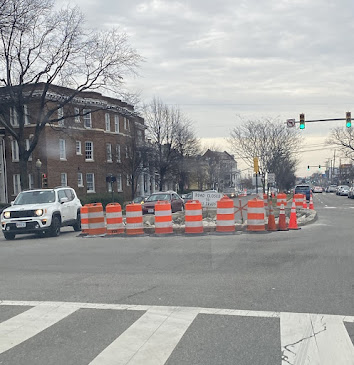

There is, these rubble-filled holes seem to say, nothing to celebrate any more, nothing anyone cares enough about to put up a monument to it.
Following preservation debates as I do, I have long been impressed by the loyalty that many Black Americans feel toward their old segregated schools:
May Day is my mother’s favorite memory from her time attending the segregated school in the mismatched buildings at the corner of Stokes and Alliance streets. During my own childhood, she and my father, the late Joseph Williams Sr. — both members of Havre de Grace Colored High School in northeast Maryland, Class of ’51 — told stories to my sisters and me that bordered on legend. Harlem Renaissance poet Langston Hughes once lectured my dad’s English class and gave him a book of poems. I envied their experience: I attended a suburban, predominantly White high school in the suburbs.I can't imagine anyone showing this kind of loyalty to the sort of big, diverse high school I went to.
My parents rarely spoke of the hardships that went along with education in the Jim Crow era, like the secondhand desks and tattered textbooks, the basement science lab or the grassy vacant lot with homemade bleachers serving as the school gymnasium. “I loved being there,” my mother says. “I was proud to graduate from there. The cohesiveness and the closeness made you feel like you belonged.” . . .
The school and its long, proud history have been resurrected and returned to the community as a museum and community event space, thanks to an alumnus’s determined daughter. Havre de Grace Colored High School has joined a growing national list of formerly segregated institutions finding new life. Ongoing or recently completed grass-roots projects have been pursued in Atlanta, St. Louis, Baltimore, Delaware, Alabama, Virginia, Western Maryland, North Carolina and Florida. (Washington Post)
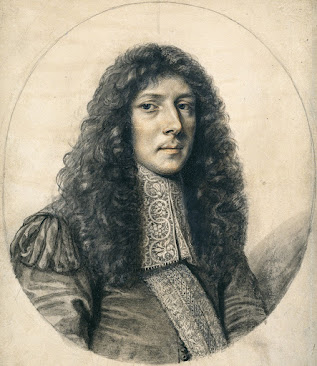
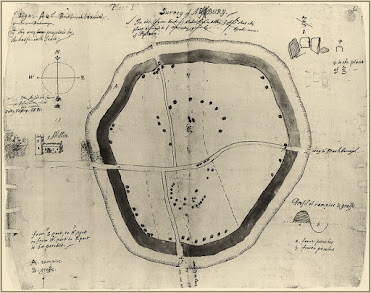
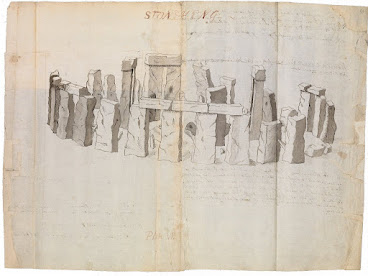
We remember John Aubrey as an antiquary and one of England's first historic preservationists. To me the most striking thing about Ruth Scurr's 2015 biography was how she brings out the frantic struggle Aubrey and some of his friends waged to keep the remains of England's past from being destroyed. Aubrey was the first intellectual to take note of the great megalithic monument at Avebury, which was being quarried for stone even as he tried to measure its dimensions. He eventually got King Charles II to issue an order preserving the site from quarrying, probably Aubrey's single most important achievement. But this was only one site among thousands that Aubrey worried about. He made the first accurate survey of Stonehenge, and one of the monument's features is still called the Aubrey Holes after him. England's monasteries had been dissolved a century earlier, and in Aubrey's time monastic ruins were fast disappearing under the assaults of time and looting. He studied and drew many now-vanished buildings, and his studies allowed to him to develop the first scheme for dating ecclesiastical buildings from the shape of their windows. (The forerunner of our Saxon-Norman/Romanesque-Gothic model.) The books and manuscripts from those monasteries had been scattered to the winds, and Aubrey repeatedly found pages of rare manuscripts being used by butchers to wrap meat or soldiers to stuff their canons. I sometimes find my contemporaries a little batty in their efforts to preserve everything, but their anxiety about loss is a small thing compared to Aubrey's.
Aubrey and his friends were all collectors, and they worried a great deal about what would happen to their collections when they died. Valuable artifacts had traditionally been preserved in the treasuries of royal and noble families, but in the 17th century many of Europe's greatest families were ruined, and their possessions dispersed. The solution Aubrey's circle hit on was to build some of the first modern museums. These were endowed institutions modeled on the colleges of Oxford and Cambridge where precious manuscripts, books, and artifacts could have a permanent home. Aubrey helped to found the Ashmolean Museum at Oxford, and some of the rarities he collected ended up there. I mention this because modern museums are suffering from a crisis of conscience and wonder what they are for, and what their part is in perpetuating injustices; but imagine how much would have been lost if those great museums had not been built and funded to save what could be saved from the destructive march of history.
Aubrey was equally involved in preserving folklore, and he assembled (but never published) a compendium of sayings, tales and rituals that he thought were remnants of pre-Christian Britain. You will often read that the rise of science was accompanied by great contempt toward the wisdom of ordinary people, especially ordinary women, and certainly that happened; early modern doctors in particular spent a lot of time railing against village hags and their supposed cures. But the age also birthed men like Aubrey who delighted in nothing more than listening to old people describe the ways they celebrated Christmas in their youth, or tell their local ghost stories. Aubrey eagerly discussed the properties of herbs with unlettered women, and on more than one occasion he recommended to one of this friends a treatment he learned of in this way.
Let me mention two more things about Aubrey's life that especially struck me. First, the weirdness of money under the Old Regime. Noble families were all wealthy, at least compared to everyone else. But on the other hand they were very often bankrupt. Aubrey was a case in point; the houses and lands he inherited from his father were so encumbered by debts that he eventually lost everything. He spent years hiding from bailiffs who wanted to clap him in debtor's prison. This was partly because he was, as a friend put it, "Shiftless, roving and magotie-headed," more interested in drawing monastic ruins than estate management. But it was a constant theme of life in the period; Aubrey spent a great deal of time persuading his friends to donate their books to Oxford or Cambridge before they died, since many of their estates were also so debt-ridden that their possessions would probably have to be sold.
But of course even when broke Aubrey remained a member of the gentry. He continued to rent rooms in London, frequent coffee houses, attend the Royal Society, travel extensively. With no income, how did he do it? Scurr was able to figure a little of this out, using memoranda in which Aubrey recorded money lent to him by friends, and also sales of the books he had inherited or bought while young. But the sums we can account for don't add up to a living, and the memoranda also note that some of his debts were eventually repaid. How? One meets similar people in 19th-century novels from both England and Russia, noble characters who traipse through a glittering life while complaining that they have not a penny to their names. Some of it seems to be outright fraud, especially perpetrated against tailors, dressmakers, and innkeepers. (Thackeray's Vanity Fair has much of this). Some of it is simply camping for extended periods with your wealthy relatives; Aubrey spent much of his old age as the house guest of his cousin Sir John Aubrey. And then there was the way other members of the elite offered their friends opportunities; Aubrey was at various times offered the chance to take up land in both Barbados and Pennsylvania, but he didn't want to cross the ocean and lacked the acumen to profit from these grants from afar. One of Thackeray's or Tolstoy's rogues would have found a way to turn those distant lands into cash.
And yet some people did have great wealth. This was absolutely not simply from owning land; as Europe commercialized, rents from average farm land declined steeply. Some land, such as that on the outskirts of growing cities, or with good coal fields or quarries, did provide a good income, but the average gentry family was simply getting by. Real money came from investments, for example in new housing developments on the edges of cities, or, especially, from holding office. Investments had the problem that they could go bad and ruin their investors; several English noble families were ruined by their attempts to build canals. Holding office was the real route to riches. Some of the viciousness of politics in this era came from the simple fact that the holders of great royal offices were enriched to a staggering degree, even compared to their aristocratic peers, while those who lost out often faded into obscurity and (comparative) penury.
But even knowing as much about the economics of life in this period as I do, I still find the operations of money mysterious, and wonder how people – especially naifs like John Aubrey – managed to survive. And that's before we get into questions like how factory workers survived when the mills sometimes shut down for months at a time, or how peasants got by in years when the harvest failed. Some just died, but most did not, and none of it makes much sense to me. I have to imagine that it was possible to live without money because much less of the economy was handled by cash. Much work was done for food, or food and shelter. Goods were often exchanged by barter, and used items retained much more of their value than they do now, so households could subsist by trading (say) blankets for food. A gentry household could raise much of its own food, brew its own beer, and so on. And yet the sources don't really show us this; how people got along in tough times is one of the things nobody thought to write down.
Second, the porous boundaries of science in its early stages. As I said, Aubrey was a member of the Royal Society when its leading members were discovering the properties of air and the equations of gravity. Yet most of the papers he presented concerned the properties of England's healing spring waters. He collected samples of water and evaporated them, displaying the resulting mineral residues so the assembled scholars could discuss the smell of each and speculate about what diseases each would treat best. These accounts read like scenes from the comedic plays that mocked the pretensions of intellectuals; you can readily imagine an actor dramatically sniffing a retort and saying, "I detect sulfur with undertones of lime, so this should be superb for treating gout or calming shrewish wives," while the audience hoots.
From our perspective much of it is ridiculous. They were trying, but they were starting from such a small and error-ridden base of knowledge that their efforts were mostly vain. One of the many excellent little notices of intellectual life in Scurr's book is this one:
I visited Sir Christopher Wren again with Mr. Hook and Mr. Hill. We talked about petrifications of bodies, about plaisters, about framing glass, staining marble, filligreen sodering with bran, about printing stuffs and gilding stuffs, and about ghosts and spirits. (258)
The most important thing that happened in science before around 1850 was not any particular scientific discovery, but the discovery of what science is.
Ruth Scurr's book takes the form of a largely imaginary diary. I was not impressed by this experiment, which was tedious to read, although maybe in the end it did help immerse me in the 17th century. But John Aubrey was a very interesting citizen of a time I find fascinating, so I enjoyed My Life even while thinking a more standard biography would have worked better.


